
Space Garden is a concept for a greenhouse that would orbit Earth in low orbit. It was developed by Heatherwick Studio with the Aurelia Institute, a nonprofit that works on space architecture, and a large model of it went on show at the Venice Biennale.
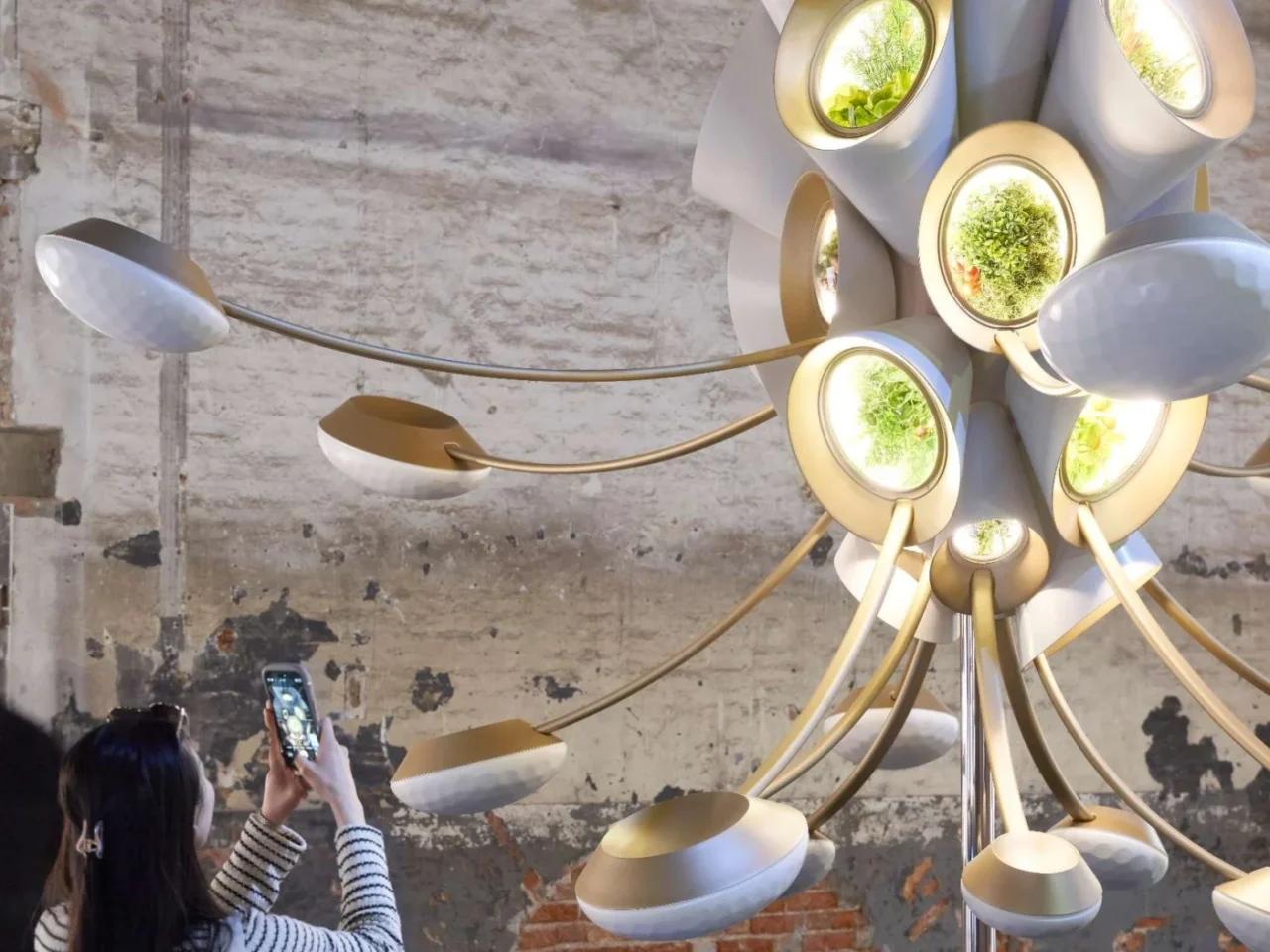
Plants instead of hardware
Space habitats are usually designed around survival, with hard, clinical interiors. Space Garden starts from a different brief: to make life in orbit healthier and more humane by bringing living plants into it.
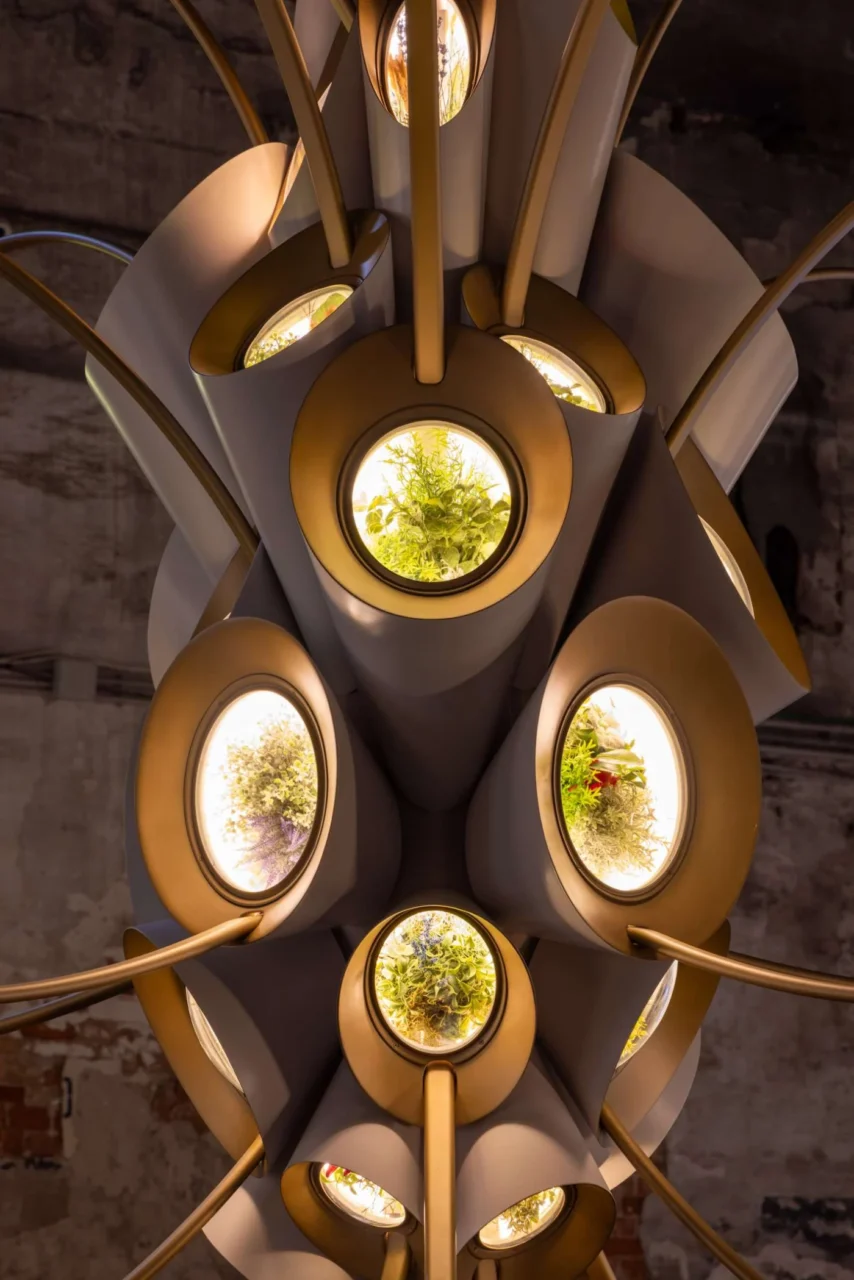
The structure is made of 30 pods, and each one holds a different plant species. At the centre sits a pomegranate tree, chosen for its long cultural and historical meaning.
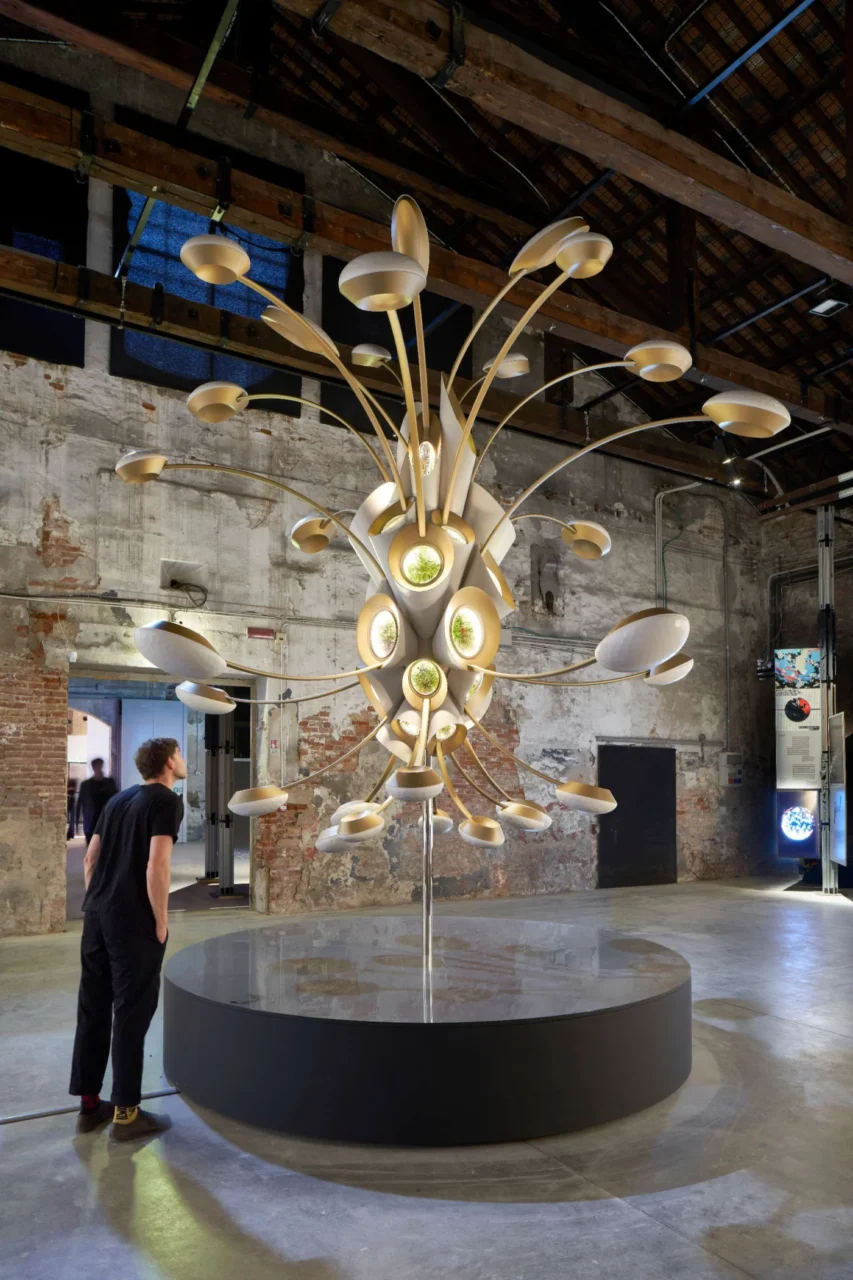
A 4 x 4 metre model
The exhibition model measures 4 metres by 4 metres. It was built by Millimetre, a UK fabrication company that specialises in precise architectural work.
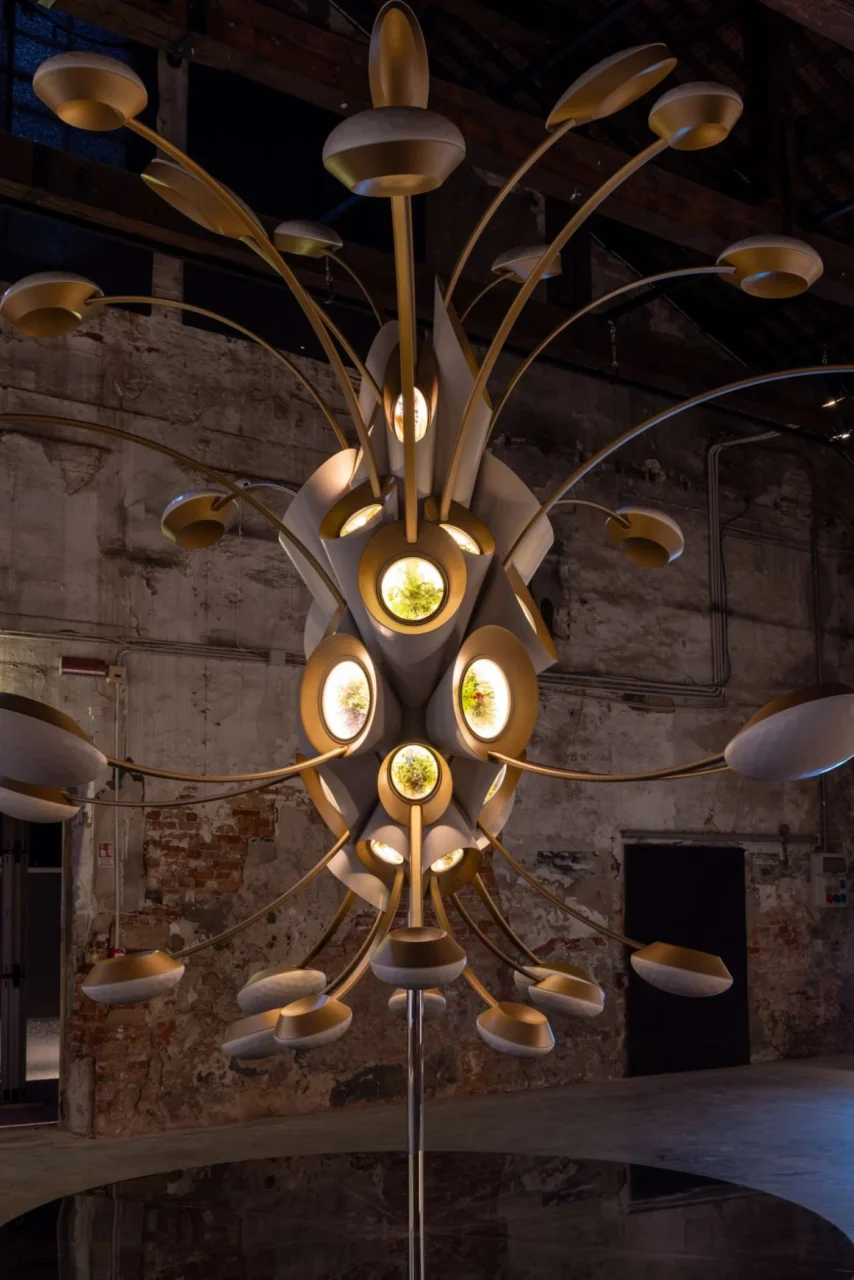
In the design, photovoltaic cells cover the outside of the greenhouse to collect solar power. The pods can open and close, so they can let in light or shield the plants from space debris.
Why grow a garden in orbit
Thomas Heatherwick describes the project as an experiment in making space more human. The idea is to grow the kinds of plants that support mental health in small, enclosed places, and to move the goal from surviving in orbit to living well there.
The team also sees practical uses. Conditions in orbit, such as microgravity, could be used to grow plants and possibly to make materials more efficiently, with benefits for life on Earth as well.
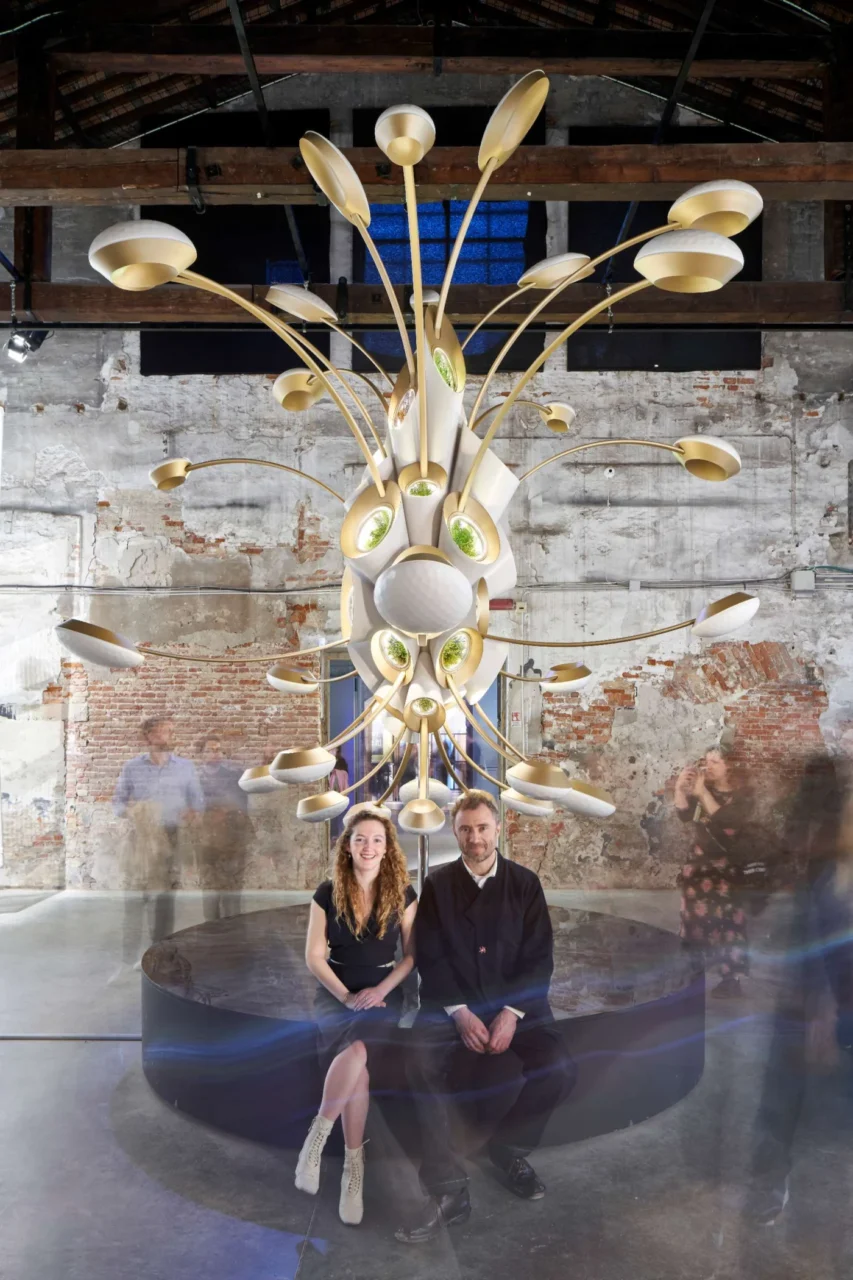
Prototype and speculation
Space Garden sits between a technical prototype and a piece of speculative design. It shows one way people could bring nature with them when they live and work in space.
Project credits
- Project: Space Garden, orbiting greenhouse concept shown at the Venice Biennale
- Design: Heatherwick Studio (Thomas Heatherwick)
- Partner: Aurelia Institute (Ariel Ekblaw)
- Model fabrication: Millimetre
- Photography: Nils Koenning; Marco Zorzanello, courtesy La Biennale di Venezia
- Source: Contemporist