
Shinnoki is a range of prefinished real wood veneer panels made by Decospan and distributed in the UK by James Latham. In an interview with Architecture Today technical editor John Ramshaw, Stuart Devoil, Group Head of Marketing at James Latham, explained how the panels are made, where they work best and how they compare with raw veneers and with synthetic surfaces such as melamine and laminate.
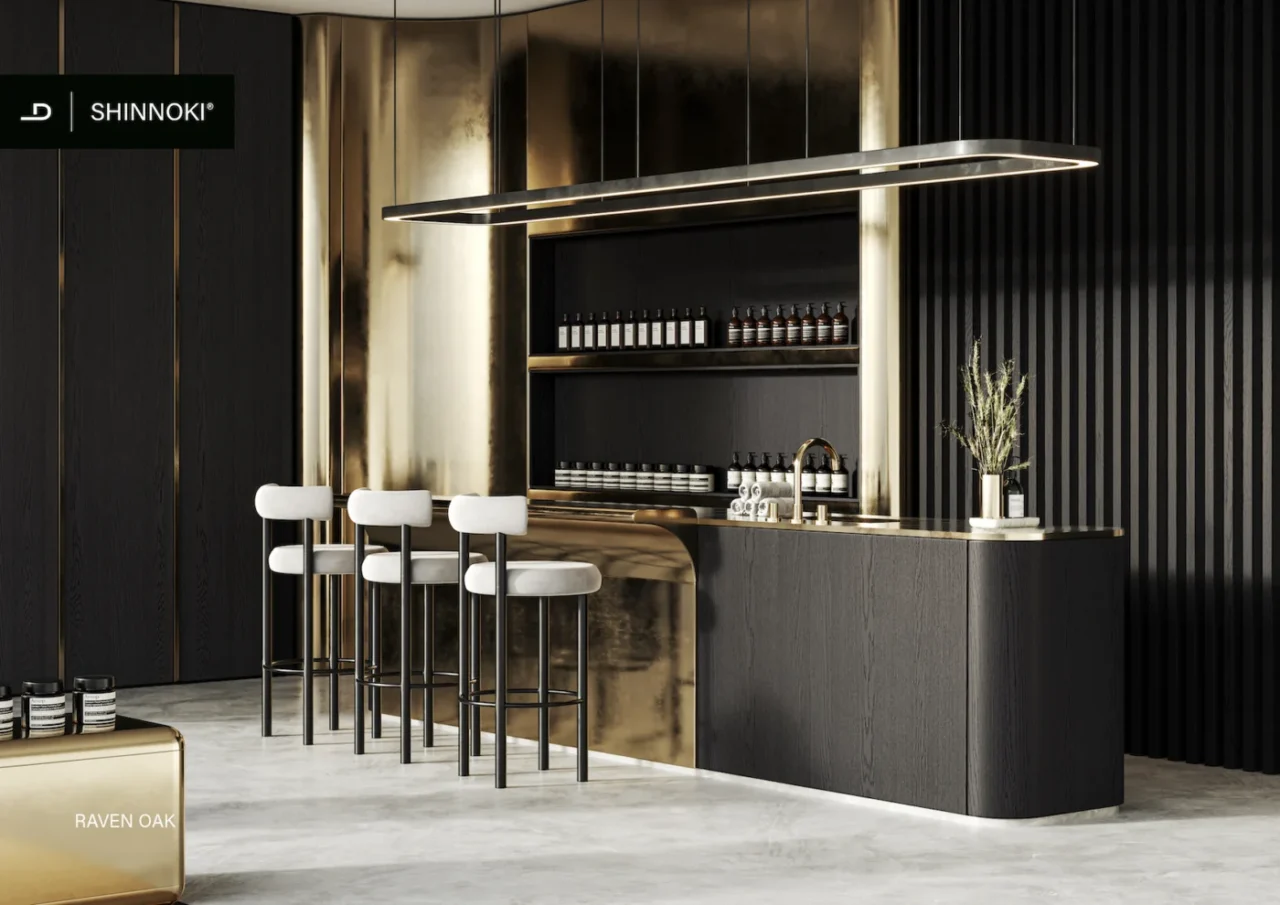
Real wood, finished in the factory
Traditional veneered boards usually reach site unfinished, and the joiner or installer has to lacquer or oil them. Shinnoki panels arrive already coated in an ultra-matte lacquer, so they can be cut and fitted straight away. The idea is to combine natural timber with the convenience of a factory-made decorative board.
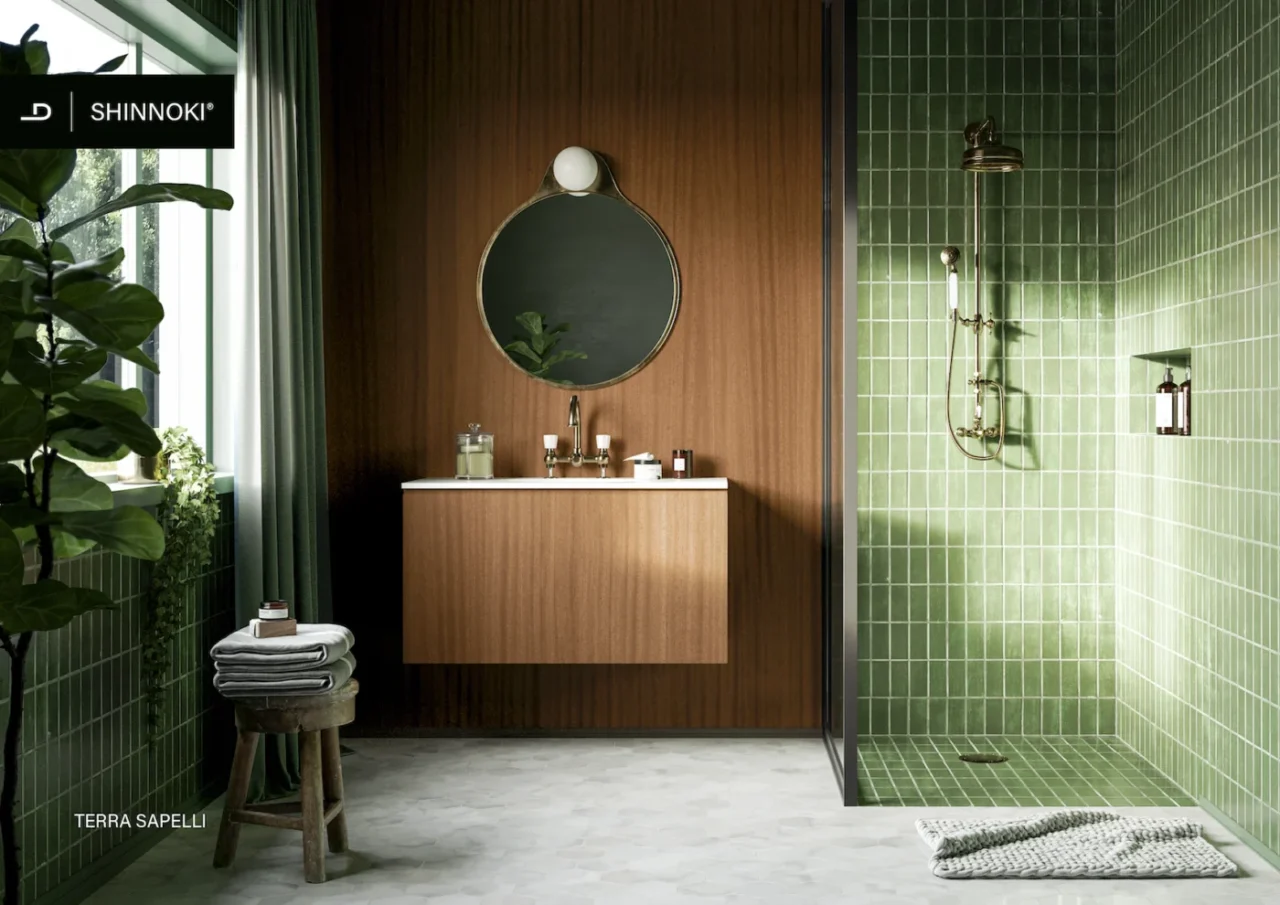
How the panels are made
Decospan selects sustainably sourced veneers and lays them out in mix-matched patterns, so the grain looks balanced and does not repeat across a panel. The veneer is pressed onto an MDF core, or laminated to paper impregnated with phenolic resin.
The surface is then brushed and stained with water-based colours. Six coats of ultra-low-emission acrylate urethane varnish (99.5 per cent solids) are rolled on and UV-cured in stages. The matt version has a gloss level of 2 ±1, the semi-matt version 7 ±3.
Four practical benefits
- A soft, ultra-matte surface, with deeper brushing that brings out the wood structure while keeping it protected.
- Better scratch resistance from the improved varnish and application process.
- Protection against spills and moisture, because soft roller application reaches into deeply brushed textures.
- No site finishing. The range also includes matching veneers, edge banding, correction pens and connecting components.
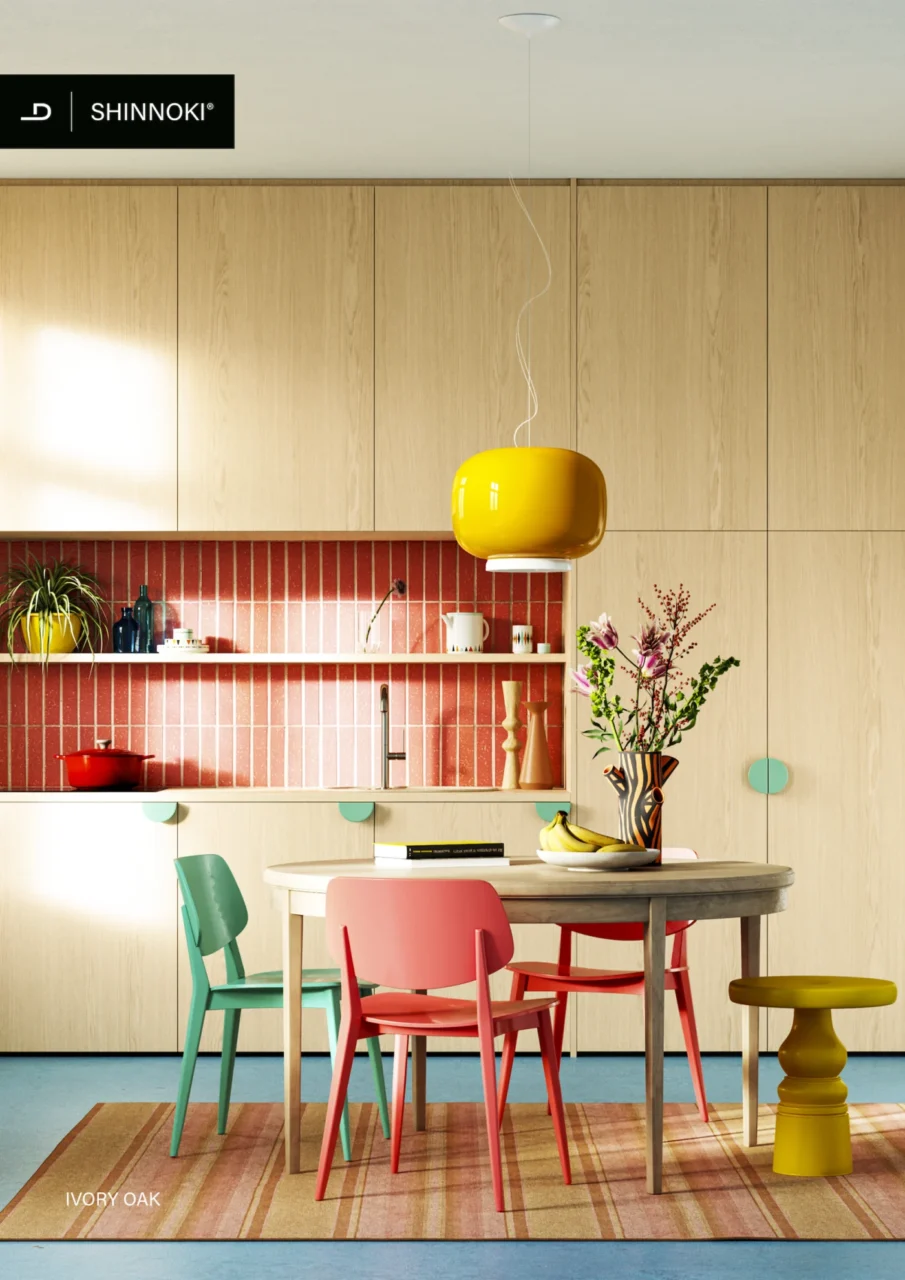
Where it is used
The panels are intended for interiors in offices, shops, hotels and homes. Typical uses are office cabinetry, kitchen fronts, wardrobes, fitted furniture, reception desks, hotel cabinets and wall panelling. They can technically be used horizontally, but James Latham does not recommend horizontal use in kitchens, bathrooms or other humid rooms.
Decospan's Querkus (oak) and Nuxe (walnut) panels, also sold by James Latham, are supplied unfinished.
Species and sizes
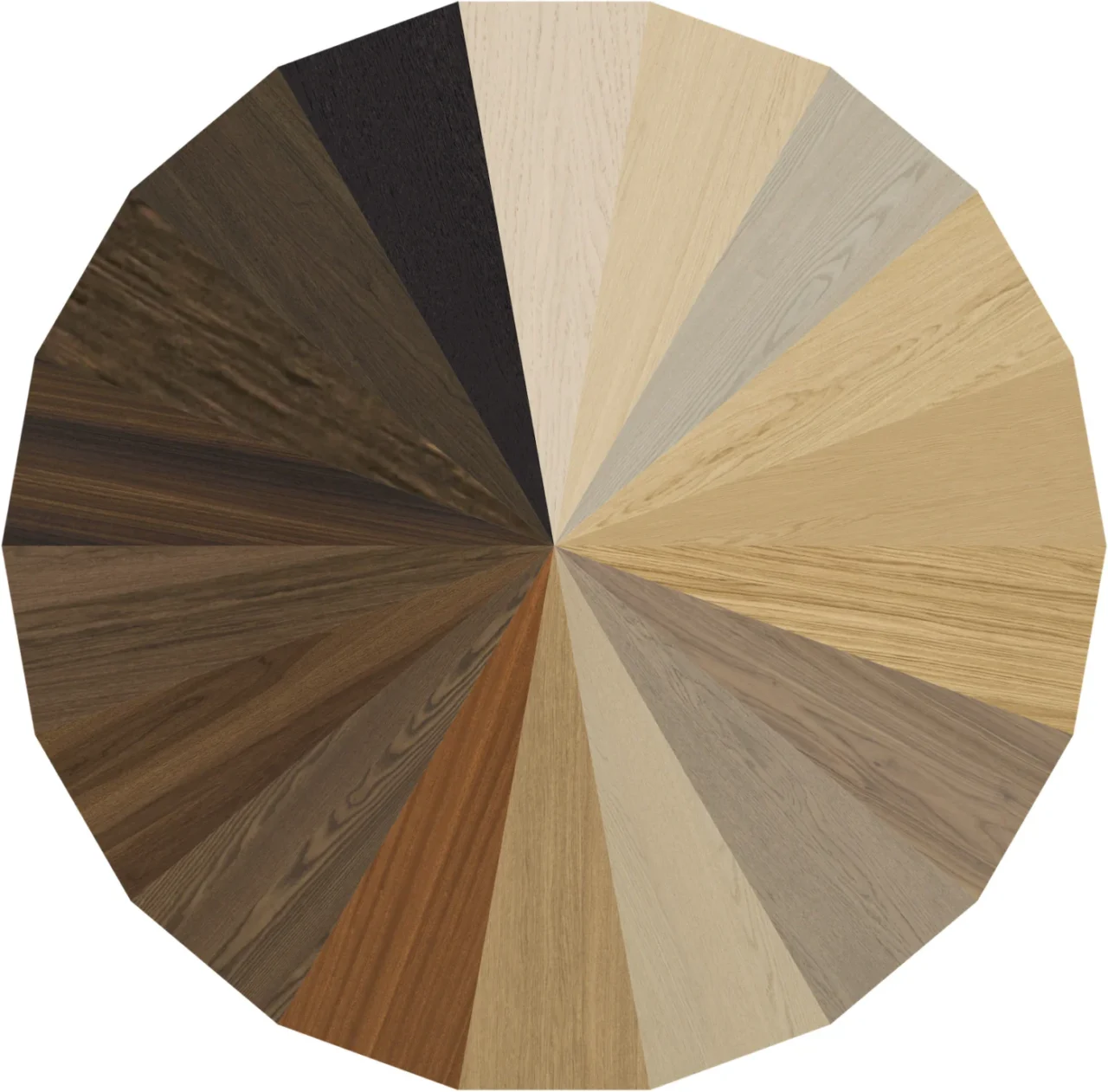
James Latham stocks the full Shinnoki 4.0 range, which includes Oak, Infinite Oak, American Walnut, Smoked Eucalyptus, Sapele and Triba. Standard panels measure 2790 x 1204 mm and are 19 mm thick. Flexible veneer sheets measure 3050 x 1220 mm and are 1 mm thick.
Consistency across batches
Because the finishing is done in-house under strict colour calibration, each batch should match the last. This matters on large jobs such as hotels and offices, where doors, cabinets and wall cladding need to look the same. Factory finishing also removes the variation that comes from different installers, and it saves the time and cost of separate lacquering.

Sustainability credentials
The timber and the MDF core are FSC certified, and the core meets TSCA Title IV with no added formaldehyde. The panels are made in Europe and designed to use veneer efficiently. Life Cycle Assessment and Environmental Product Declaration documents are available, which helps teams working towards BREEAM or LEED targets.
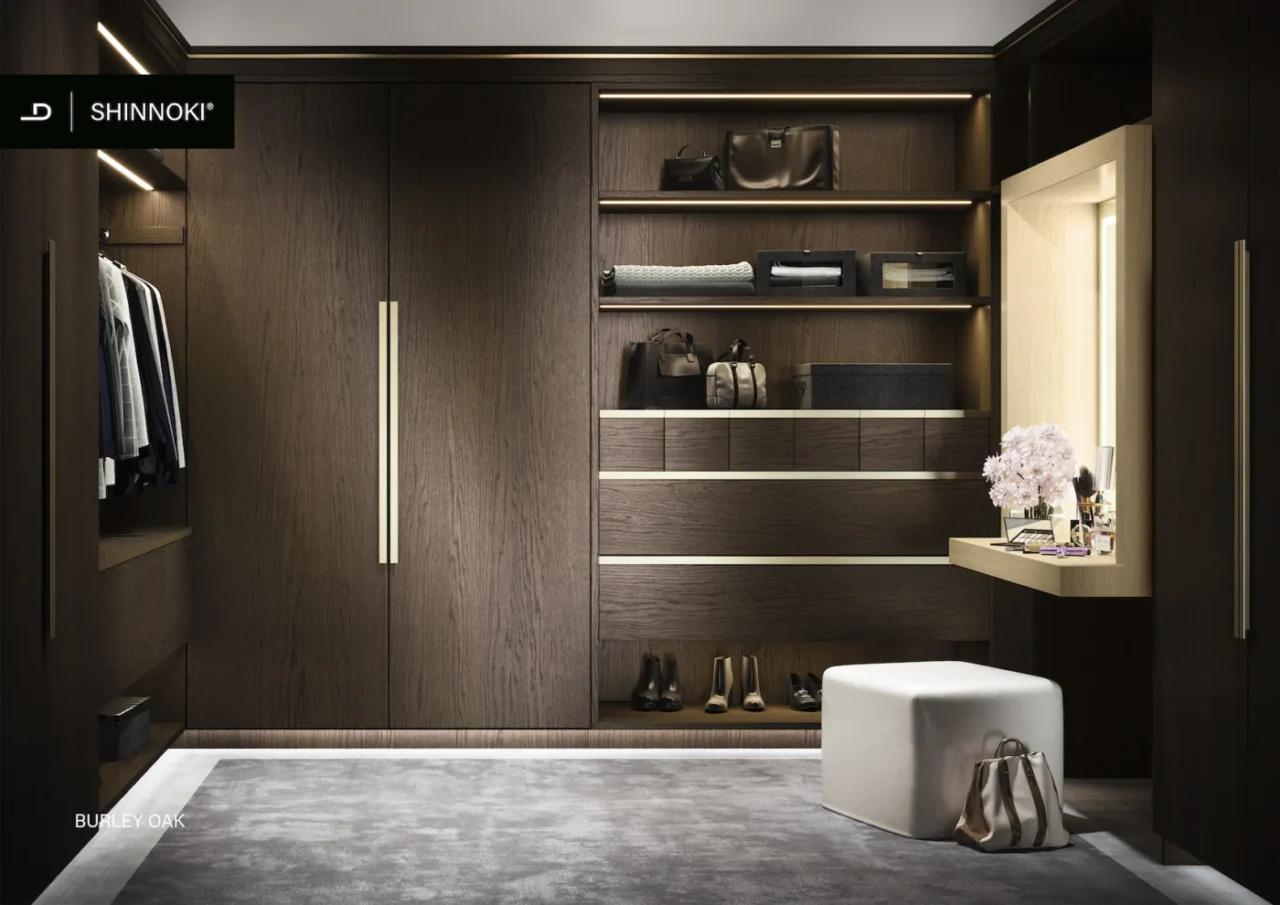
For specifiers, James Latham has Veneer Champions in every depot, a six-person specification team and a CPD on specifying real wood veneers.
Project credits
- Product: Shinnoki prefinished real wood veneer panels
- Manufacturer: Decospan
- UK distributor: James Latham
- Interview: Stuart Devoil (James Latham) with John Ramshaw (Architecture Today)
- Photos: Decospan
- Source: Architecture Today