

The Breitenbach Landscape Hotel in Alsace, France, has no conventional wing of guest rooms. Instead, 14 wooden cabins are scattered across a hillside around a single main building. The ecotourism hotel was designed by Norwegian practice Reiulf Ramstad Arkitekter together with the French firm ASP Architecture, and the design draws on Scandinavian traditions, the meeting of French and Scandinavian cultures, and the relationship between nature and architecture.
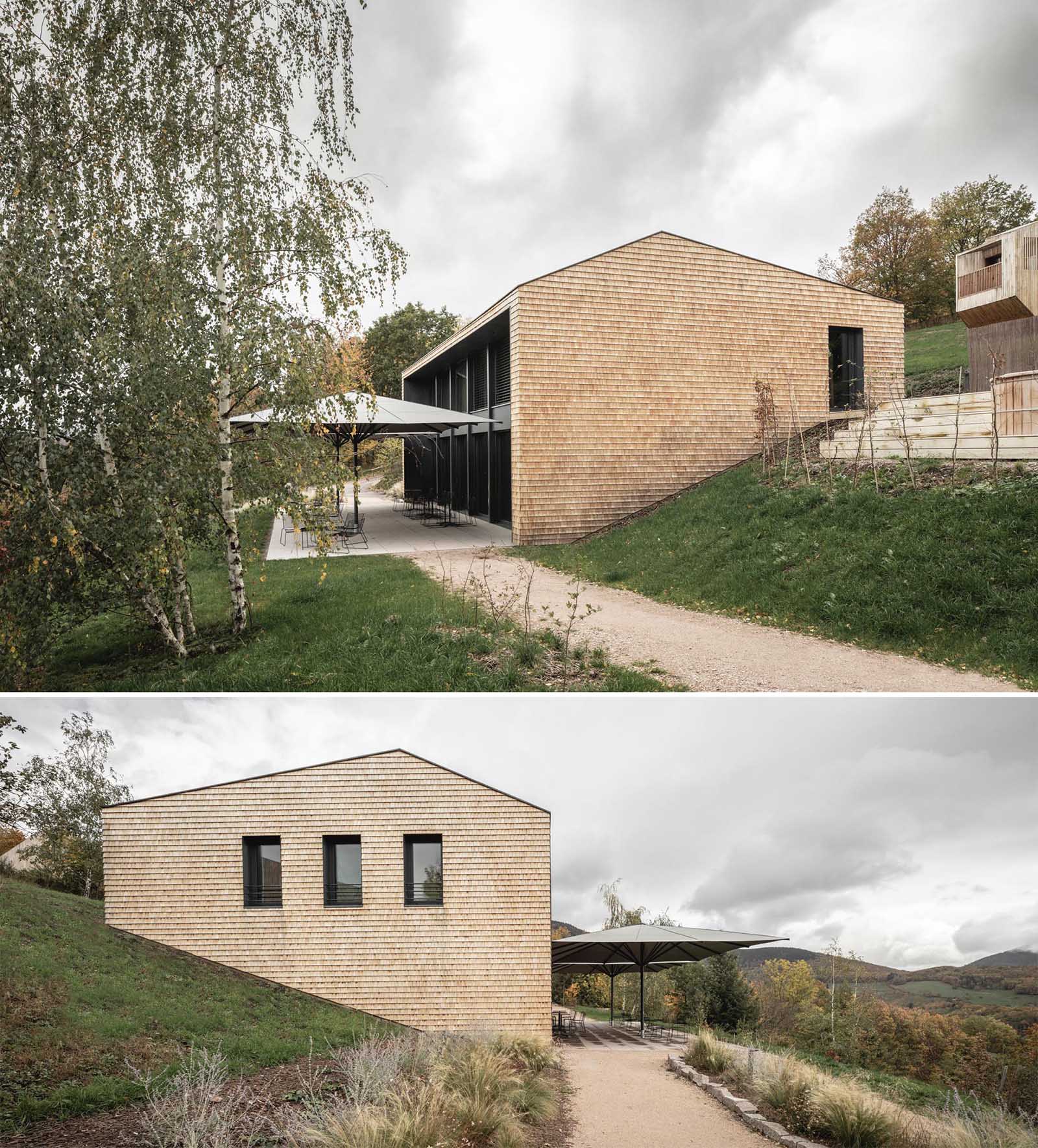
A main building in chestnut shingles
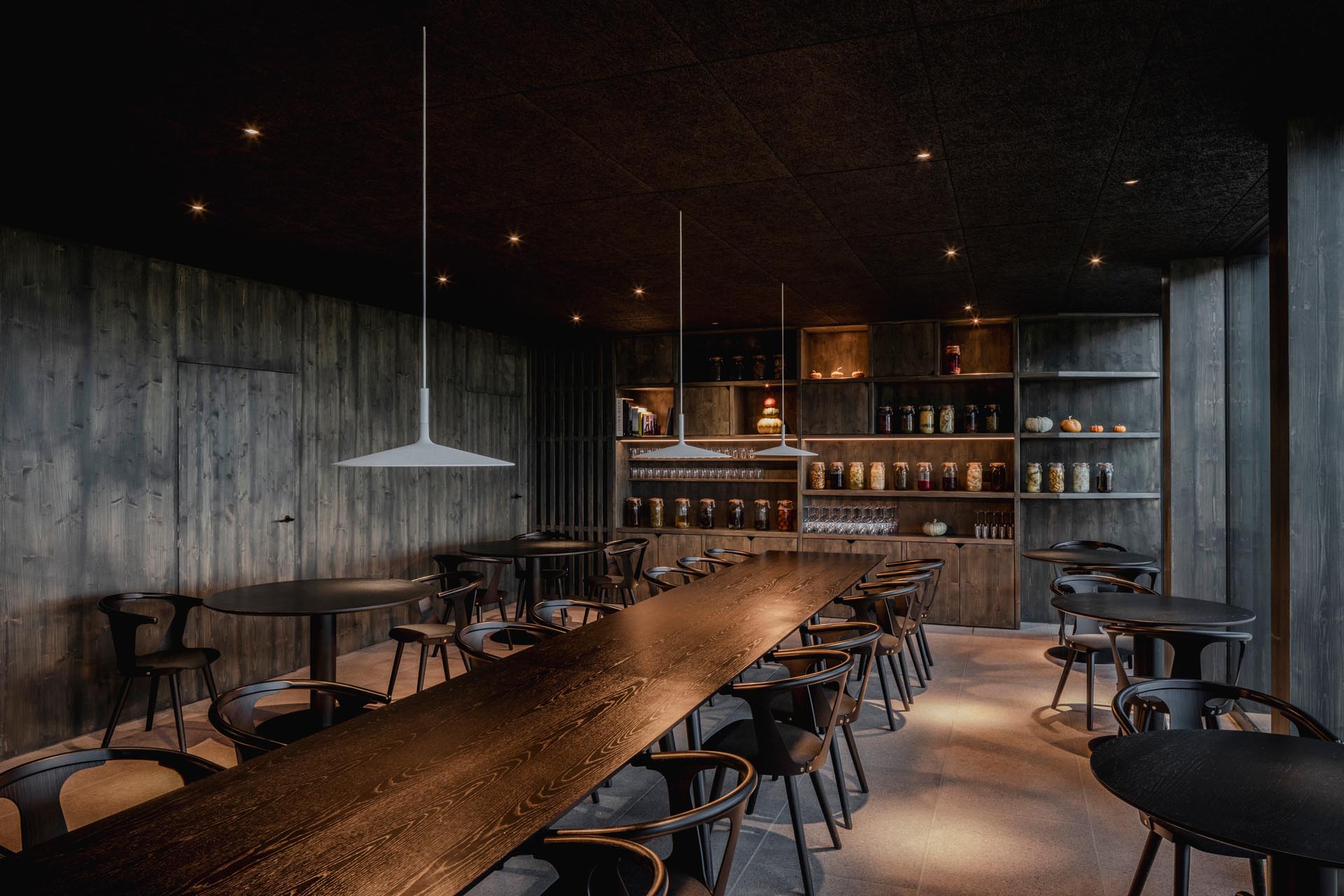
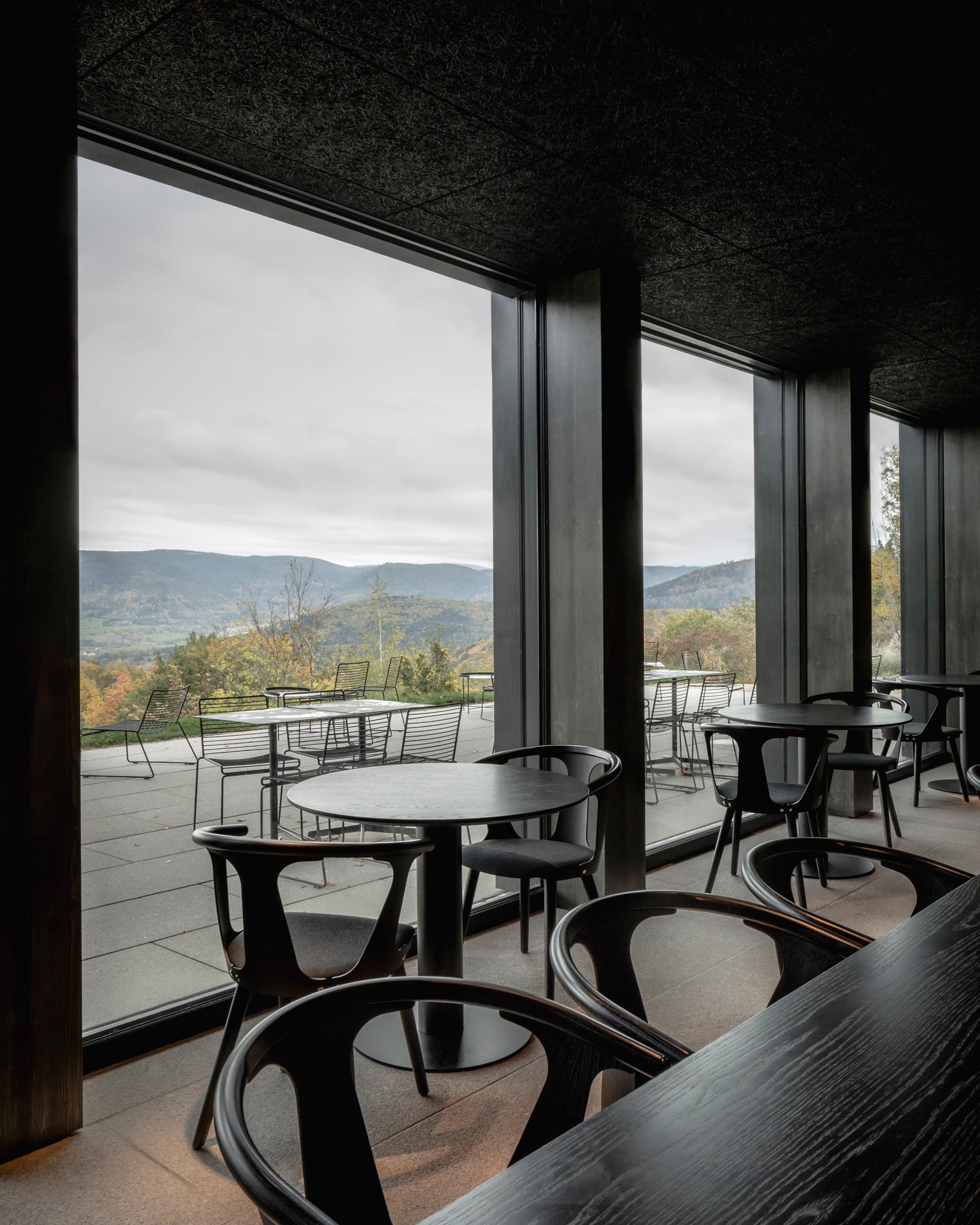
Shared functions are gathered in one main building. Its exterior is wrapped in Alsatian chestnut shingles, and inside are the reception, the restaurant, the spa and the director's apartment. The restaurant is finished in dark wood with large windows.
14 cabins placed like boulders on a slope
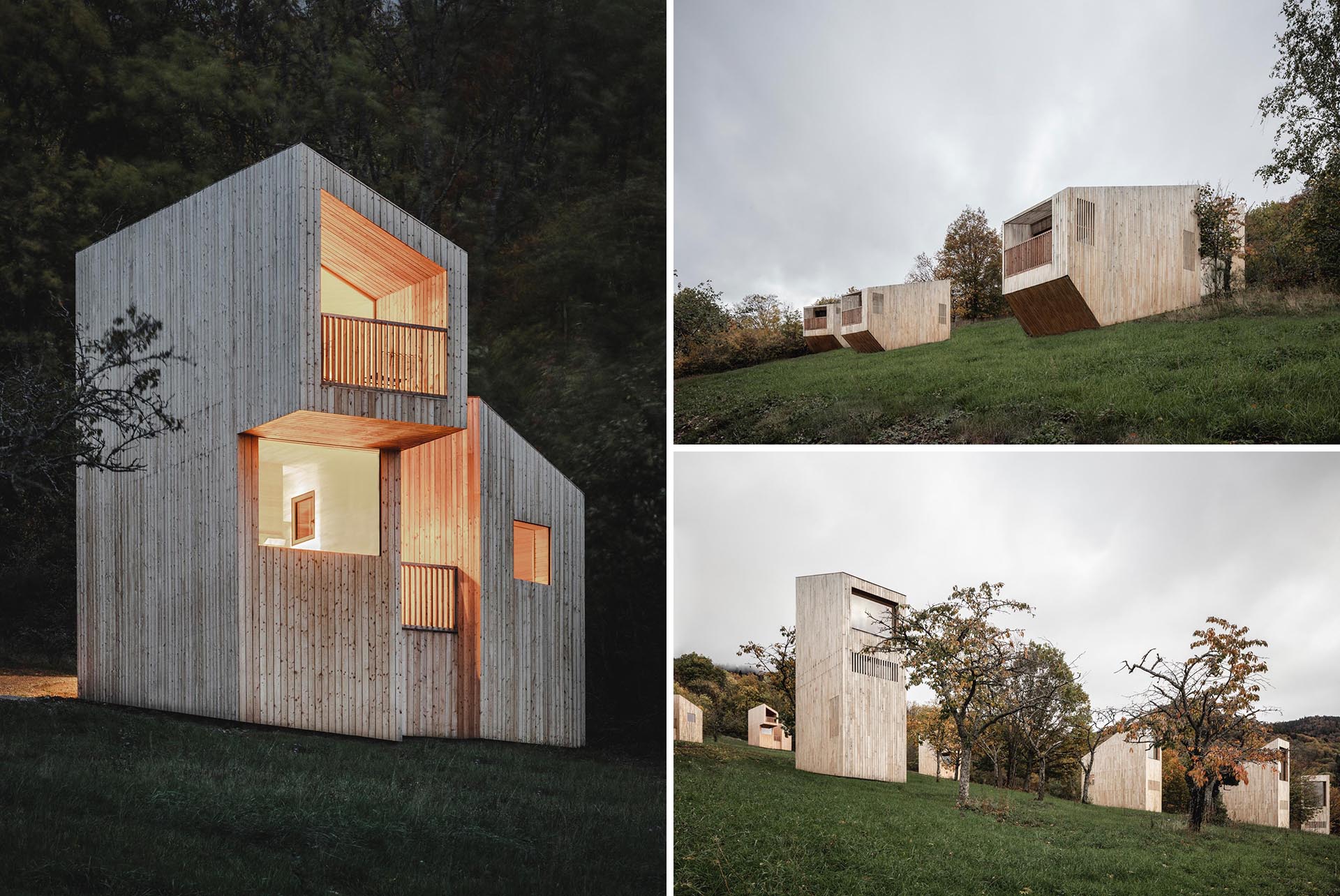
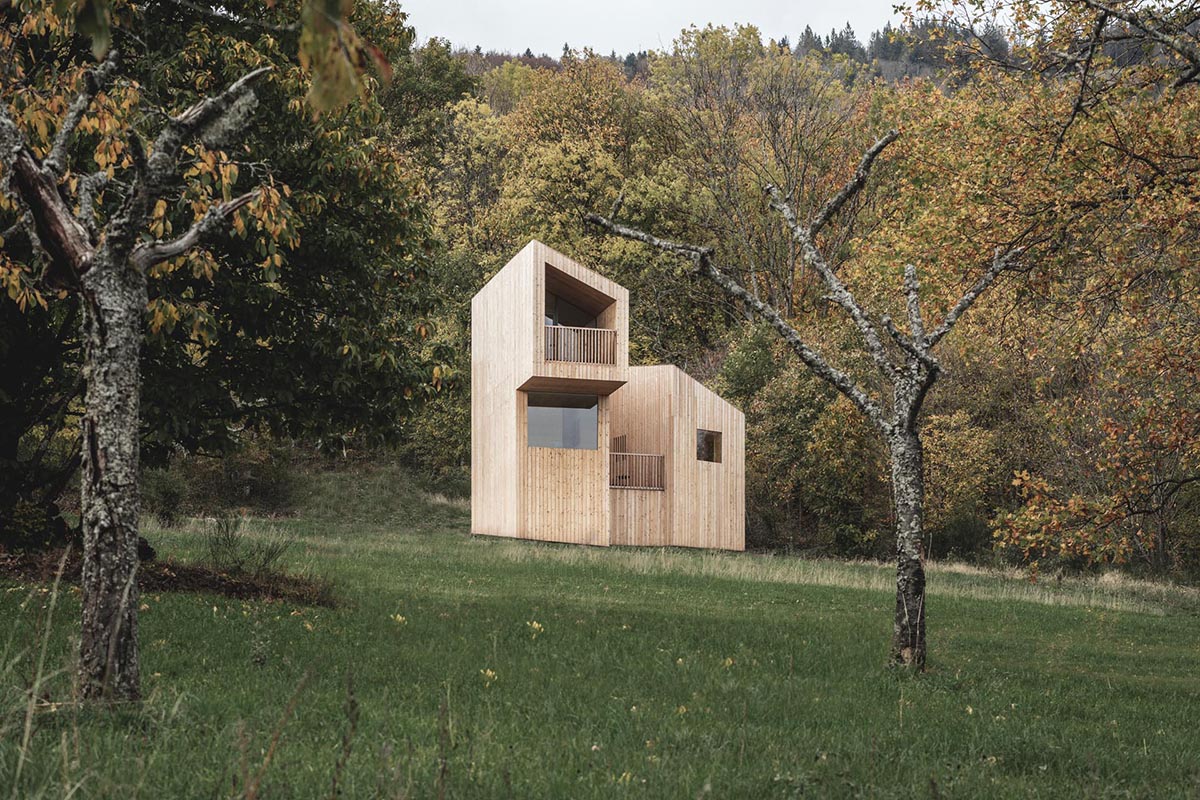
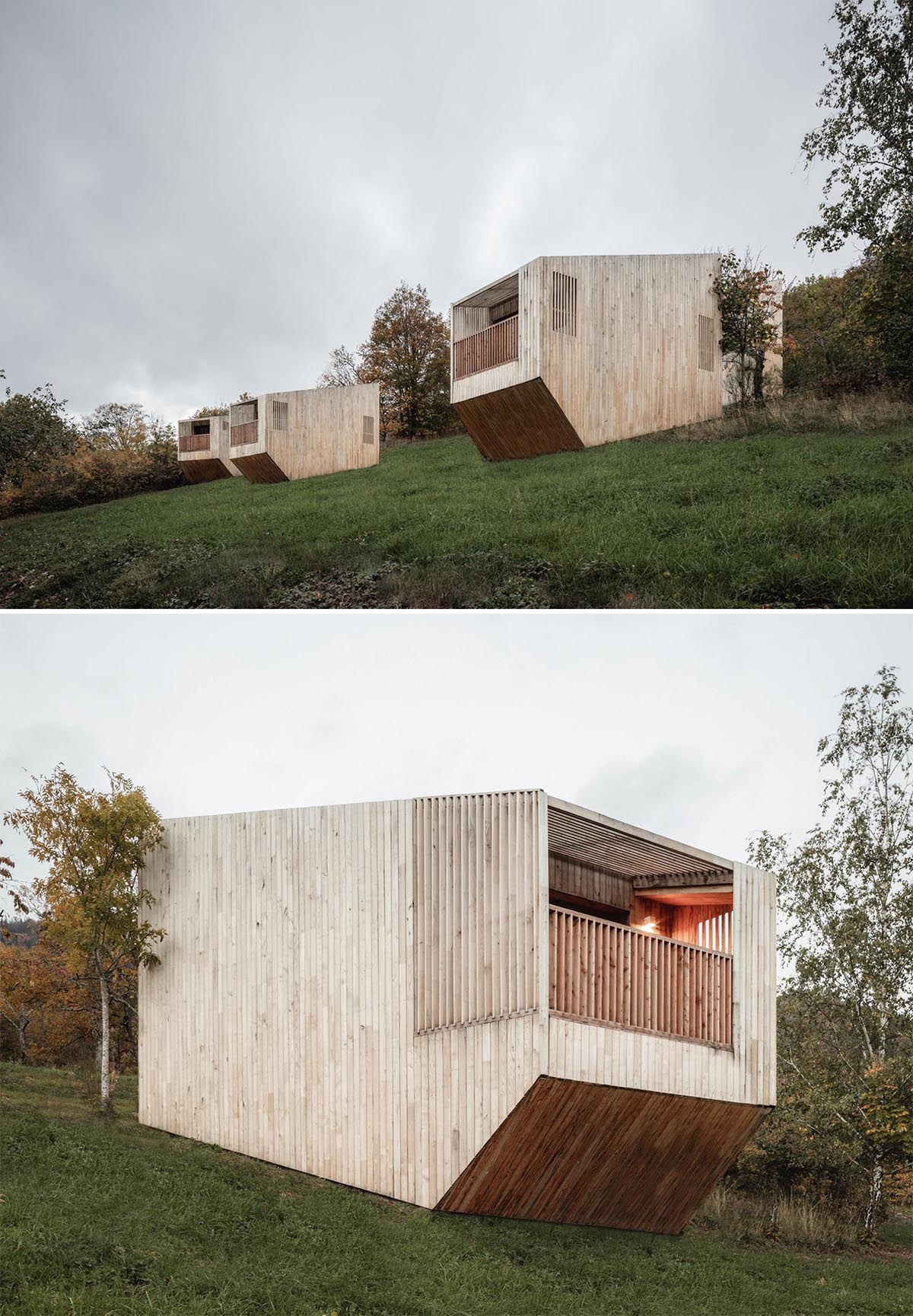
The guest rooms are the cabins themselves. The architects placed them across the hillside like boulders on a slope, spacing them to balance privacy with views. Each cabin stands on stilts and can be removed, so the landscape stays as natural as possible.
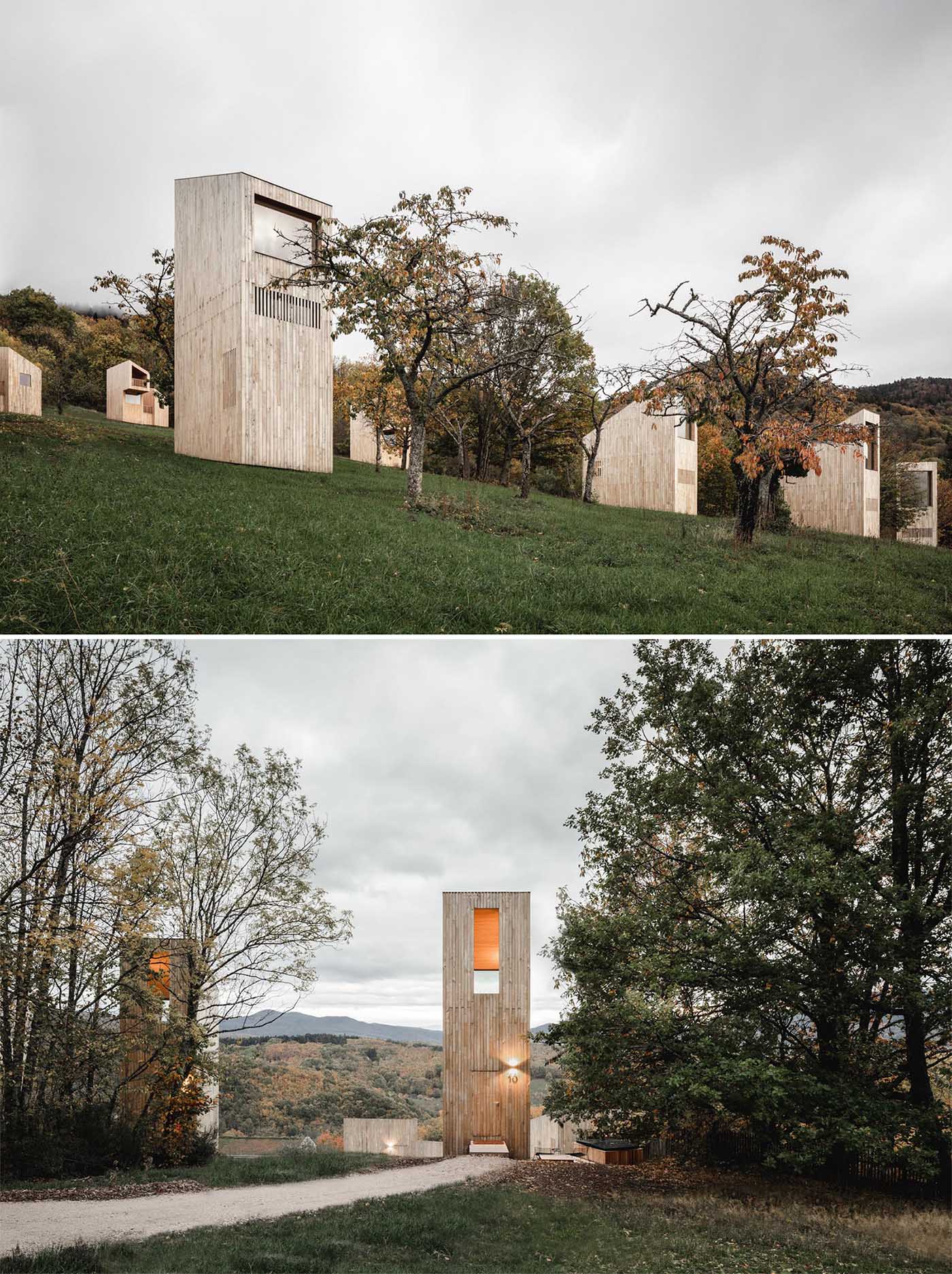
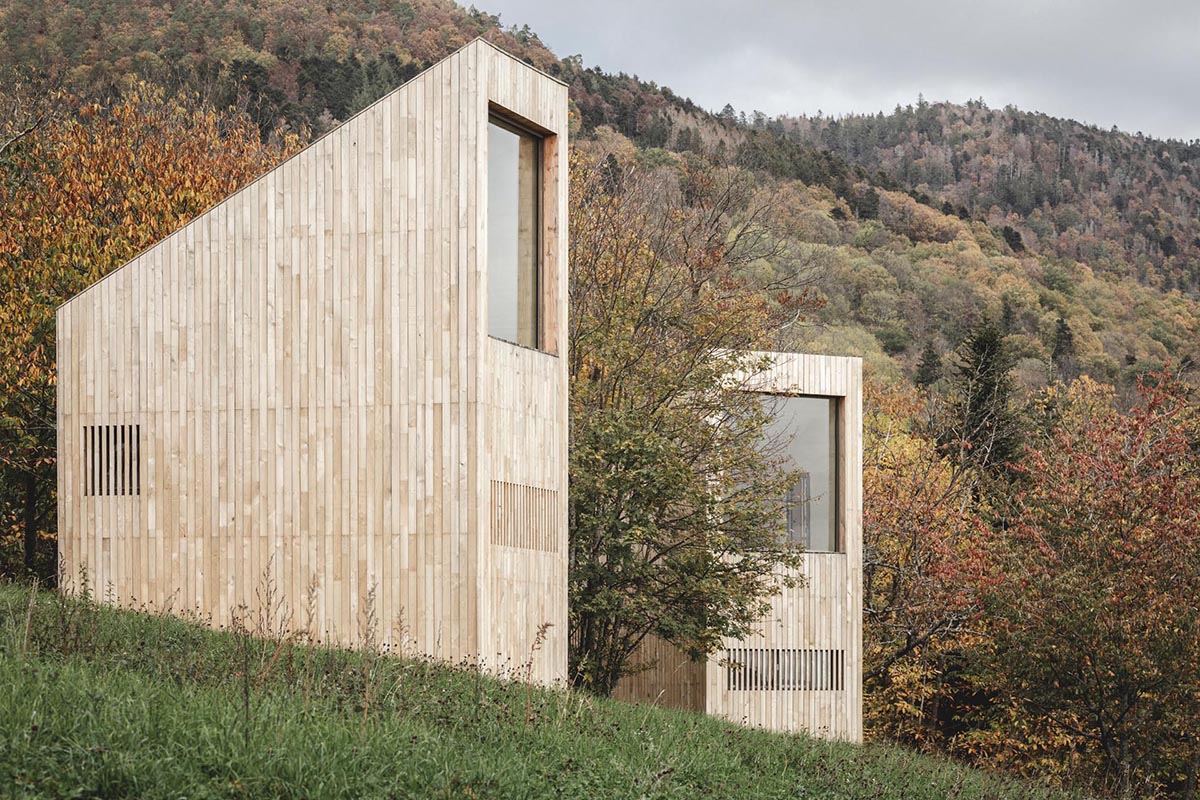
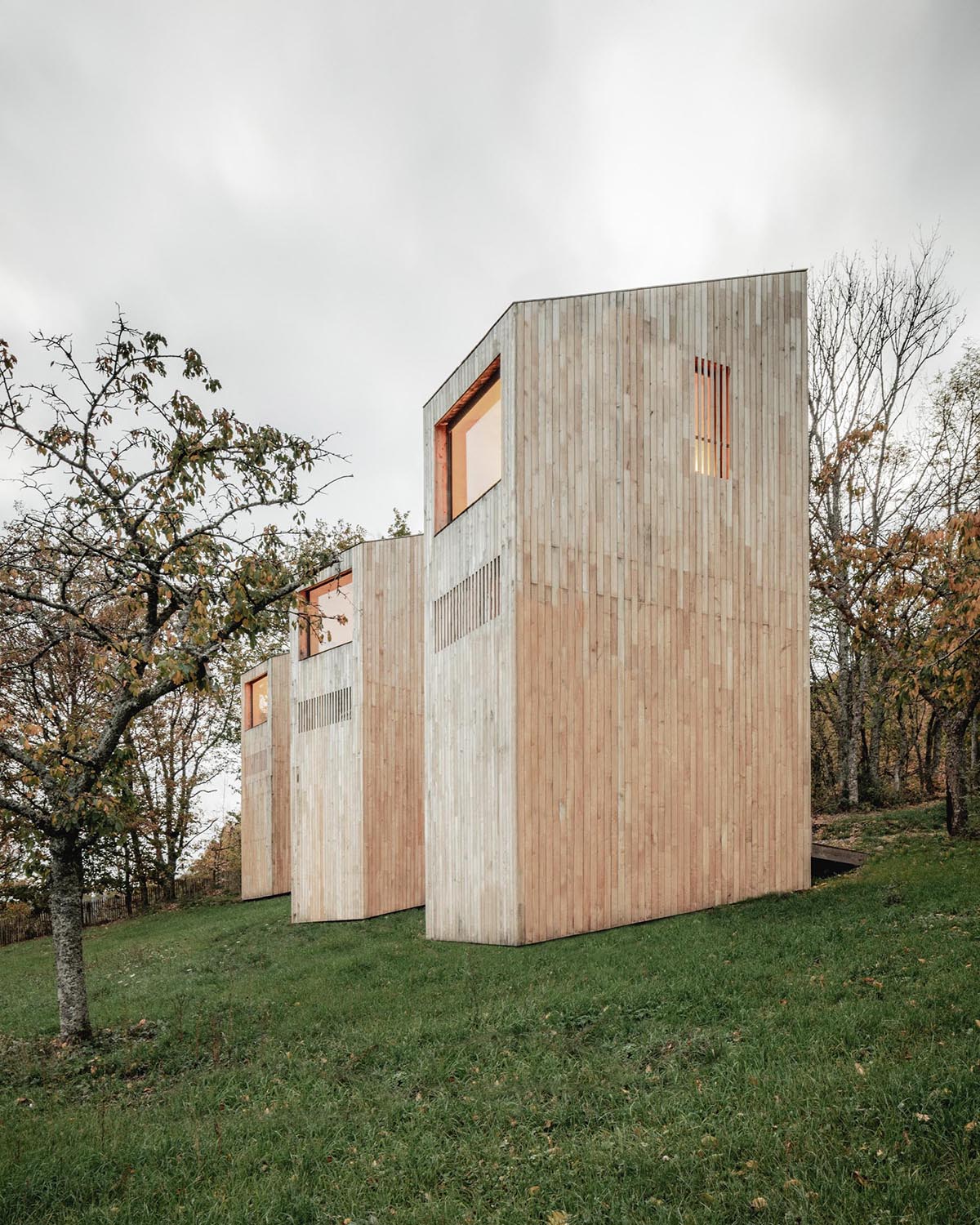
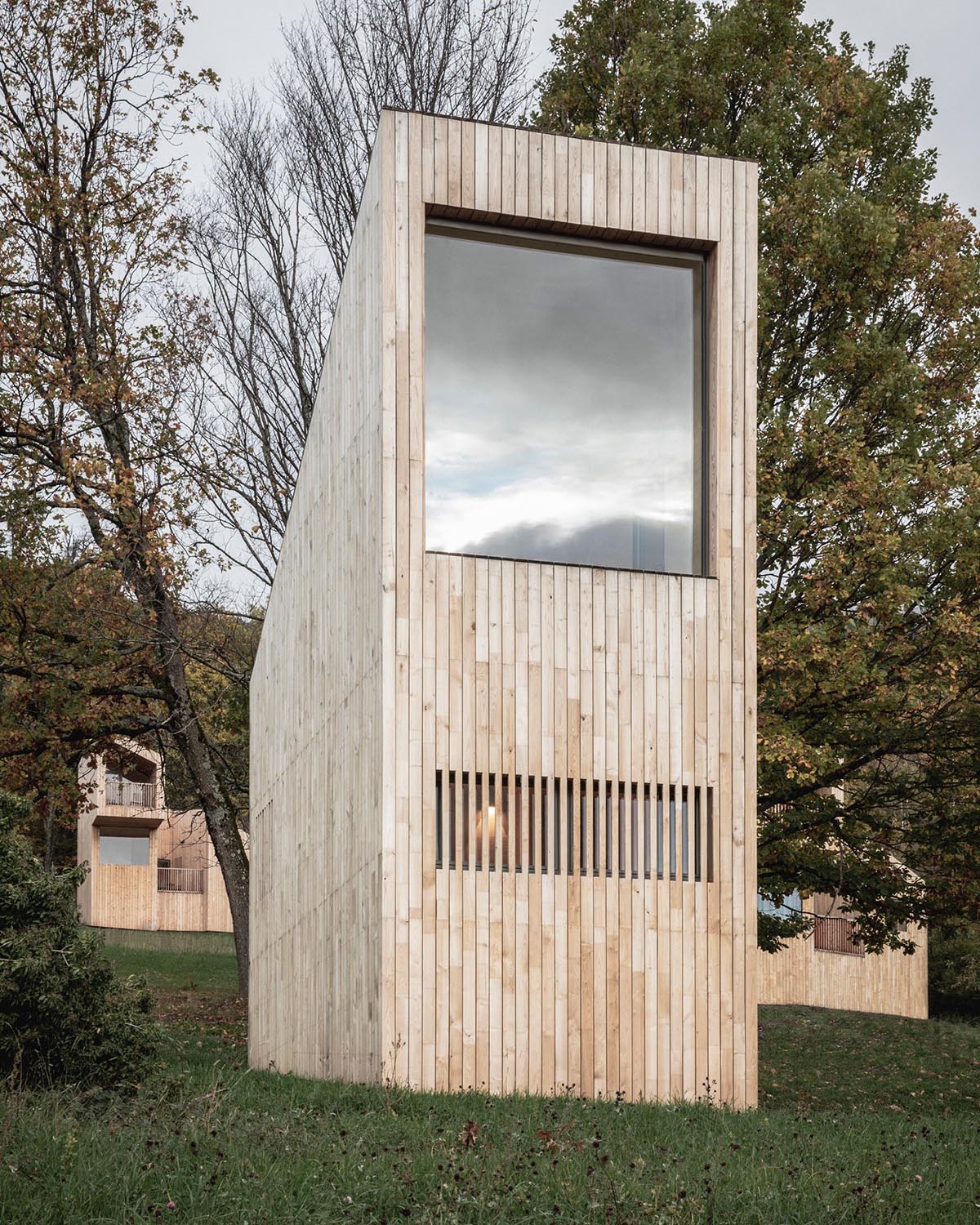
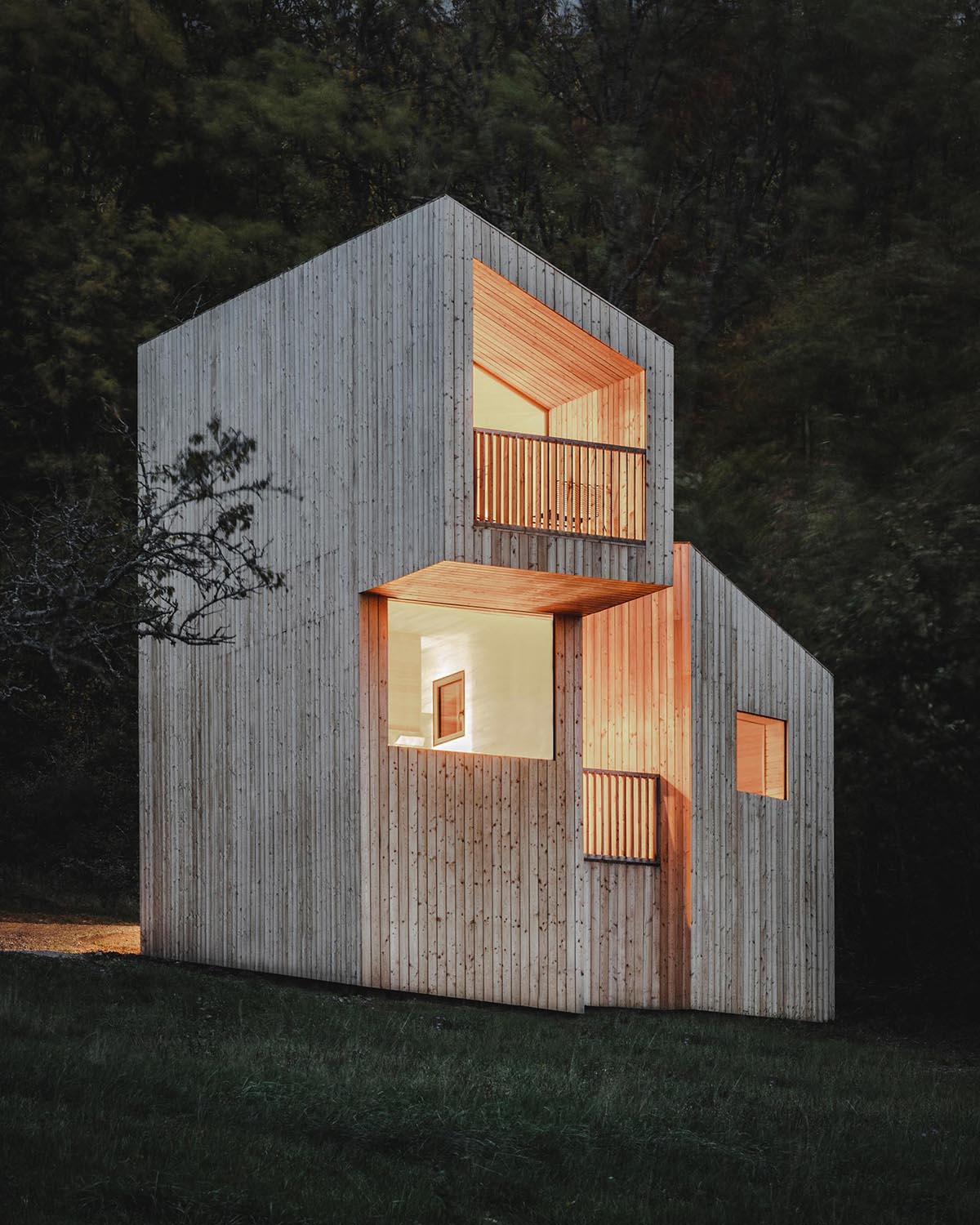
All exteriors are clad in untreated, locally sourced chestnut, cut on the hill opposite the hotel. The only other material on the facades is large areas of glass.
Four cabin types
The cabins, called hytte after the Norwegian word for a small cabin, come in four types:
- Grass: a single-level cabin that is fully accessible.
- Tree and Ivy: tall, slender cabins that combine vertical and panoramic views.
- Fjell: cabins at the top of the hill for families, with sheltered outdoor space.
Interiors in light wood
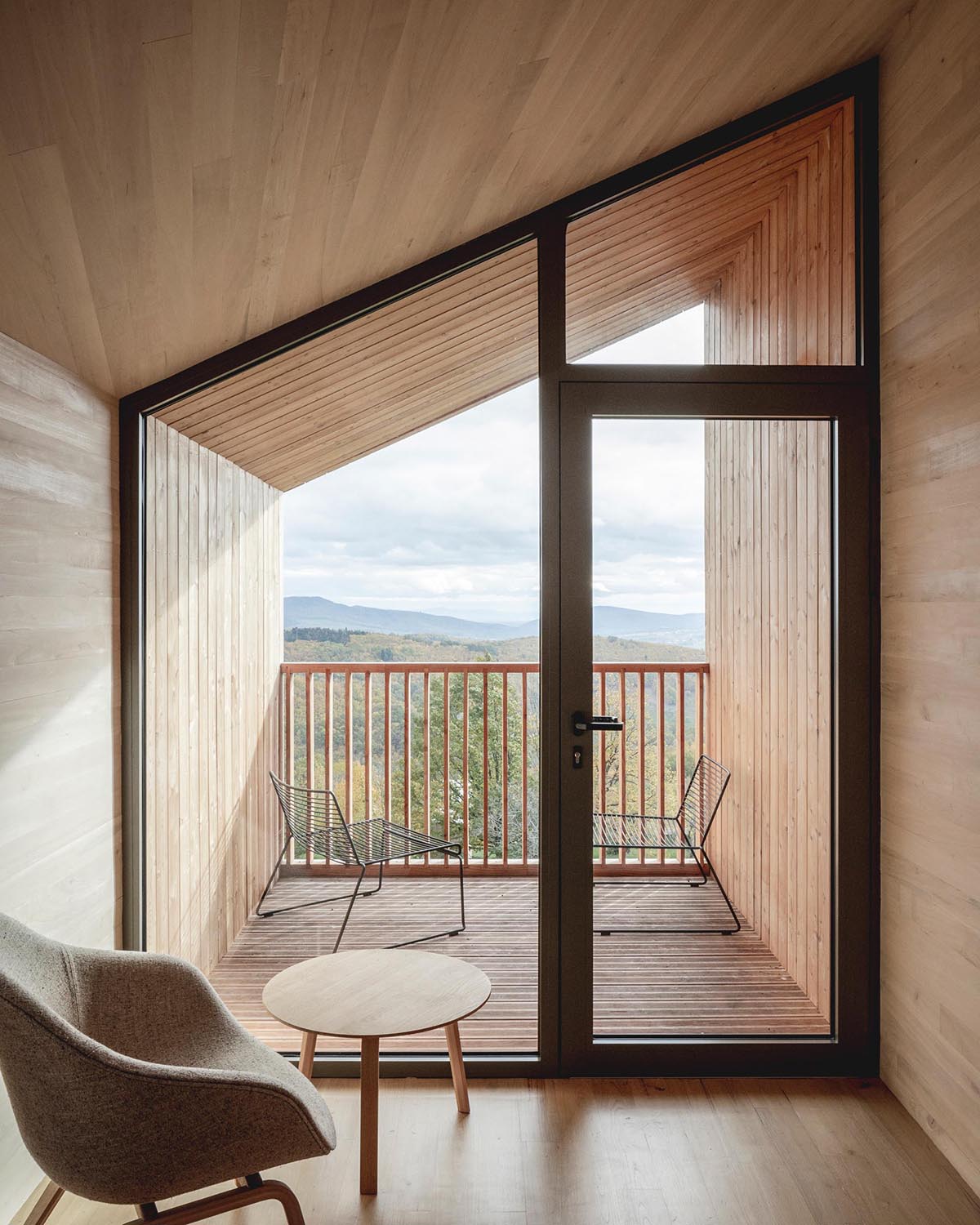
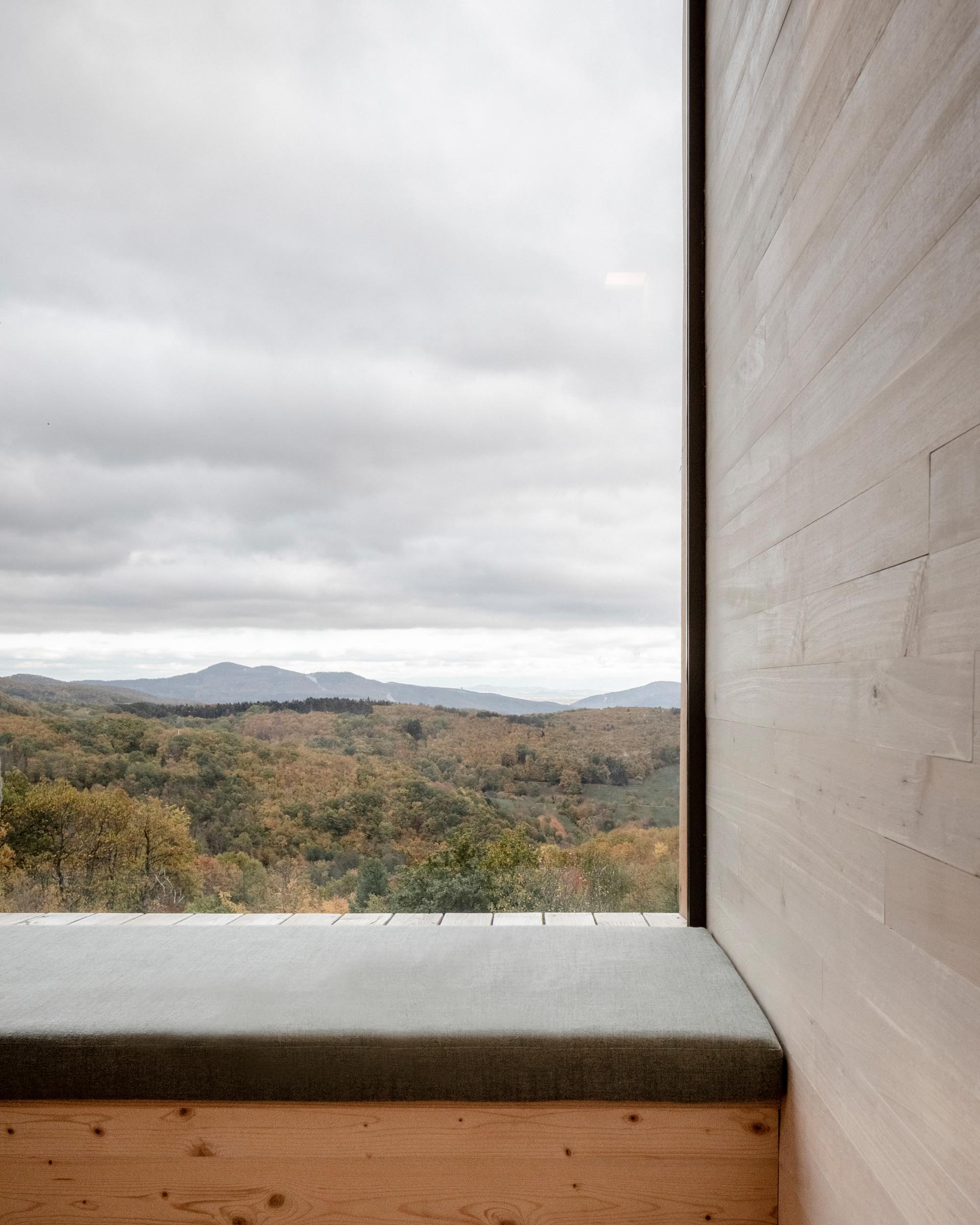
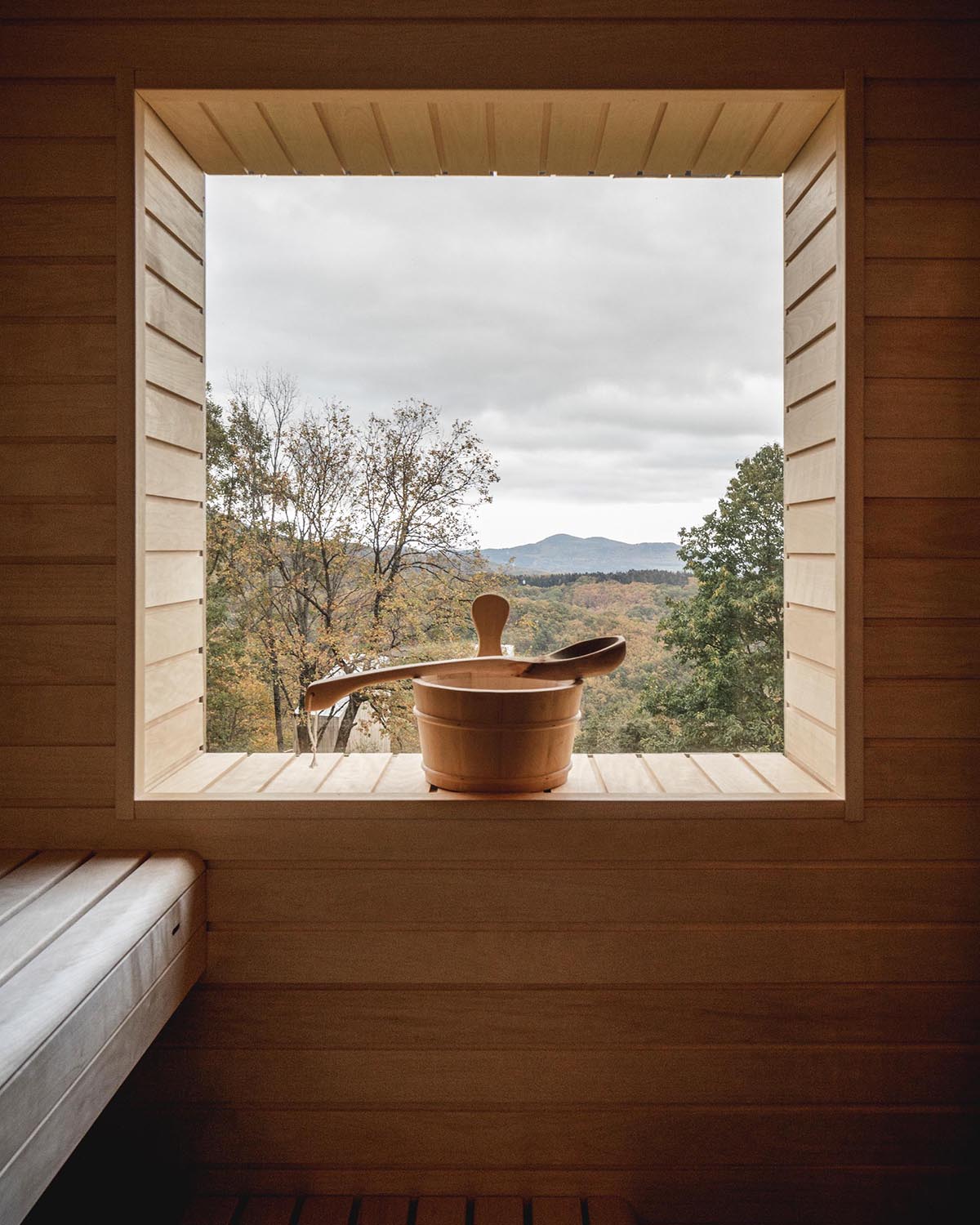
Inside, the cabins are simple and rustic: light-coloured wood, compact built-in furniture, framed views and spatial contrasts. The approach follows the Nordic idea of hygge, a sense of comfort and warmth in a small room. A sauna continues the same palette of pale timber and built-in benches.
Project credits
- Architecture: Reiulf Ramstad Arkitekter in collaboration with ASP Architecture
- Hotel: Breitenbach Landscape Hotel
- Photography: Florent Michel @11h45
- Source: Contemporist