
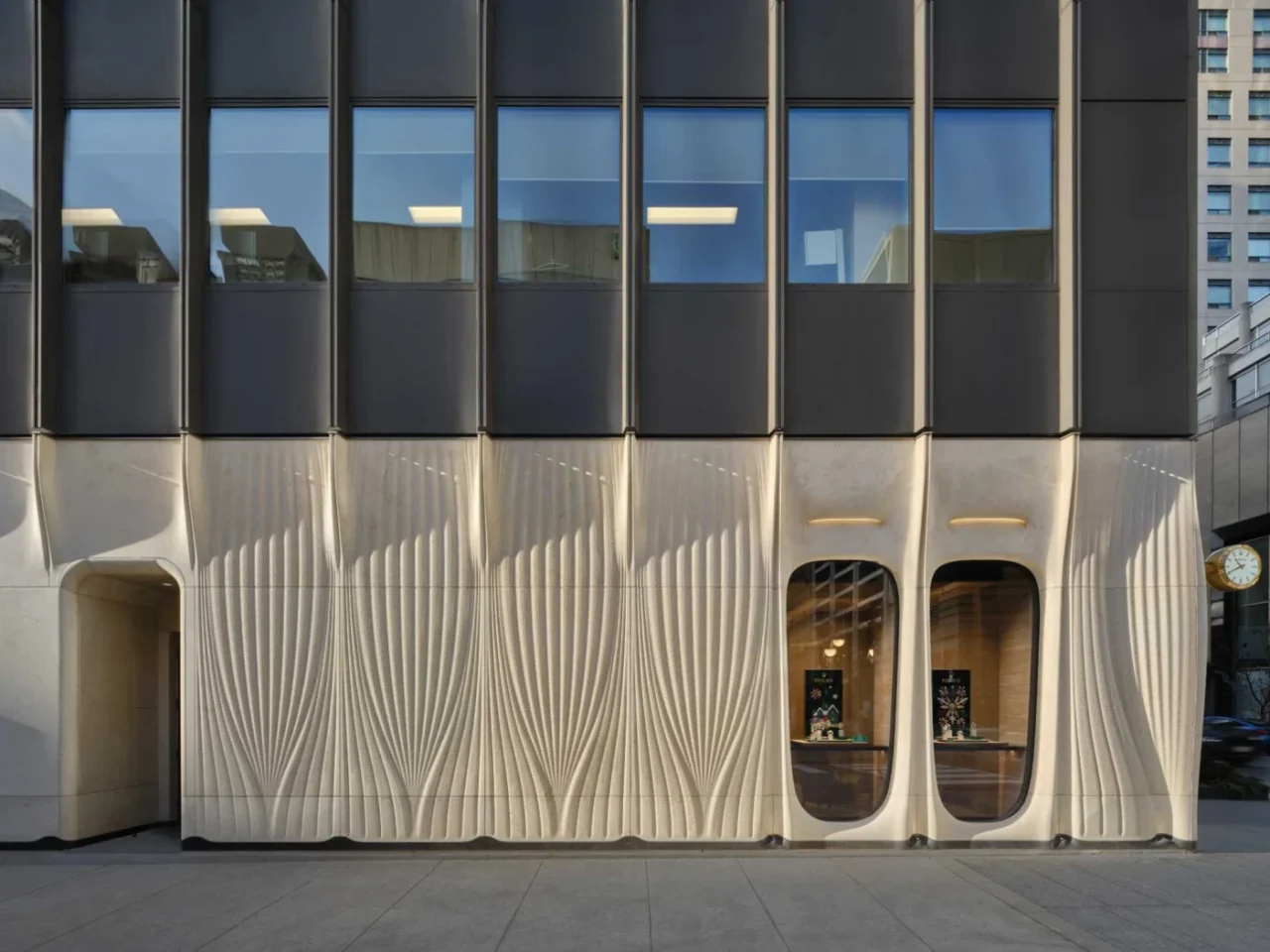
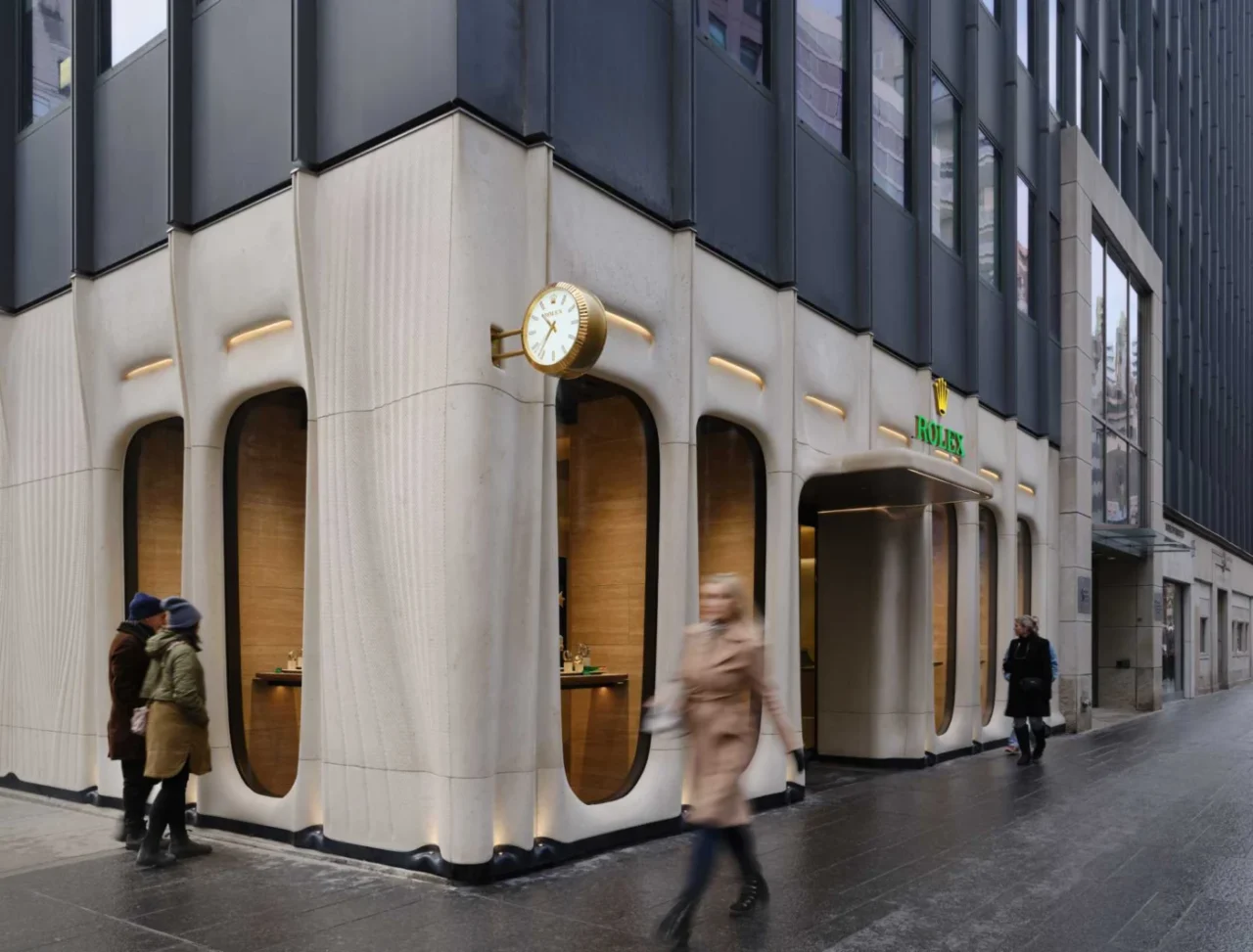
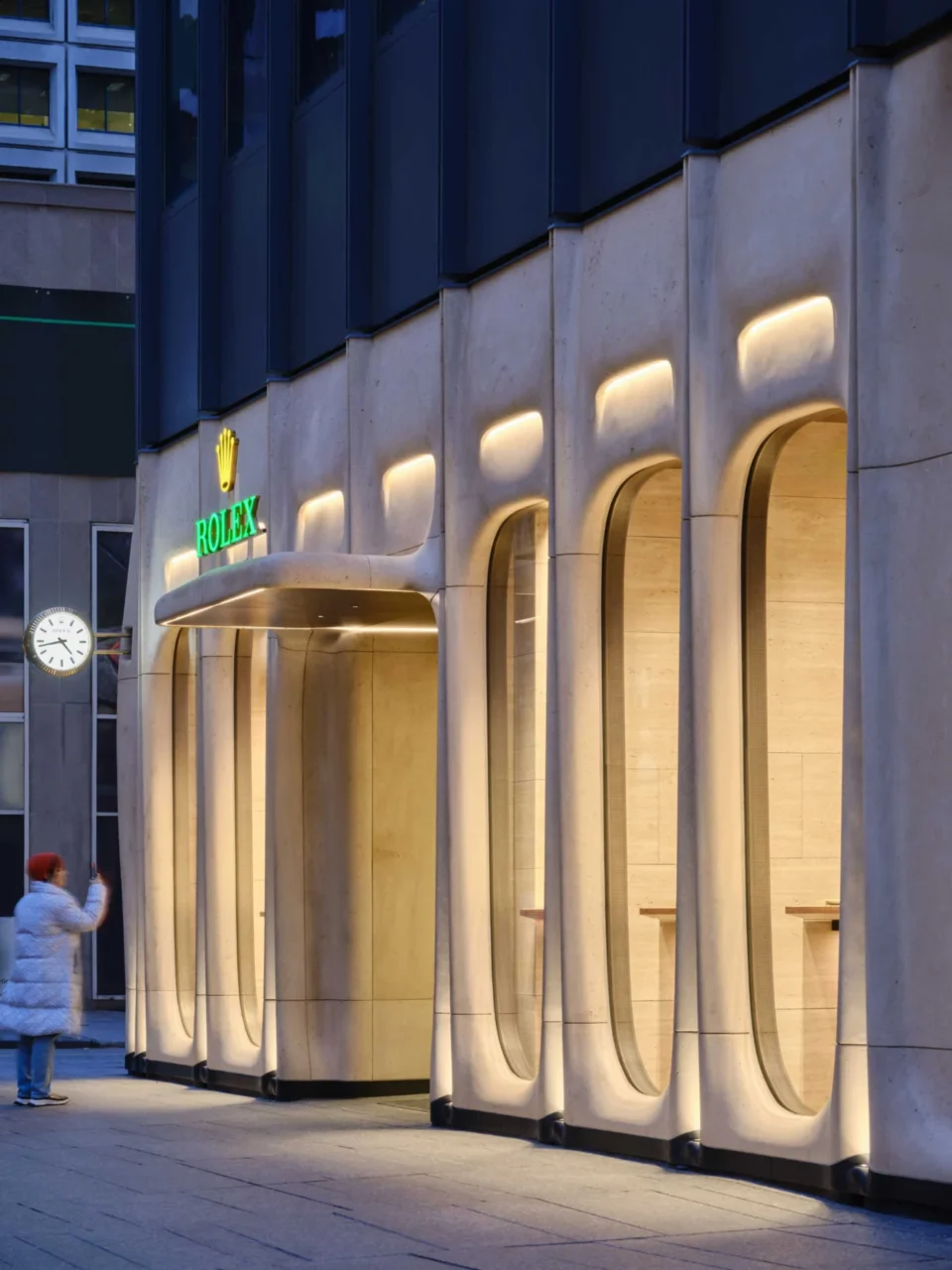
Architecture studio PARTISANS has completed a boutique in Toronto, Canada, owned and run by Royal de Versailles Jewellers. Its most visible feature is a sculptural stone facade that wraps around the street corner.
Designed with computational tools
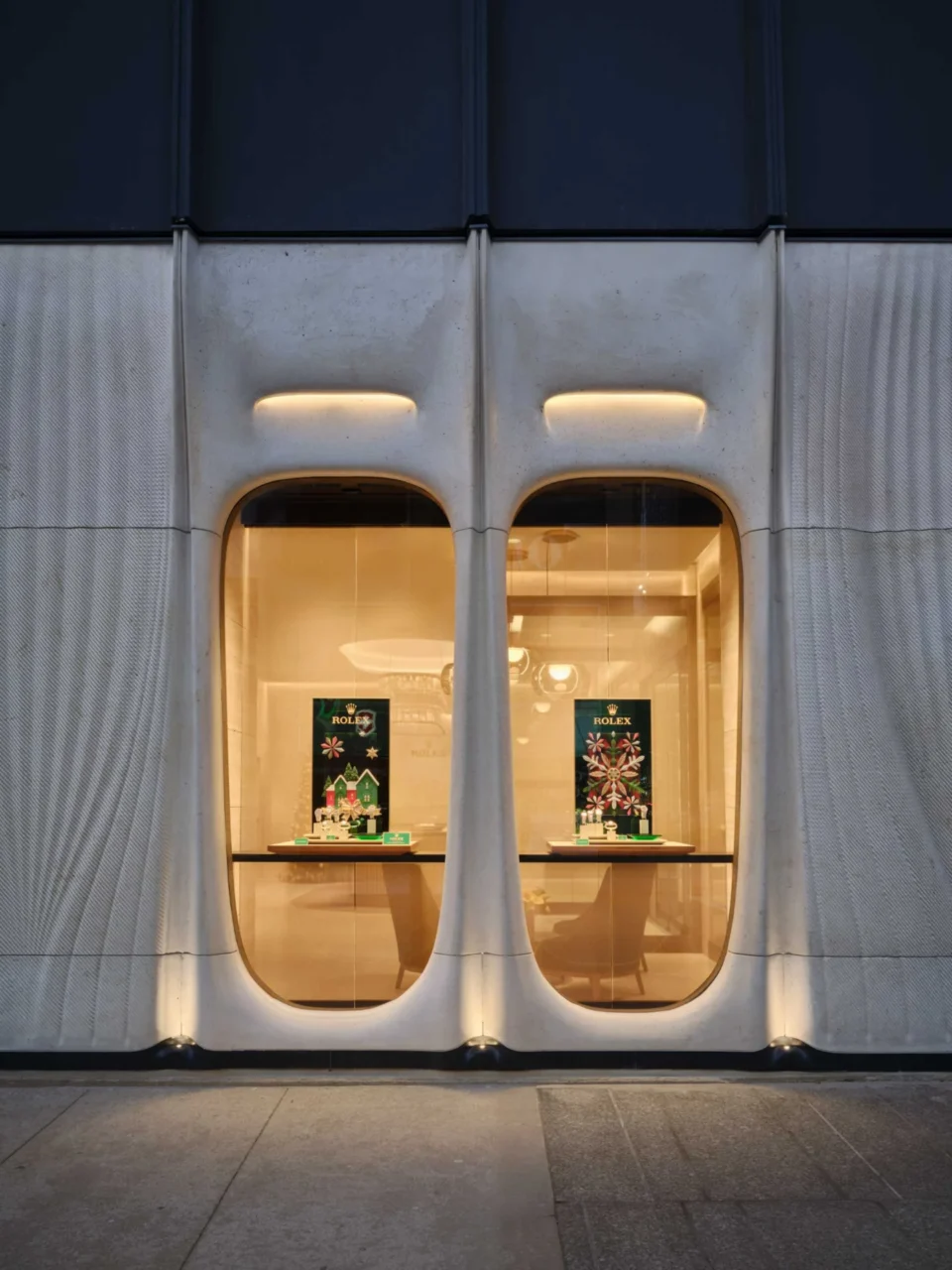
To develop the facade, PARTISANS worked with Italian architect Arturo Tedeschi, using computational design and digital fabrication. The cladding is limestone, cut digitally so that it frames each of the shop windows. Construction company Burnac built the project.

Smooth stone and carved lines
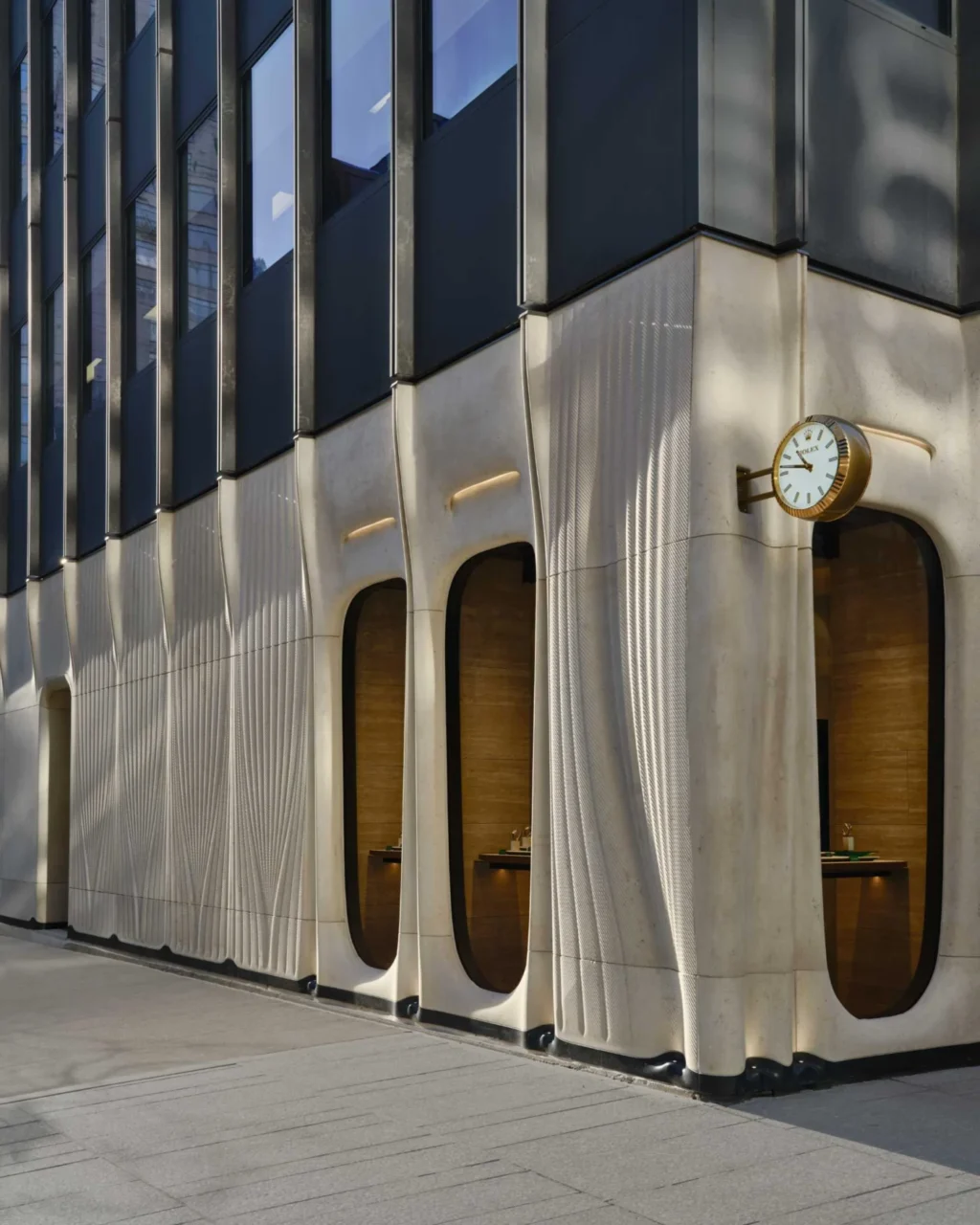
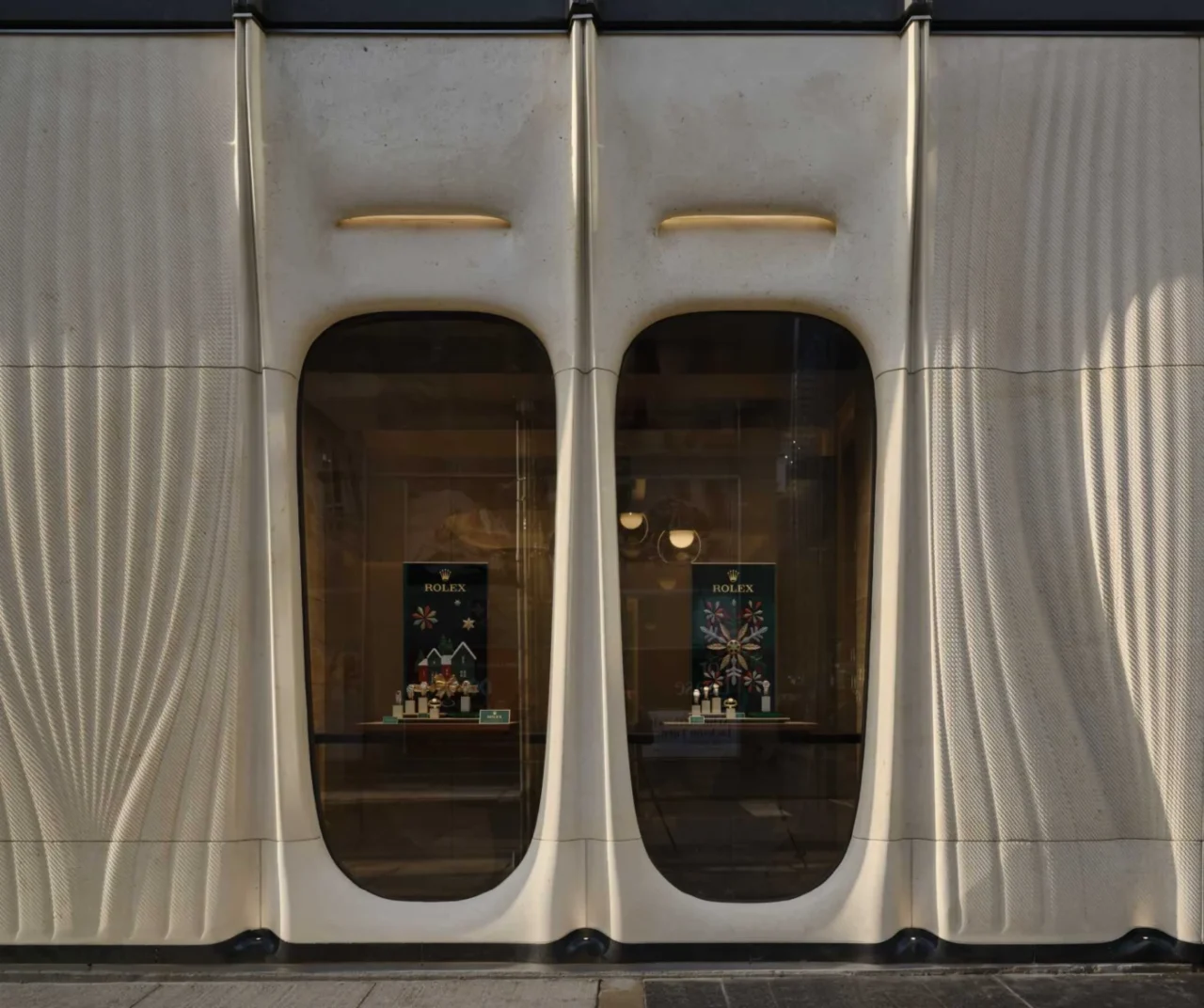
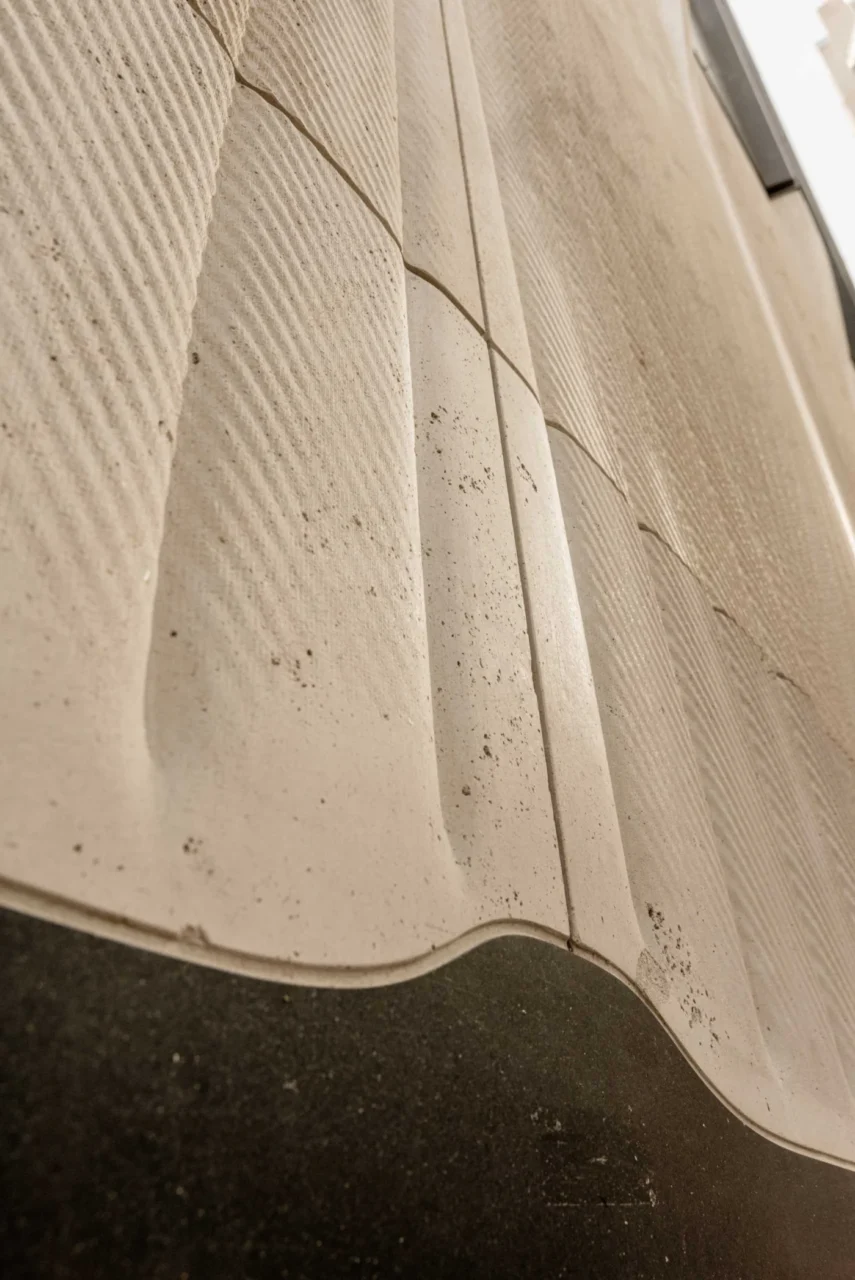
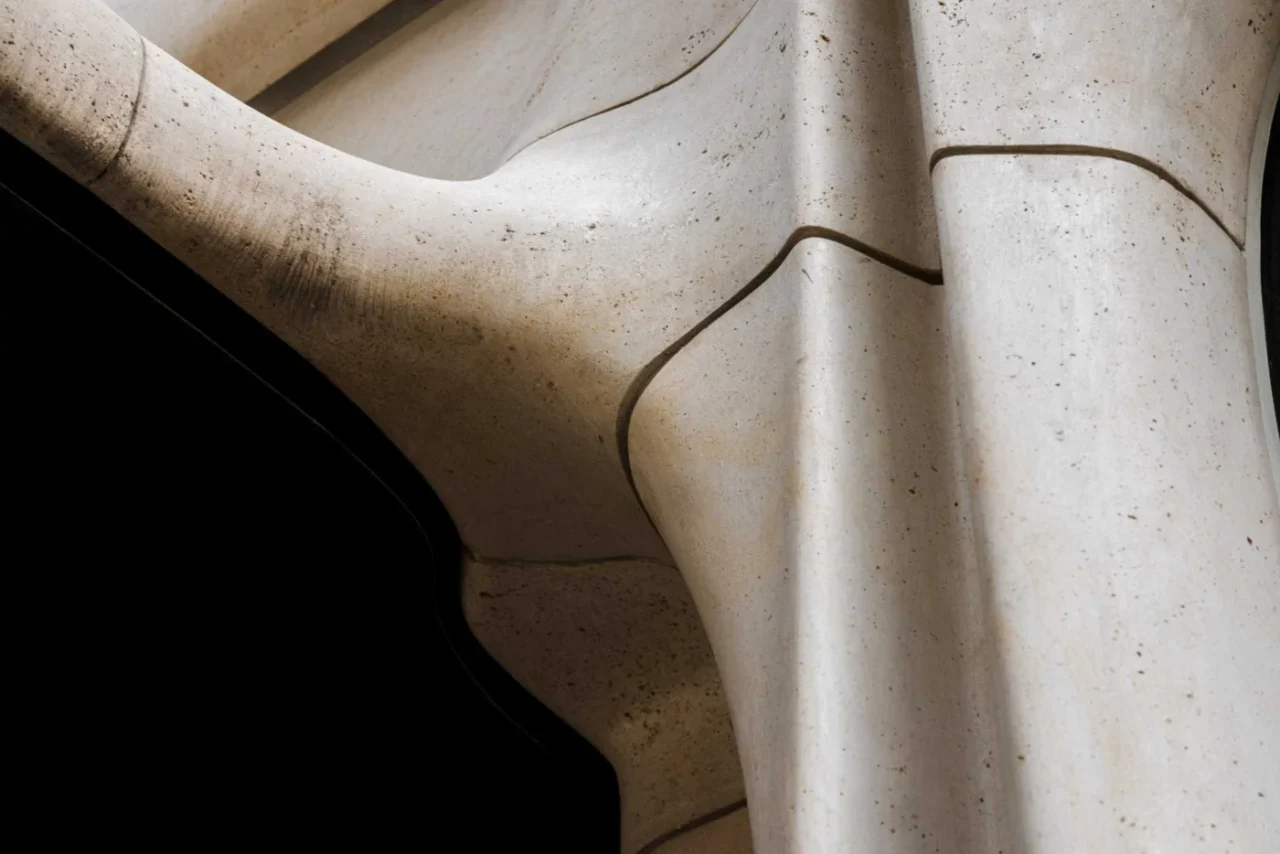
Across the facade, flat areas of stone shift into sculpted ridges left by the CNC tool path. The contrast gives the exterior texture and depth without any added ornament. After dark, lighting picks out the windows, the smooth stone and the interior of the shop.

The close-up views below show the detailing and surface texture of the stone.
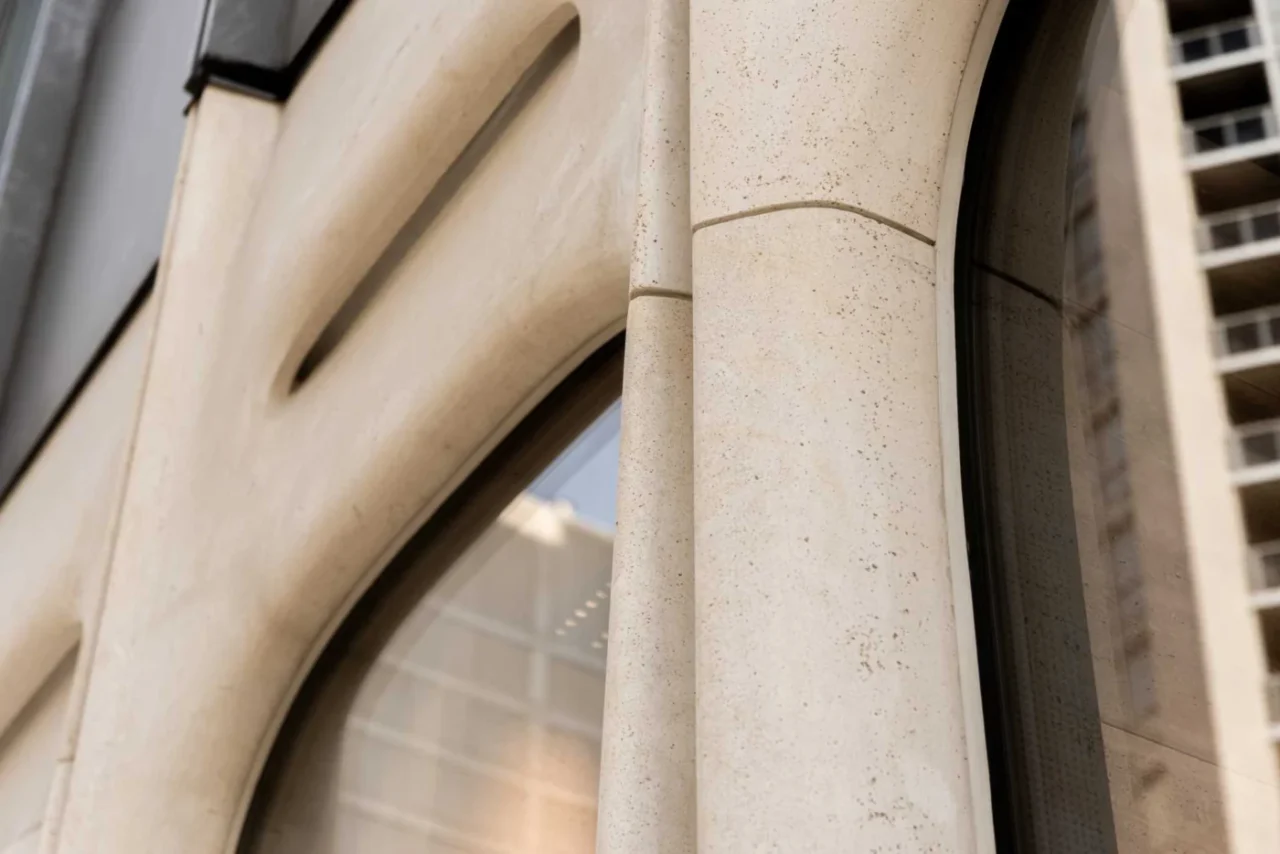
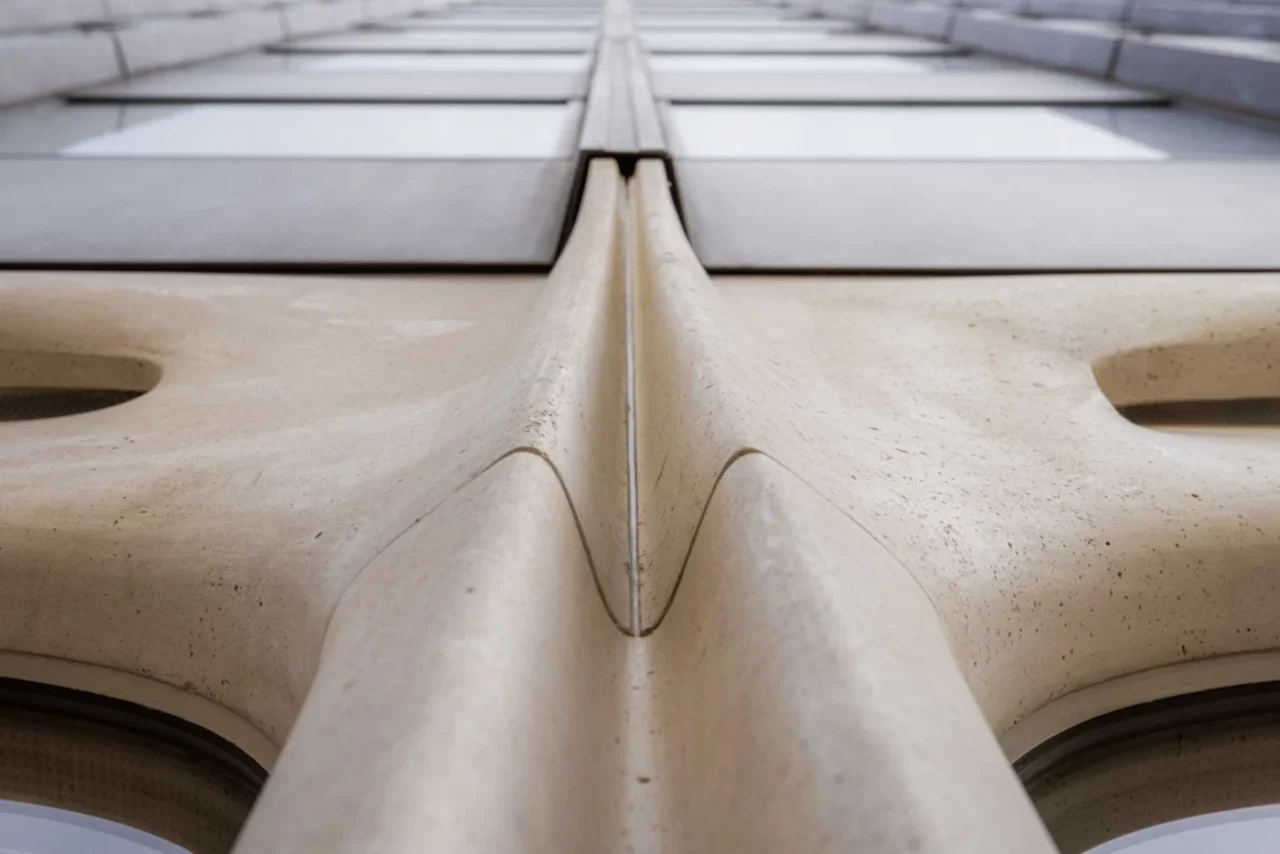
As a general point, digital fabrication lets a single material such as stone carry both a plain surface and a detailed pattern, which can make a small shopfront stand out on a busy street.
Project credits
- Architecture: PARTISANS (Alex Josephson, partner in charge; Ian Pica-Limbaseanu, project lead)
- Client: Royal de Versailles Jewellers
- Site: Toronto, Canada
- Computational designer: Arturo Tedeschi
- Contractor: Burnac
- Structural: PICCO Engineering / Matthew Innocente
- Building envelope: Entuitive / David Thompson
- Code: Senez Consulting
- Photography: doublespace photography; Teddy Shropshire / © PARTISANS
- Source: Contemporist