
Lighting is the discipline where photographs most easily mislead: an overexposed or heavily edited image hides exactly what the jury needs to judge. This guide shows how to present a lighting scheme or a lighting product for IADA so the jury sees the light as people experience it, and understands the design intent behind it.
IADA: Lighting Design Category · Project images and credits · How IADA projects are judged
1. Scheme or product?
Both lighting design for a specific place and lighting products can be entered. The Lighting discipline has 40 nominations: some describe an application, such as facade, retail, healthcare or street lighting, and others a product type, such as pendants, downlights or control systems. Lighting also appears in Architecture (Lighting, Facade & Building Envelope Design), Interior (Lighting & Fixture Design) and Landscape (Lighting Design for Landscapes).
2. Presenting a lighting scheme
- Show the space at night and, where relevant, in daylight, so the jury can compare.
- Explain the lighting concept for each zone or each step of the visitor's route.
- Include a diagram or plan that shows where the light sources are and what they light.
- Use photographs that match what the eye sees; avoid heavy editing.
- Describe light sources, control and energy decisions where they matter for the concept.
3. Presenting a lighting product
- Show the fixture itself, from several angles and switched on and off.
- Include details of materials, joints and the light source.
- Show at least one real installation, so the jury can see scale and effect.
- Give the key specifications: dimensions, light source, power and colour temperature.
State the status accurately: built, manufactured or concept. Credit the full team, including the architects and interior designers you worked with.
4. What recent Platinum winners show
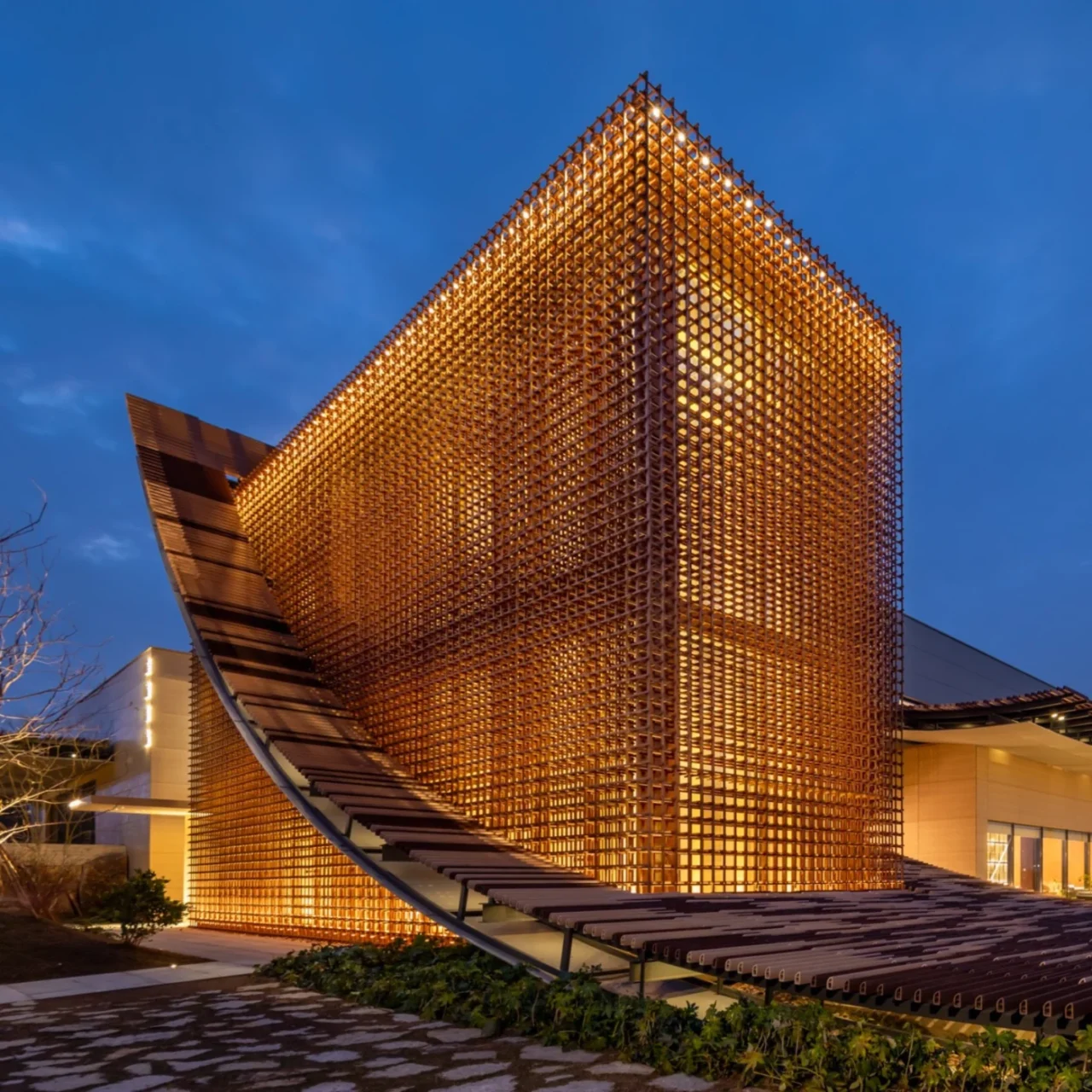
- China Merchants Shekou Nantong Heyuan by Music of Architects, China (Architectural and Facade Lighting, IADA 2026). The description names one principle, concealing luminaires within structural shadows, and explains it: custom linear lights set into the timber gaps, narrow side light across ceramic louvers, precise optical control so light does not escape to the sky, and low brightness to avoid disturbing wildlife. It also describes the visitor's walk as a sequence. Lesson: one principle, explained through specific techniques.
- Afangora by LOFTLIGHT, Poland (Wall and Sconce Lighting, IADA 2025). A product entry that explains its inspiration, the circles of the painter Wojciech Fangor, and then gives the specifications: a diameter of 70 cm, a height of 7 cm and a 14 W LED source at about 3000 K. Lesson: for a product, pair the idea with hard data.
Before you submit
- The images show the light as it is experienced, without misleading editing.
- The concept is explained zone by zone, or the product's idea in one sentence.
- A plan or diagram shows where the light comes from.
- Products include specifications and a real installation.
- The status and credits are accurate.
Lighting presentation FAQ
Can I enter a lighting product rather than a project?
Yes. The Lighting discipline covers luminaires, lighting products and control systems as well as lighting design for buildings, interiors, landscapes and events.
Which nomination fits facade lighting?
Architectural and Facade Lighting in the Lighting discipline. If the facade itself is the main subject, the Architecture discipline also includes Lighting, Facade & Building Envelope Design.
Should I edit night photographs?
Keep editing to a minimum. The jury is judging the light, so images should show it as people actually experience it.
Enter your lighting project in IADA 2027 Advance registration is open until 18 December 2026: $170 for the first project.