
By Eleni Stefania Kalapoda, IADA 2027 Grand Jury

My working life unfolds in two rooms. In the first, I design: buildings, venues and fragments of city, from the opening sketch to the final coordination drawing. In the second, I judge, deliberating with fellow jurors over what makes a work of architecture genuinely good. Each room sharpens the other: the drawing board keeps my judgment honest, and the jury table keeps my drawings demanding.
I began my professional experience through collaborations with the Renzo Piano Building Workshop team on the Stavros Niarchos Foundation Cultural Center, and later worked at Foster + Partners (KSIA) and Perkins Eastman on projects at the building and city scale. Those years taught me that even the most ambitious buildings are won or lost in ordinary moments: the walk from the street to the door, the place where a traveler pauses, the corner where a family waits. Long after a jury has spoken, architecture is judged by the people who live with it.
What a juror sees
This year I sat on the FRAME Awards Grand Jury, judged the WAN Awards and TheStadiumBusiness Design & Development Awards, and served as sustainability expert on the RIBA Awards jury that assessed Lion Green Road, the council-led housing scheme on which the 2026 RIBA Stirling Prize has since been conferred.
One memory from that jury stays with me. On our site visits, we assessed Lion Green Road and, on the Aylesbury estate, the Harold Moody Health Center, since honored with Gold at the Building Better Healthcare Awards. One is a home, the other a place of care, and neither relies on spectacle. What I found myself returning to, in both, was the threshold: how each building meets its street and square, how a front door can offer dignity, and whether a waiting area can feel like a public room rather than a corridor. Standing in those spaces, I understood that some of the most consequential civic architecture of this decade may be the everyday home and health center rather than the cultural landmark.
Across every jury I have served on, the strongest entries share that same quality: not spectacle but coherence, with space, material and use flowing from a single, disciplined set of decisions. The projects that rise to the top are rarely those that photograph best; they are those in which every choice can be traced back to the people it serves. That is what I will seek as a member of the IADA 2027 Grand Jury. A strong entry explains what it does. A winning entry demonstrates, with conviction, how it changes the lives of those who use it.
Venues shaped around real journeys
Much of my recent work considers how women athletes and fans actually experience a venue. One of my own concepts is a multi-purpose timber and ETFE stadium: glue-laminated timber ribs carry a single layer of ETFE that shades the bowl while drawing daylight onto the pitch; a compact, right-sized seating bowl keeps the atmosphere full; and public and premium spaces wrap the field so that the venue lives well beyond matchday. The brief began not with a silhouette but with questions. Where does a family wait? How long is the walk home after an evening match? How close is every seat to a well-lit facility? A venue that answers such questions with care becomes a place people choose to return to.

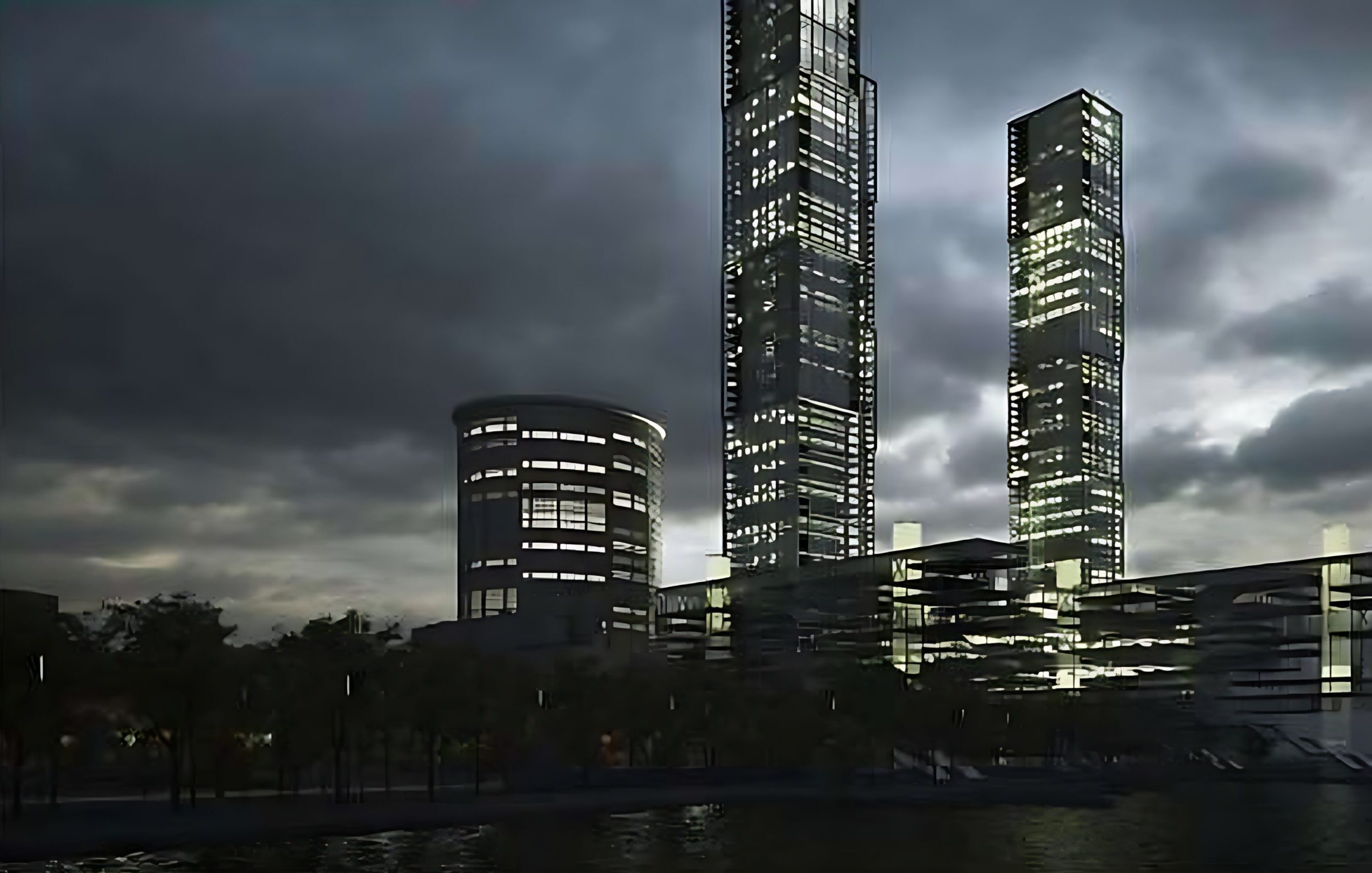
The same conviction runs through my urban work. Urban Artifacts, a study for the Manhattan waterfront, proposes an office and housing cluster that reconciles the city's grid with the tower-in-the-park typology, giving rise to a new collective housing and civic typology at the water's edge. It is an argument that density and generosity need not be opposites.

AI as instrument, never author
As a member of the Autodesk University Advisory Council, I follow closely how computation is reshaping our discipline. AI excels wherever results can be verified quickly: testing layouts, forecasting flows, comparing options by the hundred. It must never be mistaken for judgment. The model proposes; the architect decides. Juries, too, will increasingly ask how a design was reached, and whether the human intelligence behind it remains legible in the result.
Why juries matter
Awards are often read as a celebration of what has been achieved. I see them as a quiet signal of what the profession will value next. When a jury elevates a modest housing scheme above a striking object, or a venue that welcomes families above one that merely photographs well, it tells a generation of architects what excellence now means.
It is an honor to serve on the IADA 2027 Grand Jury, and I look forward to discovering the projects that will define that measure anew.
Eleni Stefania Kalapoda is a New York-based architect and urban designer; she began her professional experience through collaborations with the Renzo Piano Building Workshop team on the Stavros Niarchos Foundation Cultural Center, and later worked at Foster + Partners (KSIA) and Perkins Eastman on projects at the building and city scale. She served as a sustainability expert on the RIBA Awards jury that assessed Lion Green Road, winner of the 2026 RIBA Stirling Prize, sits on the FRAME Awards Grand Jury and the Autodesk University Advisory Council, contributes to the USGBC's LEED v5 and the ASCE/SEI 24 flood-resistant design standard, and is a 2026 Beverly Willis Architecture Foundation Emerging Leaders Fellow.
Meet the full IADA 2027 Grand Jury.