 International Architecture & Design Awards 2026
(de)luxe Living: The Afterlife of Plumbed Space
Master of Architecture Thesis Studio
Renovation, Restoration & Adaptive Reuse
(de)luxe Living: The Afterlife of Plumbed Space — IADA 2026 award
(de)luxe Living: The Afterlife of Plumbed Space received Gold Winner recognition at the International Architecture & Design Awards 2026 in Renovation, Restoration & Adaptive Reuse. Project status, design team and credits are listed alongside the presentation.
About the project
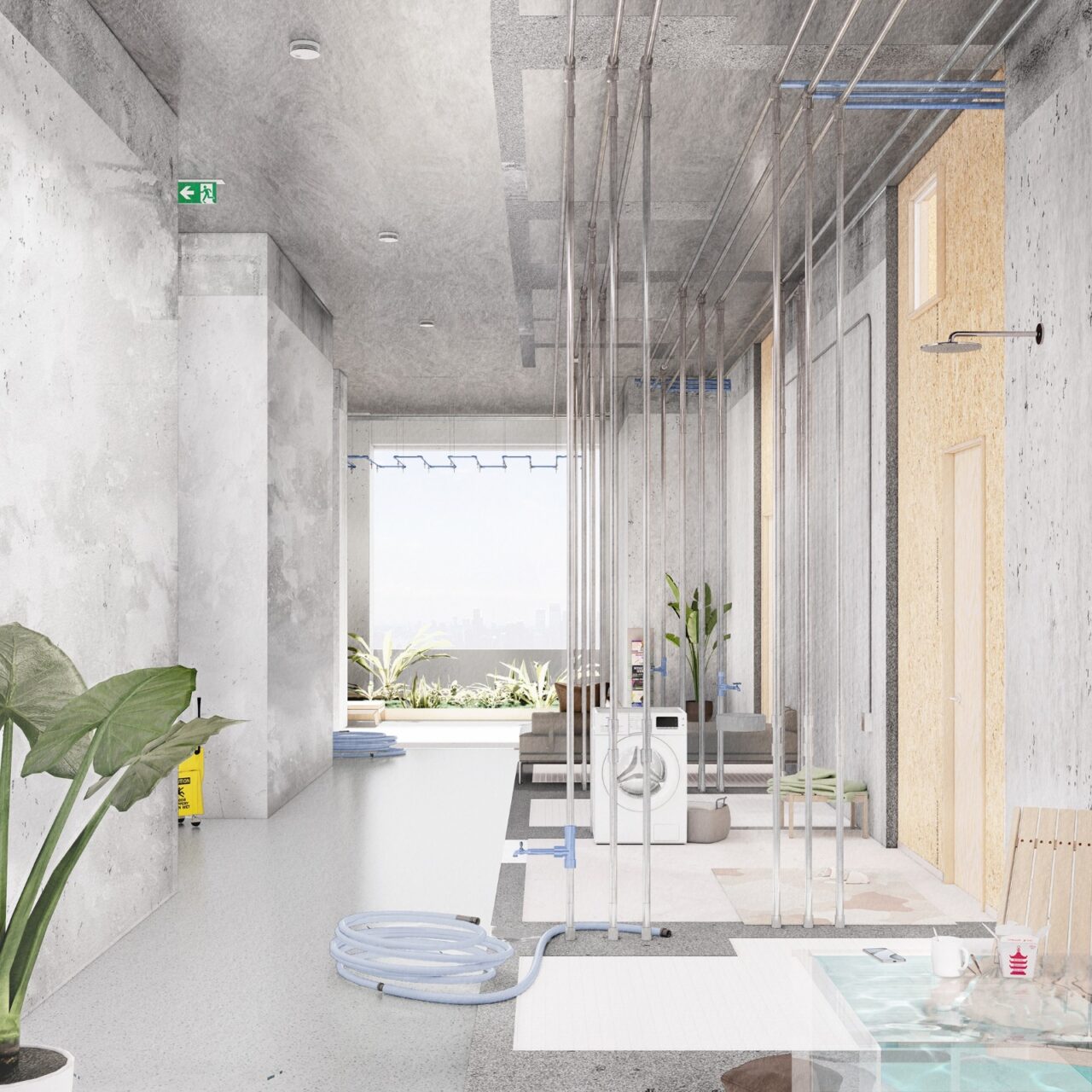
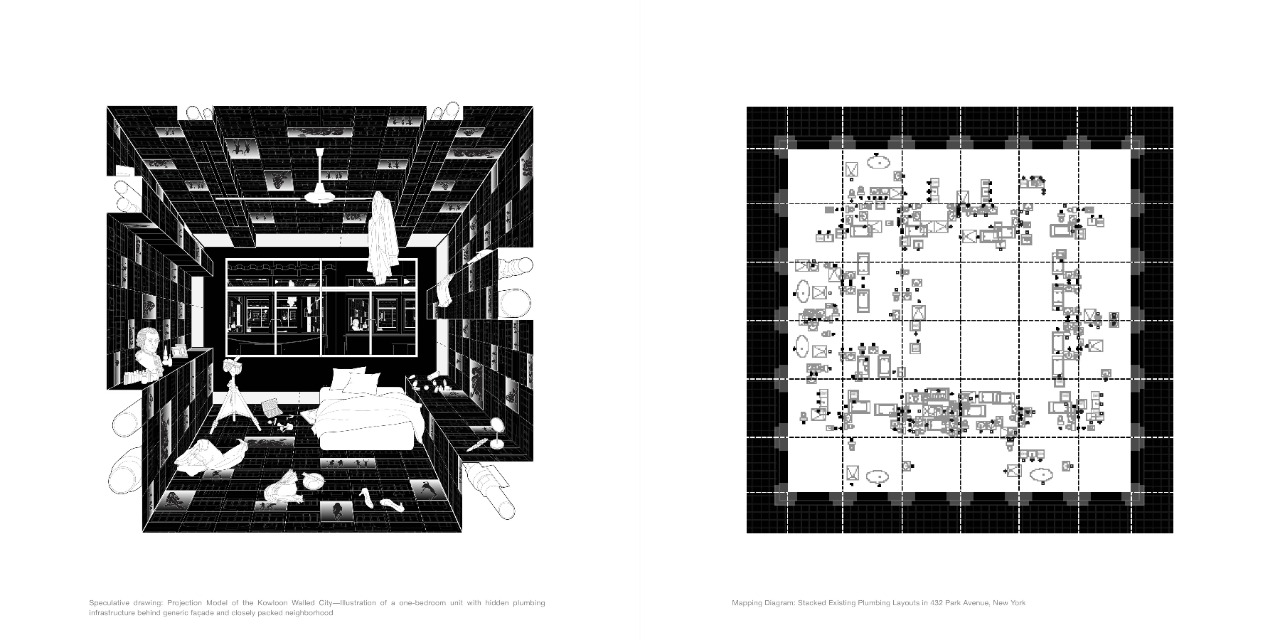
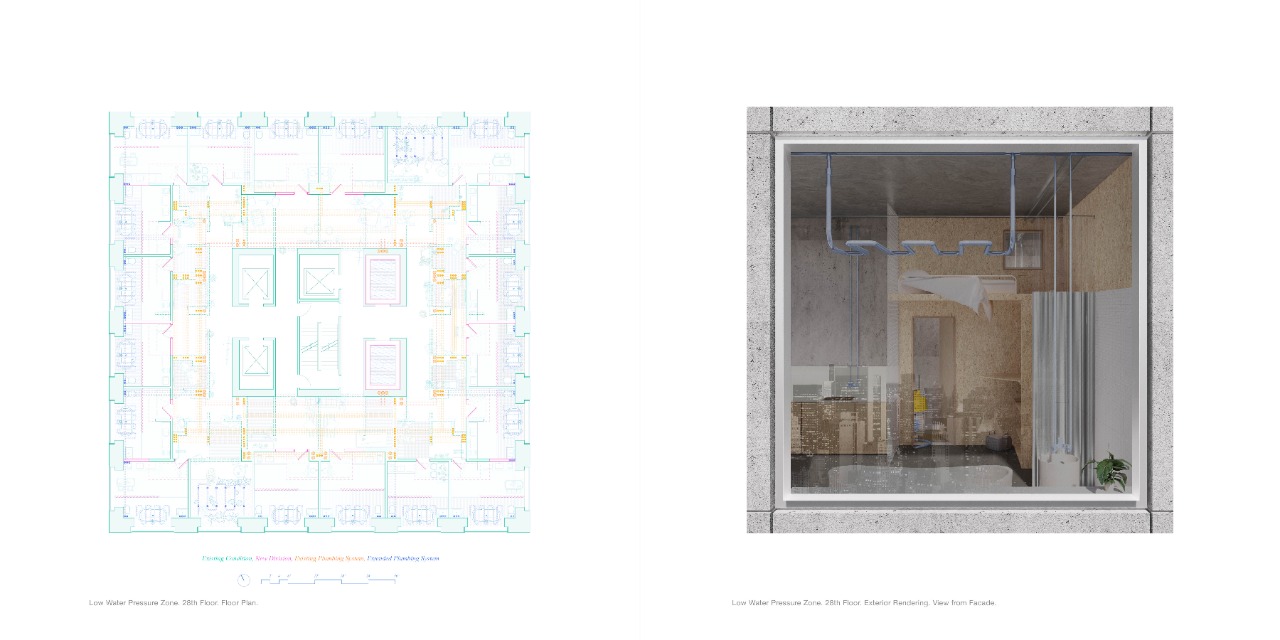
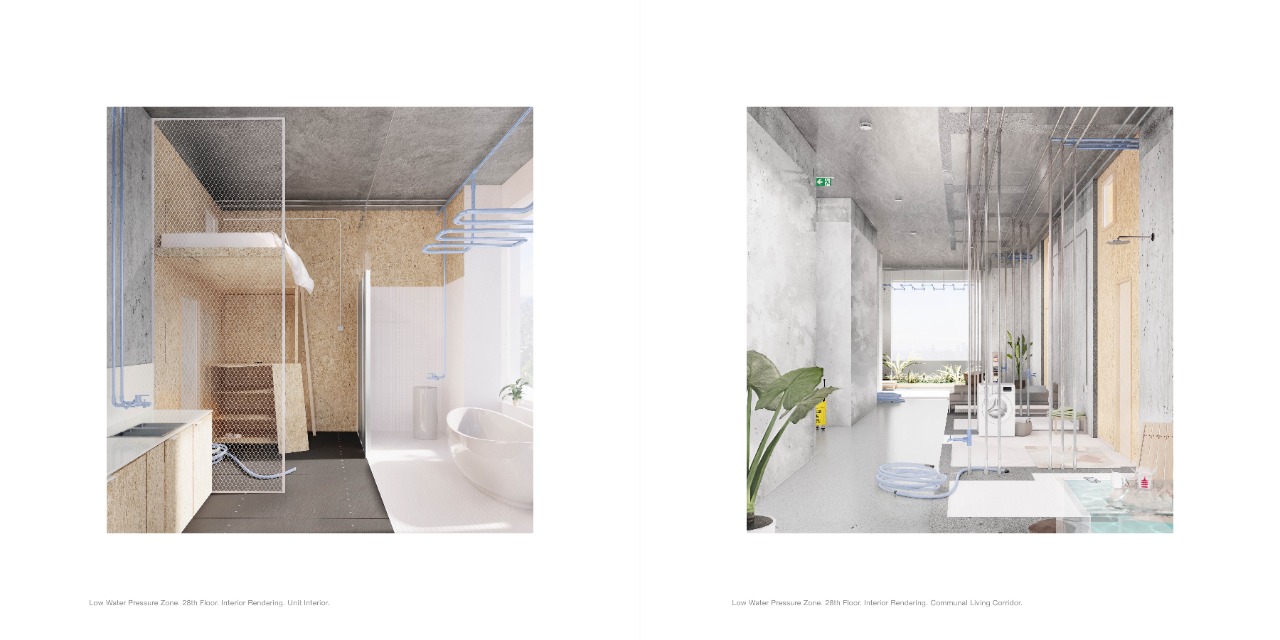
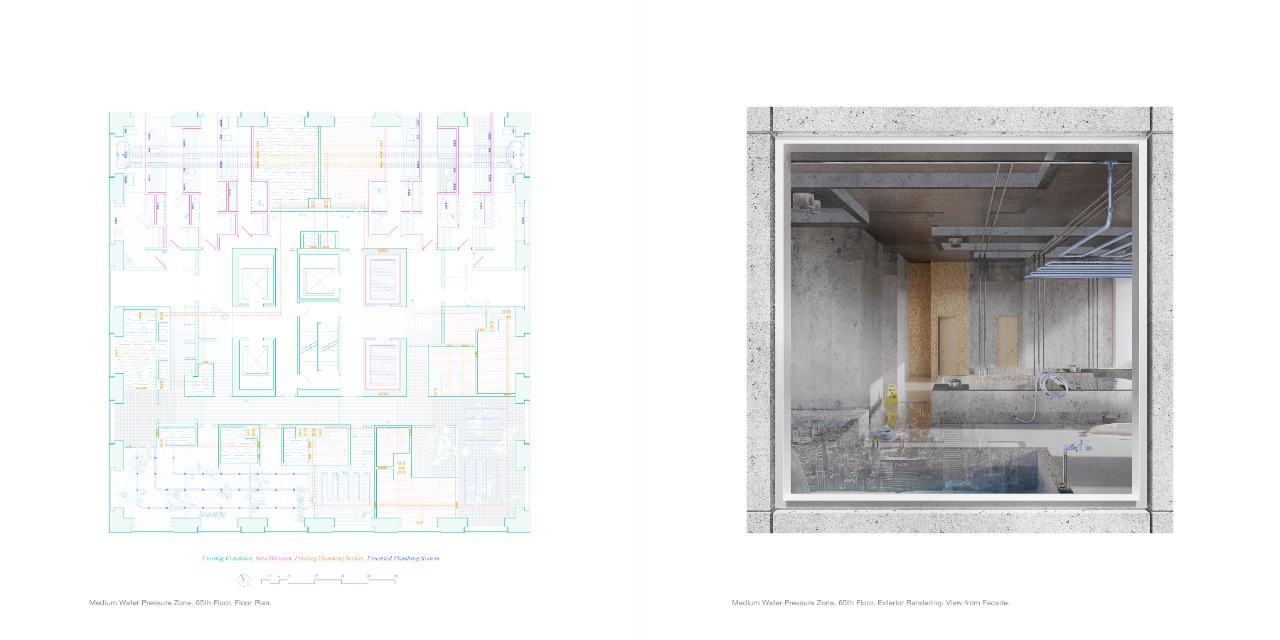
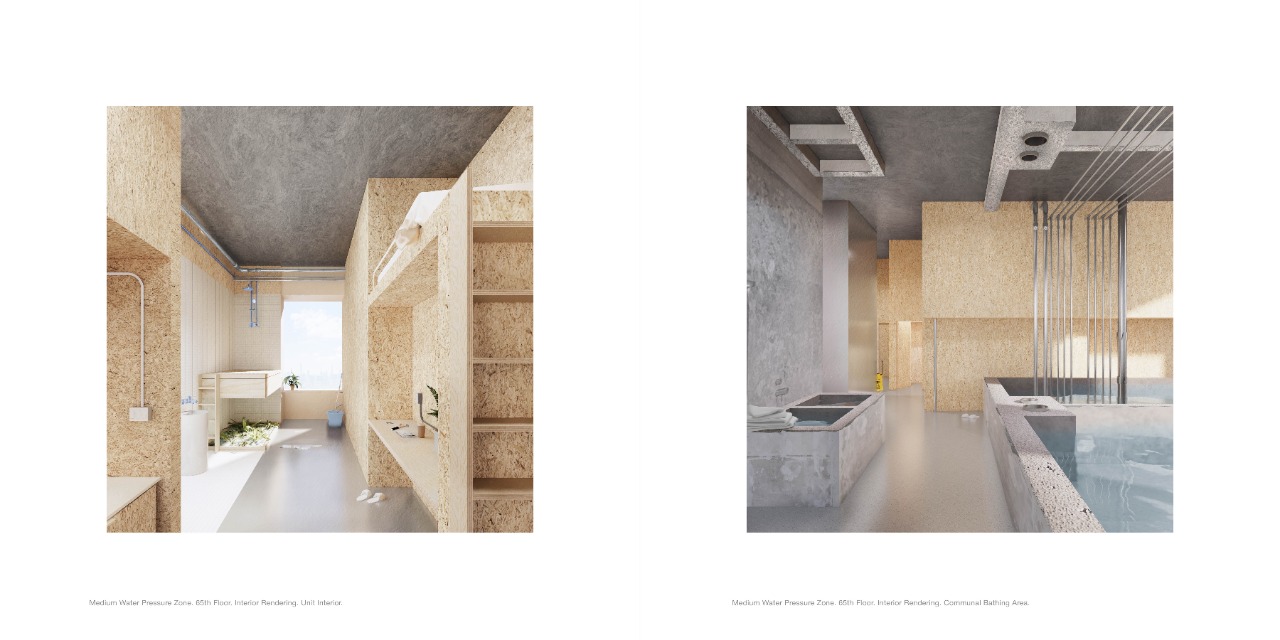
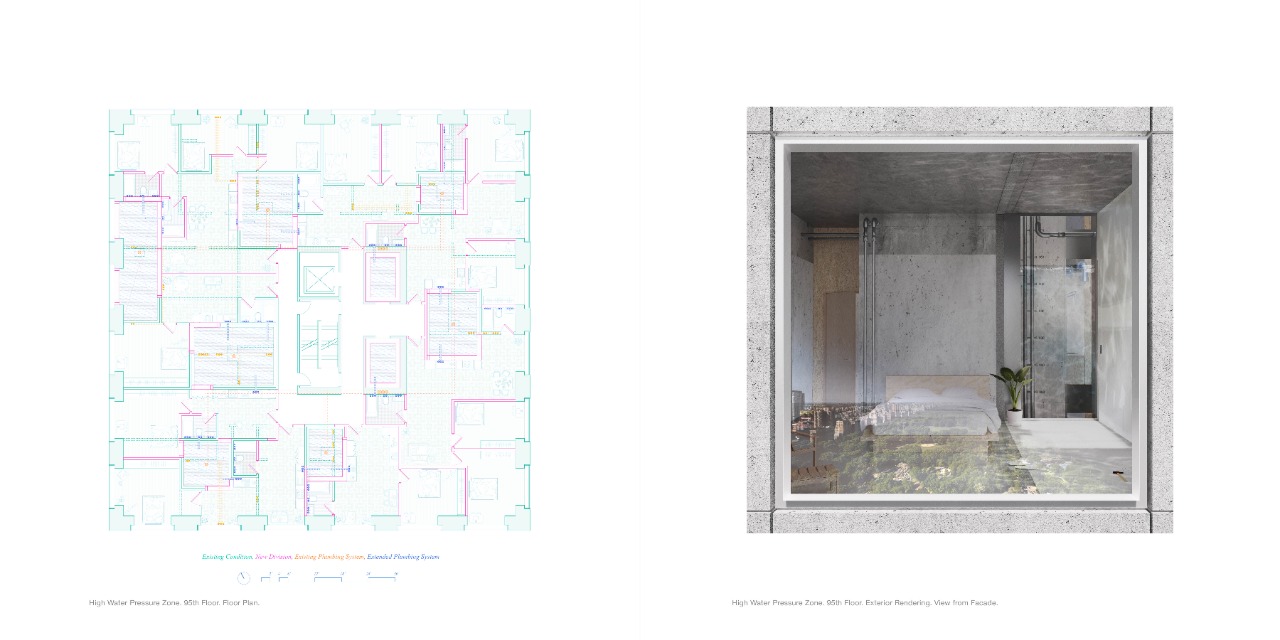
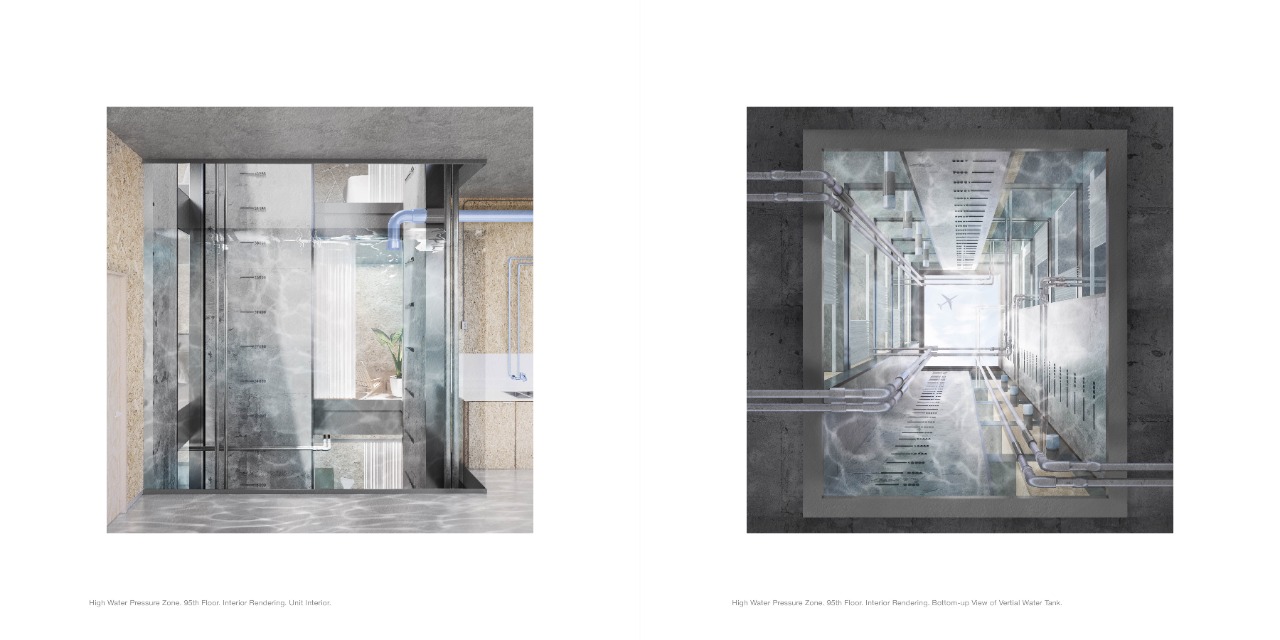
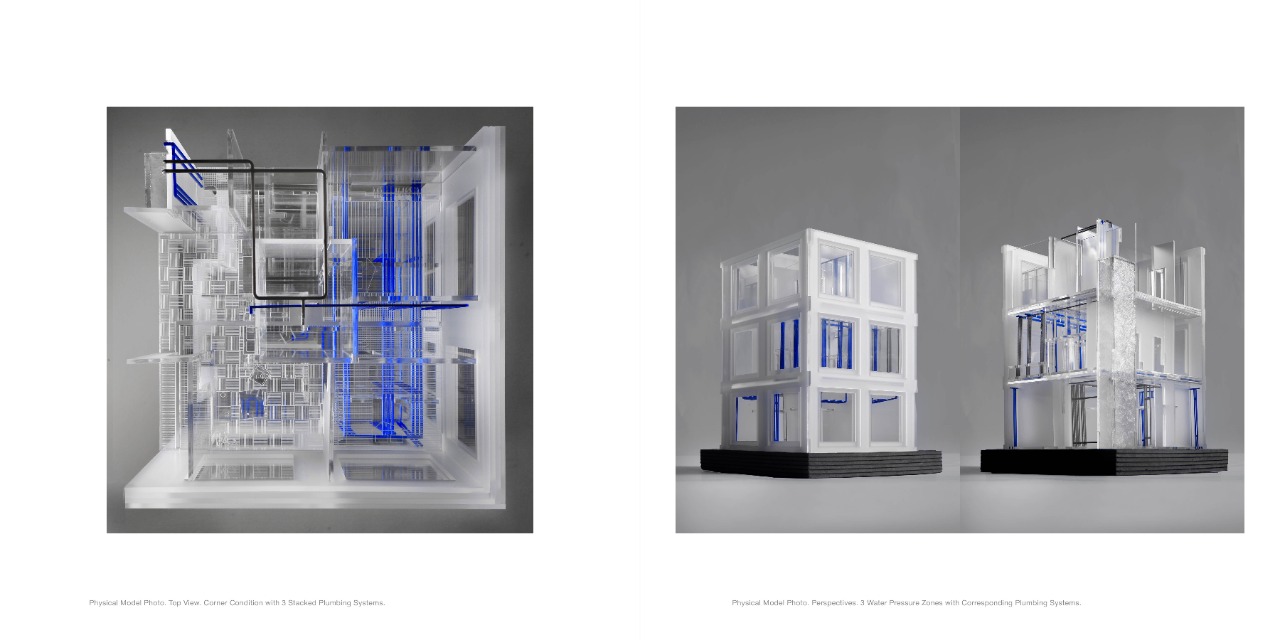
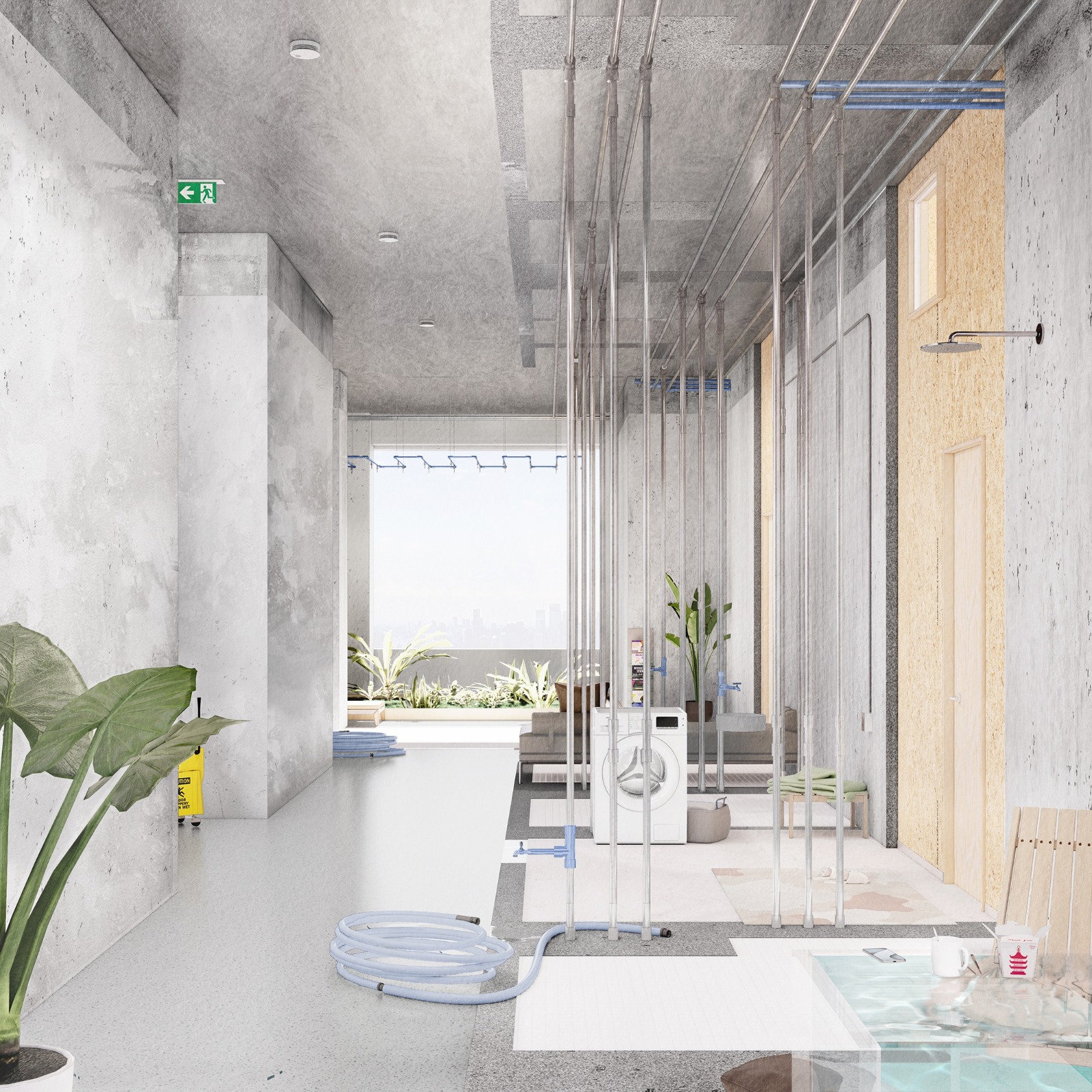
This thesis is a speculative project that aims to interrogate the hidden, excessive plumbing infrastructure in luxury superslender towers—systems designed to symbolize abundance yet often remain underused. Set against buildings like 432 Park Avenue, where minimalist interiors conceal over-serviced systems and high vacancy, this thesis reframes plumbing not as background utility but as a spatial agent for new collective domesticities. Drawing from personal experiences and case studies like Hong Kong’s Kowloon Walled City—a dense yet communal environment shaped by scarcity—it proposes a counter-model where infrastructural redundancy is revealed, reused, and inhabited. Plumbing risers become shared vertical zones; fixtures anchor form; drainage paths generate new spatial division. Through exposure, adaptive reuse, and collective inhabitation, this design proposal proposes an alternate architecture where excessive plumbing infrastructure becomes the material to redefine a new form of domestic pleasure and collective living. The methodology draws an important counterpoint from the Kowloon Walled City, a radically different form of high-density, informally serviced vertical living. In a typical super-slender tower, more energy is being used to bump up water for usage on the highest floor. By dividing the tower into three different pressure zones, its corresponding plumbing layout is then turned into a new form of inhabitation while prioritizing plumbing as another form of luxury and pleasure. At the low pressure zone–28th floor, existing pipes are being rechanneled to the perimeter for bathing, heating (hot risers are being extended and performed as radiators), and irrigation (cold risers are being extended as sprinklers). Existing pipes could be hacked for other domestic uses such as watering plants. At the medium pressure zone–65th floor, the full floor is being divided into two temperature zones (left: cold-risers dominated; right: hot-risers dominated). While parts of the existing wet walls are being demolished, their remains turn into a communal bathing area (cold plunges and onsen). As more energy is needed for water to be channeled to the highest floor in the tower, the high pressure zone–95th floor has the largest water storage. The existing main pipes on this floor are positioned as the center point of a water tank storage, each shared by two different households with wet zones (bathroom and kitchen) cluster around each tank. Besides providing visual connection and bringing in daylight into the usual dark rooms, each water tank has storage that holds up for at least two years of usage for each household. Ultimately, this thesis project challenges the conventions of luxury living and imagines a future where design emerges not from ornament, but from the radical reuse of the redundancy and abundance of infrastructures.