 International Architecture & Design Awards 2026
Reviving Bombay Beach: Landscape Renewal at the Salton Sea
University of Nevada, Las Vegas
Coastal & Waterfront Landscape Design
Reviving Bombay Beach: Landscape Renewal at the Salton Sea — IADA 2026 award
Reviving Bombay Beach: Landscape Renewal at the Salton Sea received Platinum Winner recognition at the International Architecture & Design Awards 2026 in Coastal & Waterfront Landscape Design. Project status, design team and credits are listed alongside the presentation.
About the project
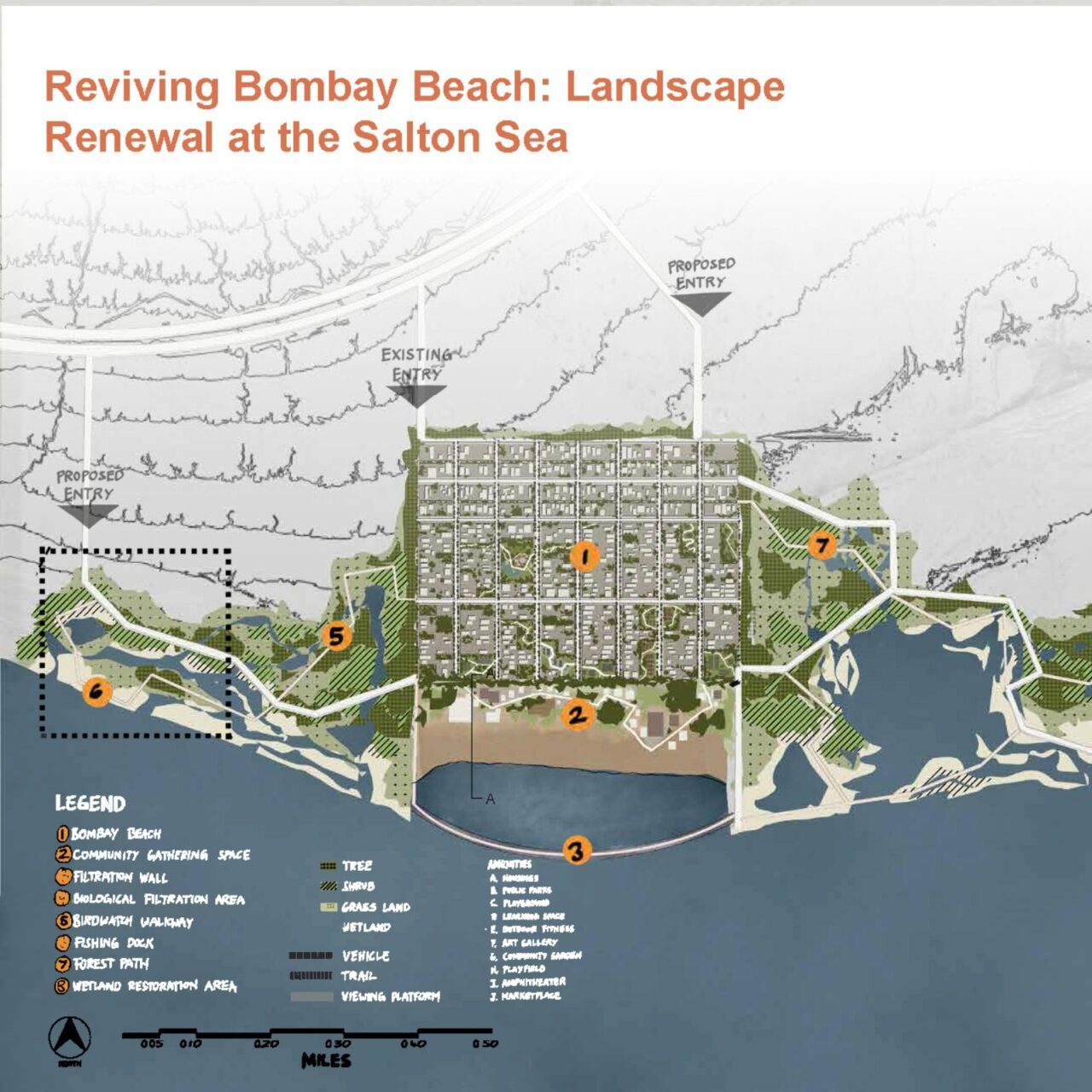
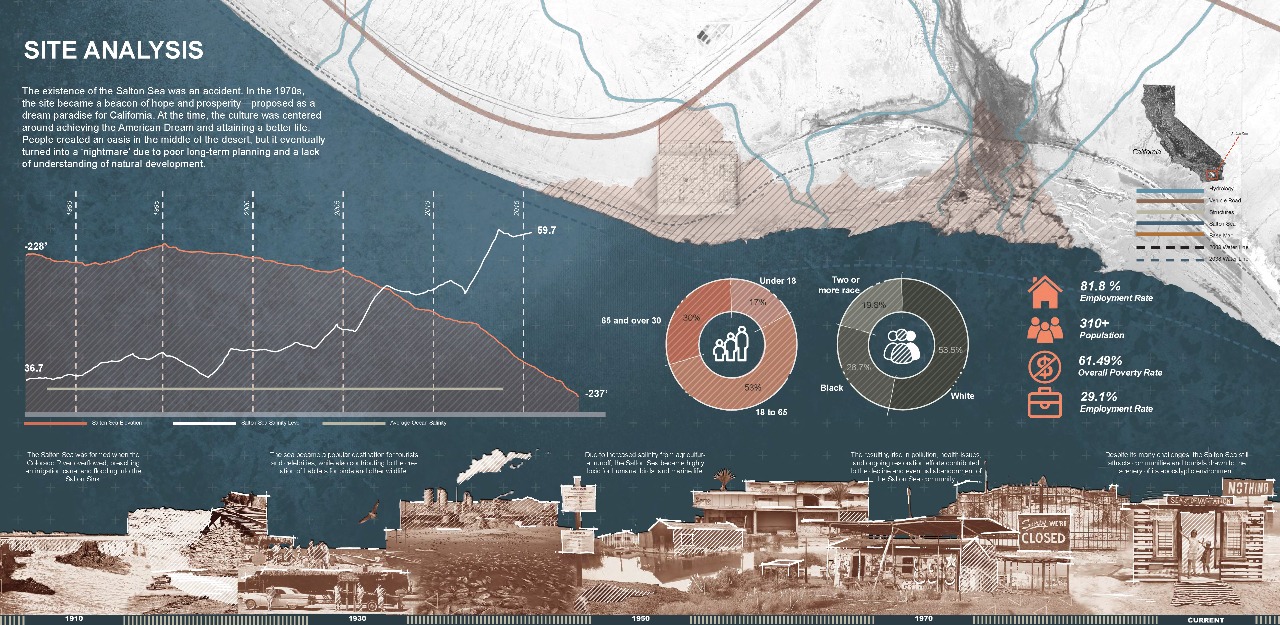
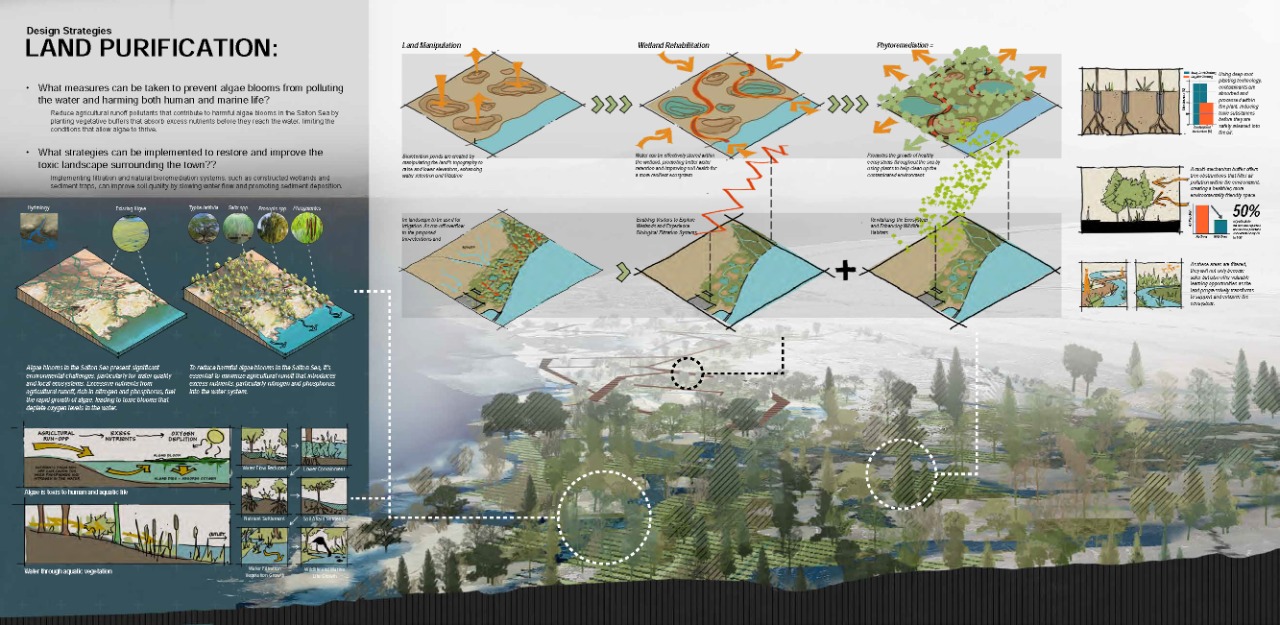
Bombay Beach, located on the southeastern edge of the Salton Sea in Southern California, serves as a powerful reminder of what can happen when human ambition exceeds environmental limits. The sea itself was never intended to exist; it formed in 1905 when the Colorado River broke through an irrigation canal
and flooded the Salton Sink. What began as an accident soon turned into a glamorous destination in the mid-20th century, drawing celebrities, tourists, and dreamers seeking a desert oasis. However, this dream quickly unraveled. Years of agricultural runoff and rising salinity rendered the water toxic, destroying
ecosystems and creating serious public health risks. Fish died off, birds vanished, and the once-clear air became thick with hazardous dust. As the crisis deepened, many residents abandoned their homes, leaving behind a haunting, decaying landscape. Today, the area is a surreal mix of art installations,
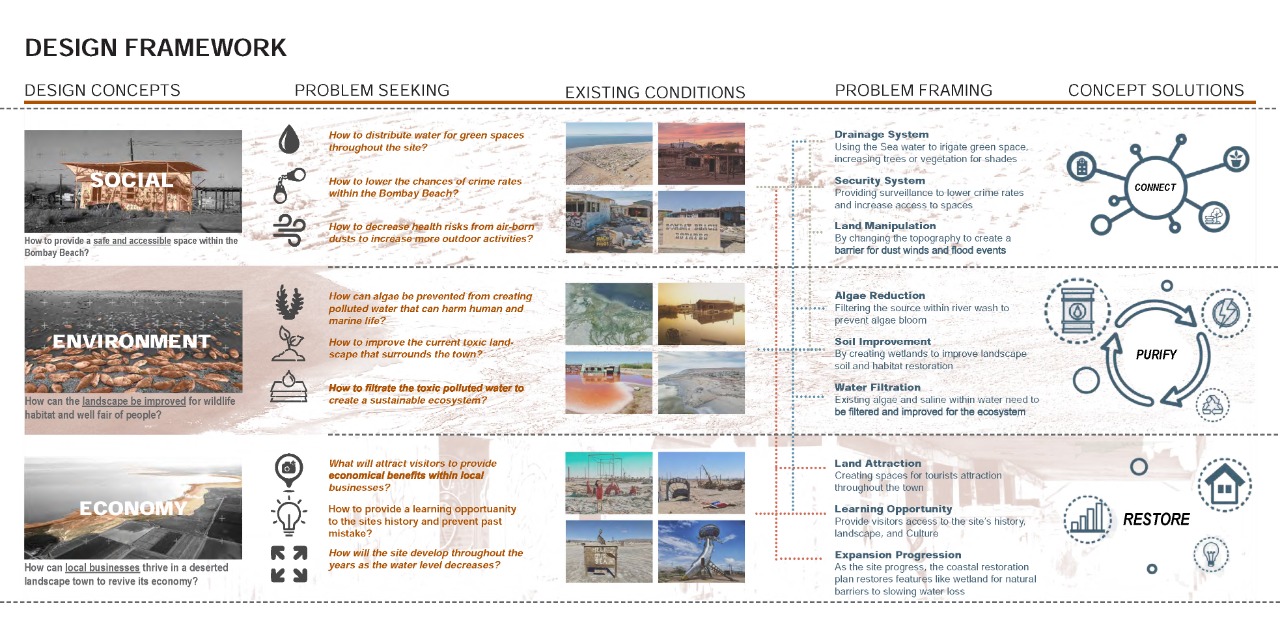
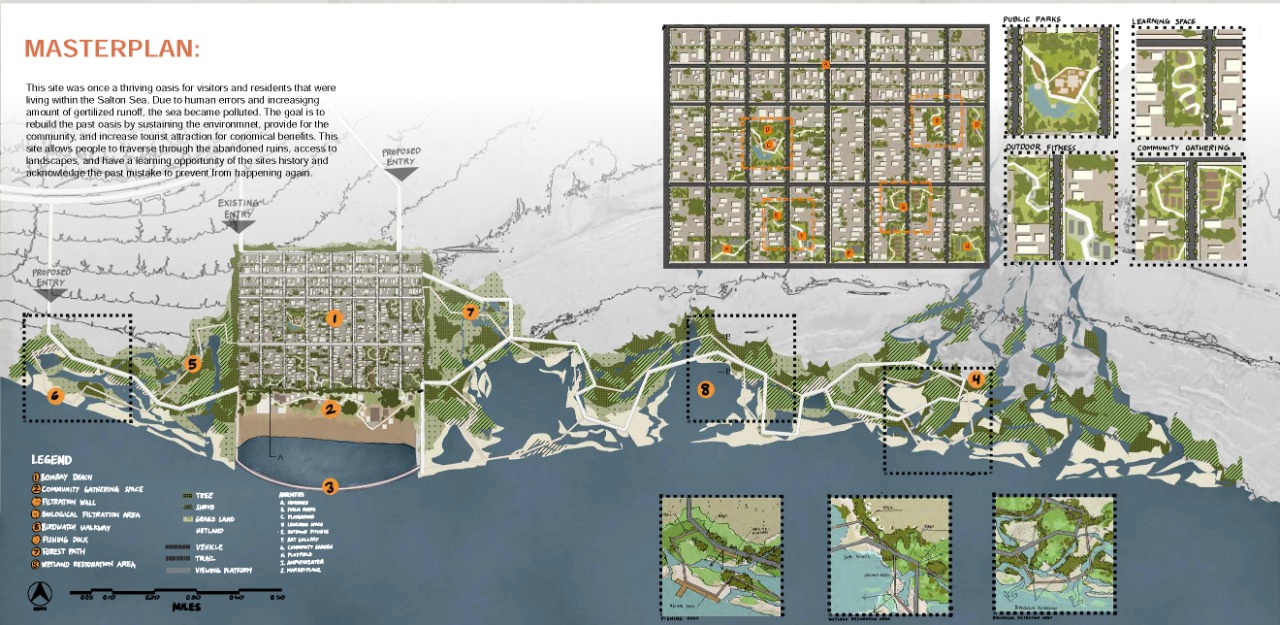
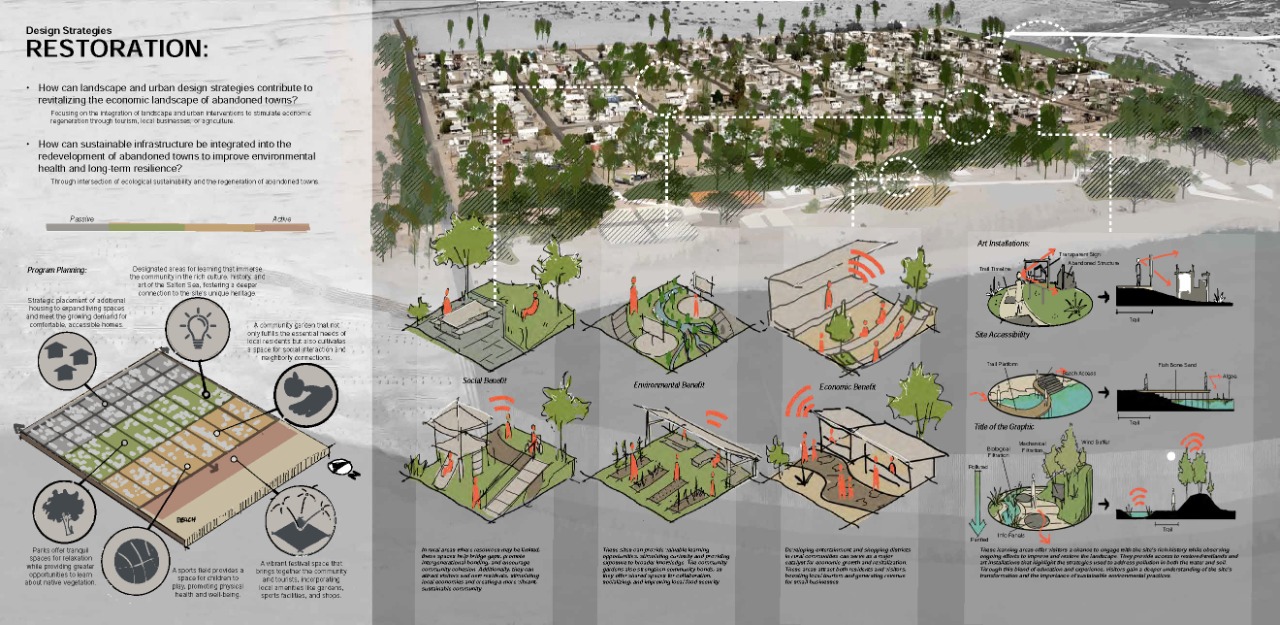
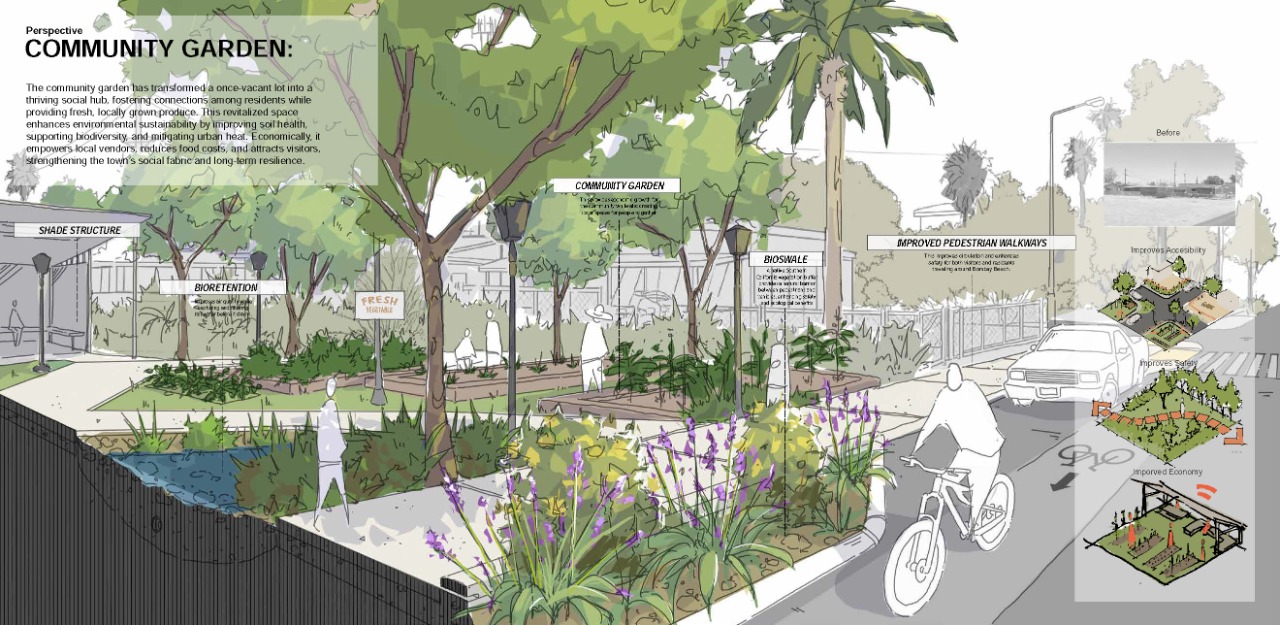
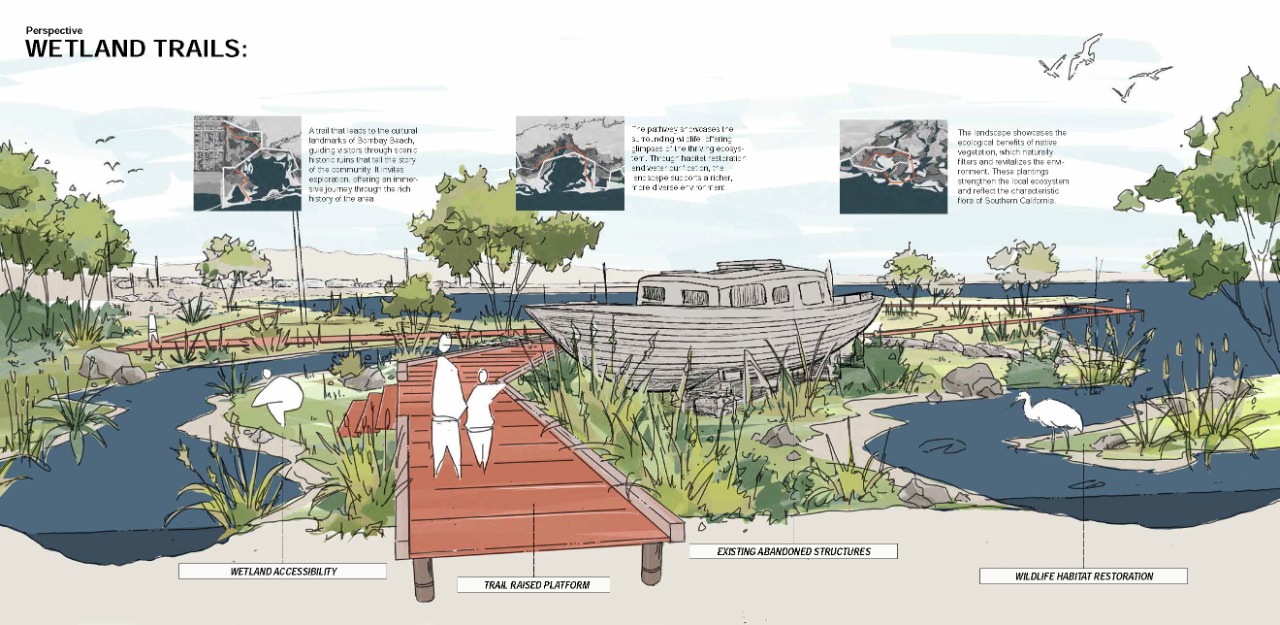
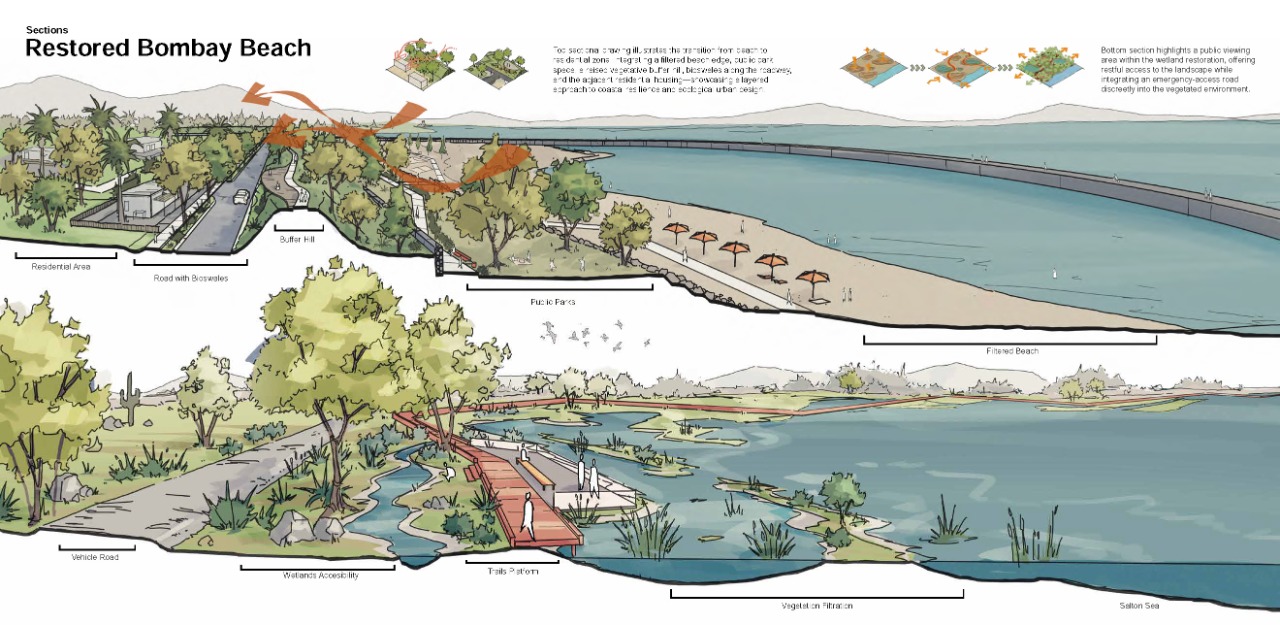
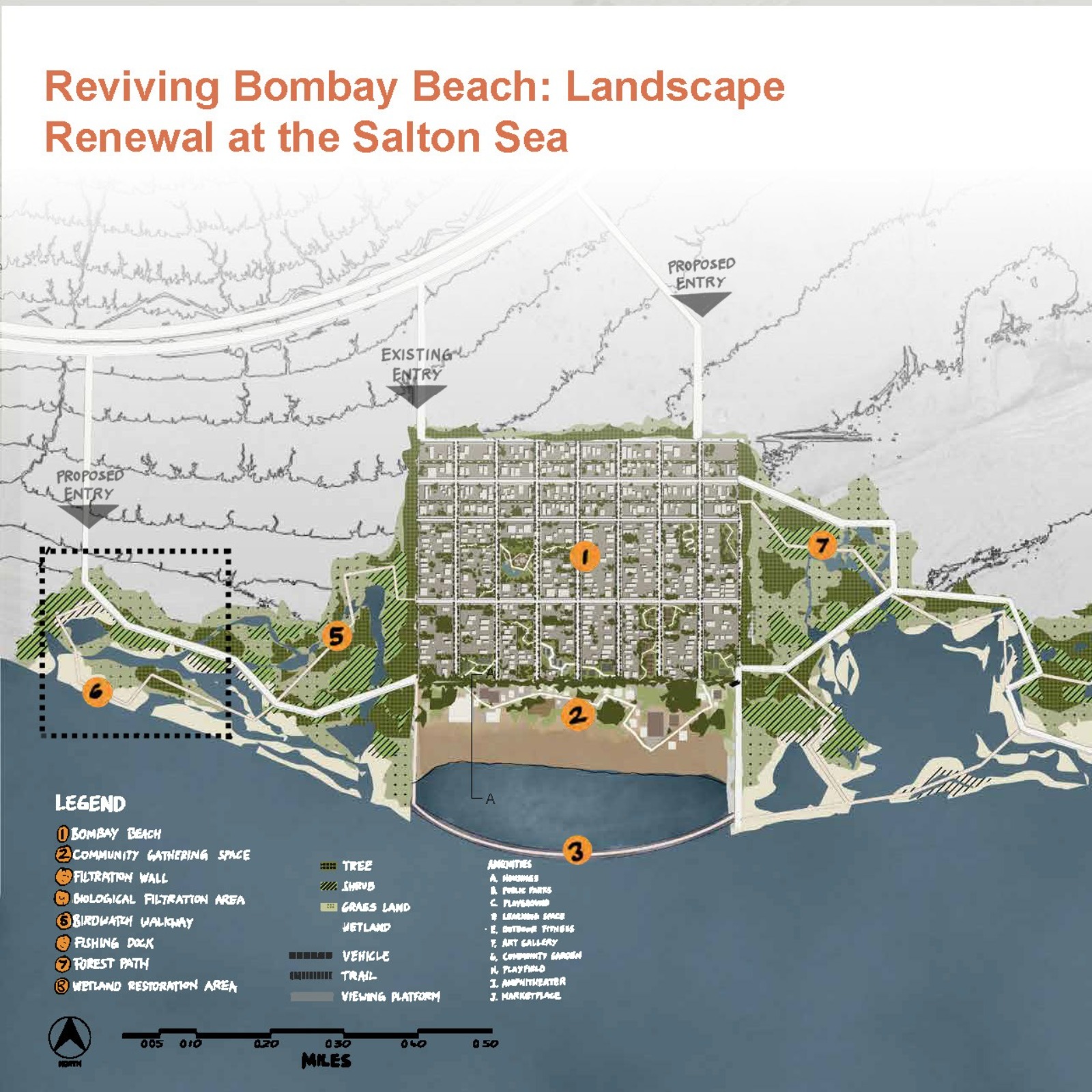
abandoned structures, and a small yet resilient community that continues to call this place home.This project focuses on Bombay Beach because it offers a unique opportunity to address significant environmental damage while preserving and honoring the social and cultural identity that remains. It explores ways to restore the ecology of the Salton Sea while also improving the health and well-being of the people who still live there. The site offers a rare chance for andscape architecture to address the intersection of ecological repair, public health, and cultural memory. The project’s goal is to heal both the land and its people. Through strategies such as terrain alteration, water and land puification, and socialrestoration, this project reimagines Bombay Beach as a place where both people and ecosystems can once again thrive. It is not solely about repairing what has been damaged; it is about creating space for community, memory, and renewal. The design invites engagement by offering spaces for gathering, reflection, and reconnection with the land, all while acknowledging the site’s history and envisioning a more hopeful future.
University of Nevada, Las Vegas

The UNLV School of Architecture (SoA) is renowned for its innovative research, teaching, and outreach that is critically informed, academically rigorous, design-led, and interdisciplinary.