 International Architecture & Design Awards 2026
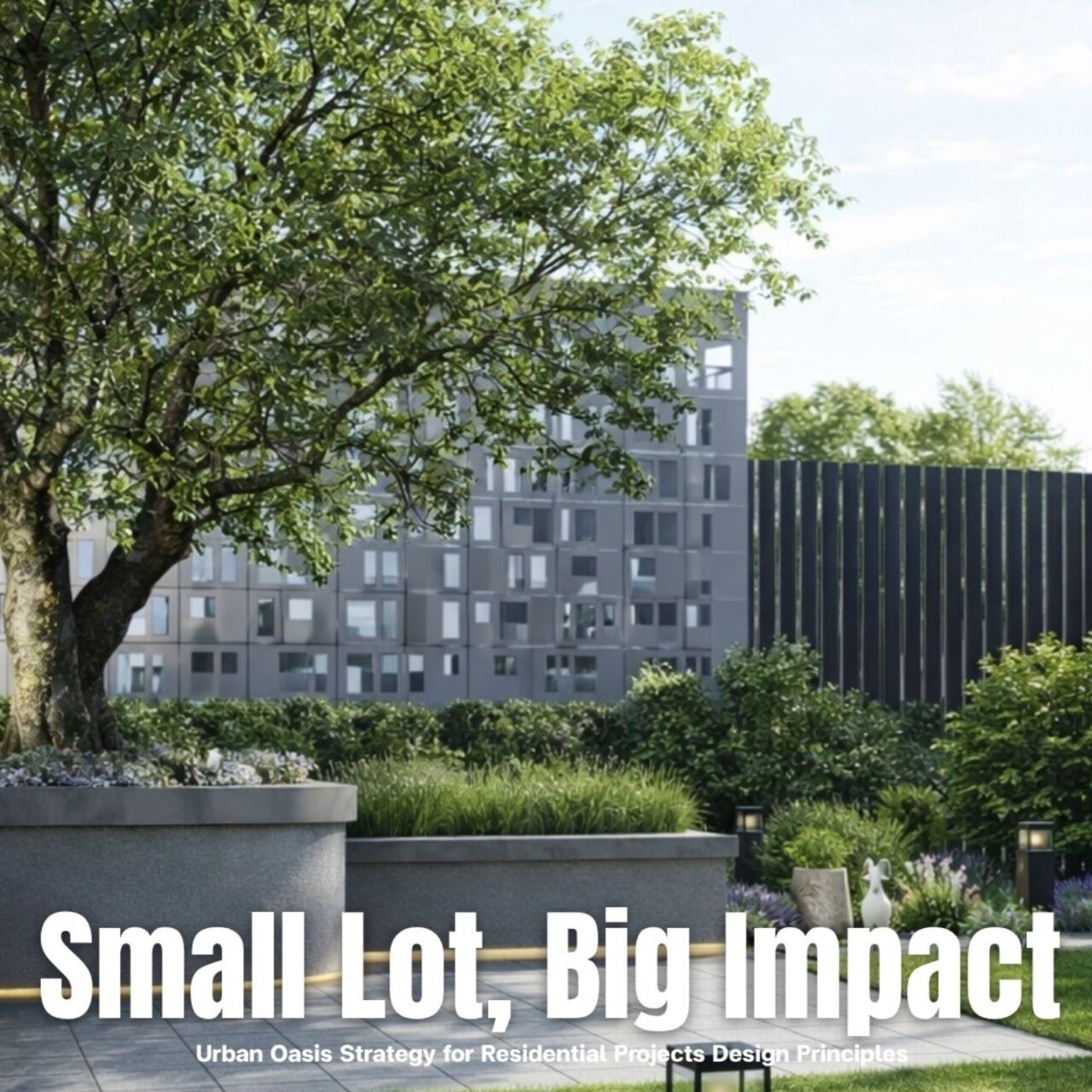
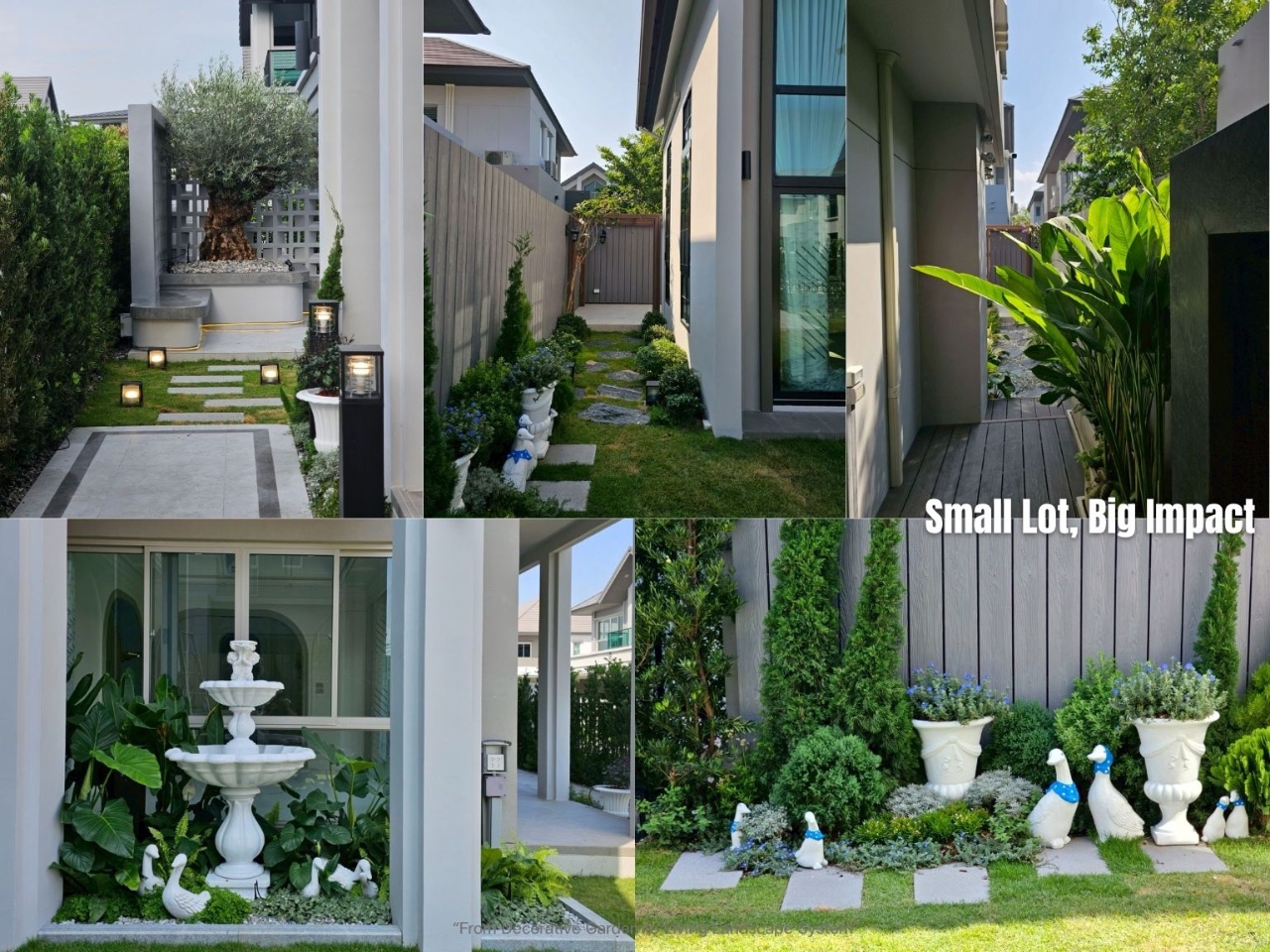
Small Lot, Big Impact Creating a “Green Urban Oasis” — Transforming rigid concrete spaces into a compact living ecosystem that is functional, low-maintenance, and sustainable.
THE GARDEN TREE DESIGN CO.,LTD
Water Conservation & Sustainable Landscape Design
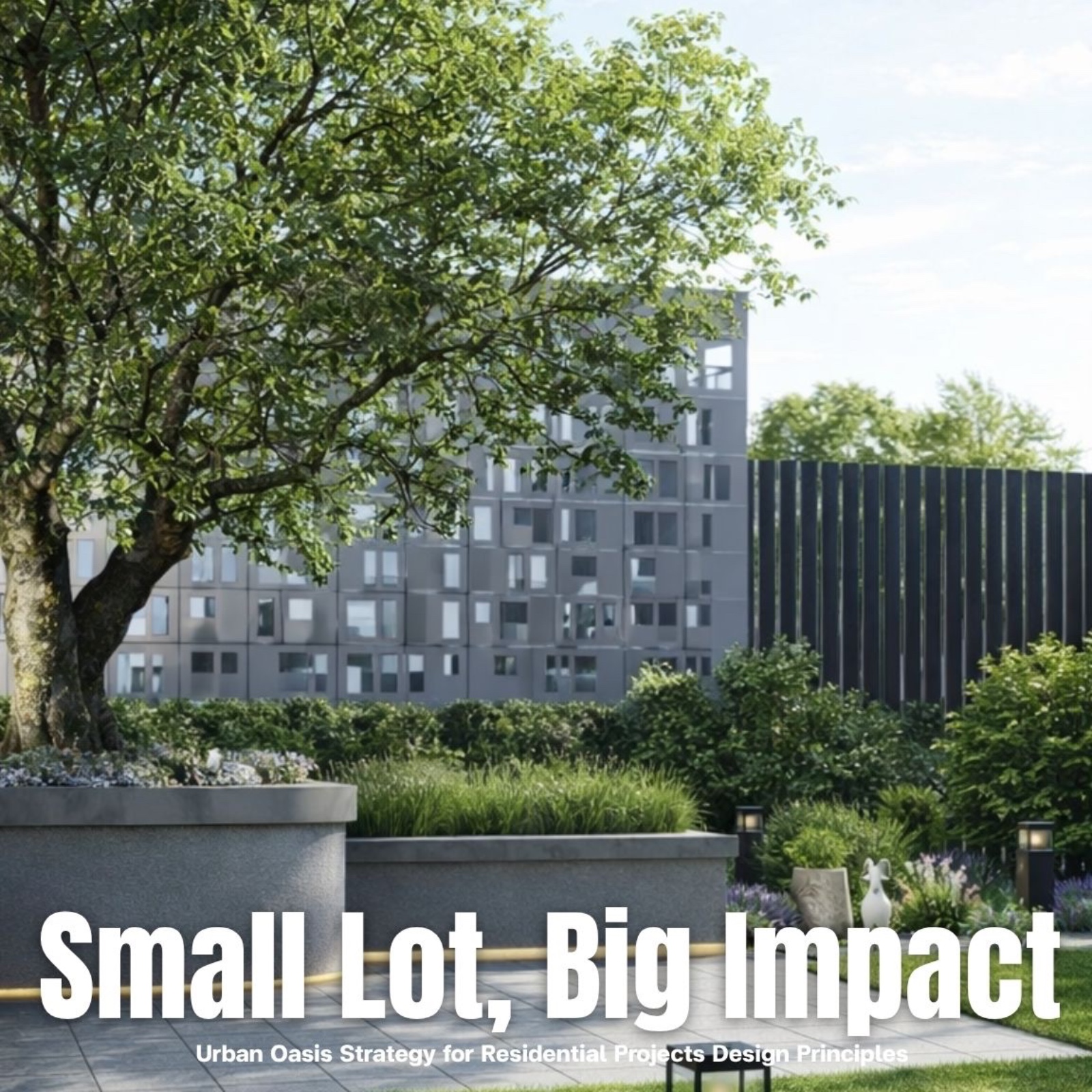
Small Lot, Big Impact Creating a “Green Urban Oasis” — Transforming rigid concrete spaces into a compact living ecosystem that is functional, low-maintenance, and sustainable. — IADA 2026 award
Small Lot, Big Impact Creating a “Green Urban Oasis” — Transforming rigid concrete spaces into a compact living ecosystem that is functional, low-maintenance, and sustainable. received Platinum Winner recognition at the International Architecture & Design Awards 2026 in Water Conservation & Sustainable Landscape Design. Project status, design team and credits are listed alongside the presentation.
About the project
Urban Oasis – Sustainable Residential Landscape Design
Small Lot, Big Impact
⸻
Urban Oasis is a conceptual residential landscape that transforms a compact urban space into a functional, climate-responsive ecological system. The project redefines a typical hardscape-dominated yard into a livable, low-maintenance, and sustainable environment.
Rather than focusing on scale, the design demonstrates how small residential landscapes can contribute meaningfully to urban sustainability.
⸻
Design Intent
The project aims to convert underutilized urban space into a micro-ecosystem that reduces heat, manages water efficiently, and supports everyday outdoor living. It serves as a replicable prototype for sustainable residential environments in dense cities.
⸻
Site Context
The design is based on a typical urban home with limited planting area, high heat exposure, and air pollution challenges. The landscape must be both practical and resilient, supporting real daily use rather than being purely decorative.
⸻
Core Strategies
1. Water-sensitive Landscape
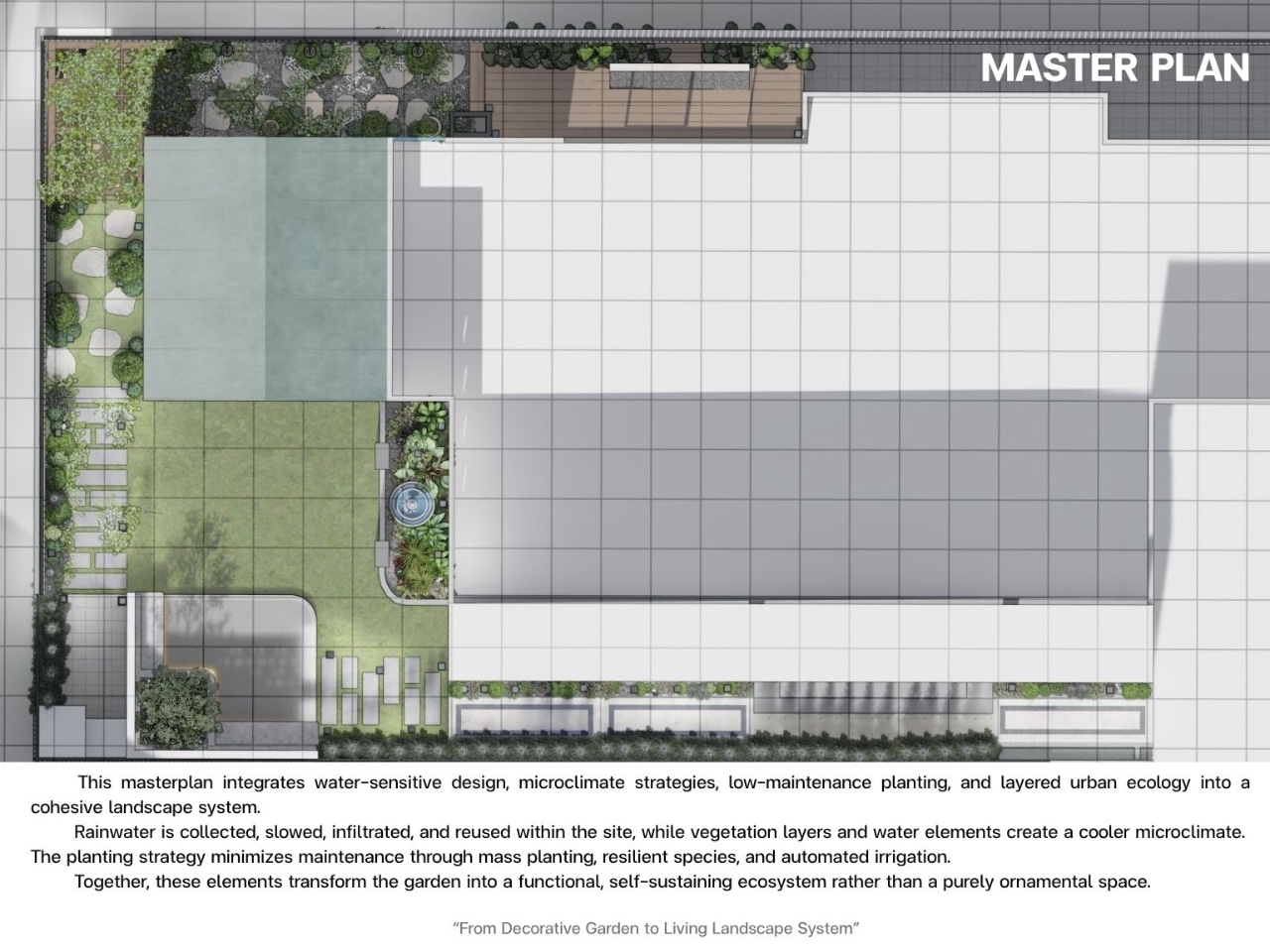
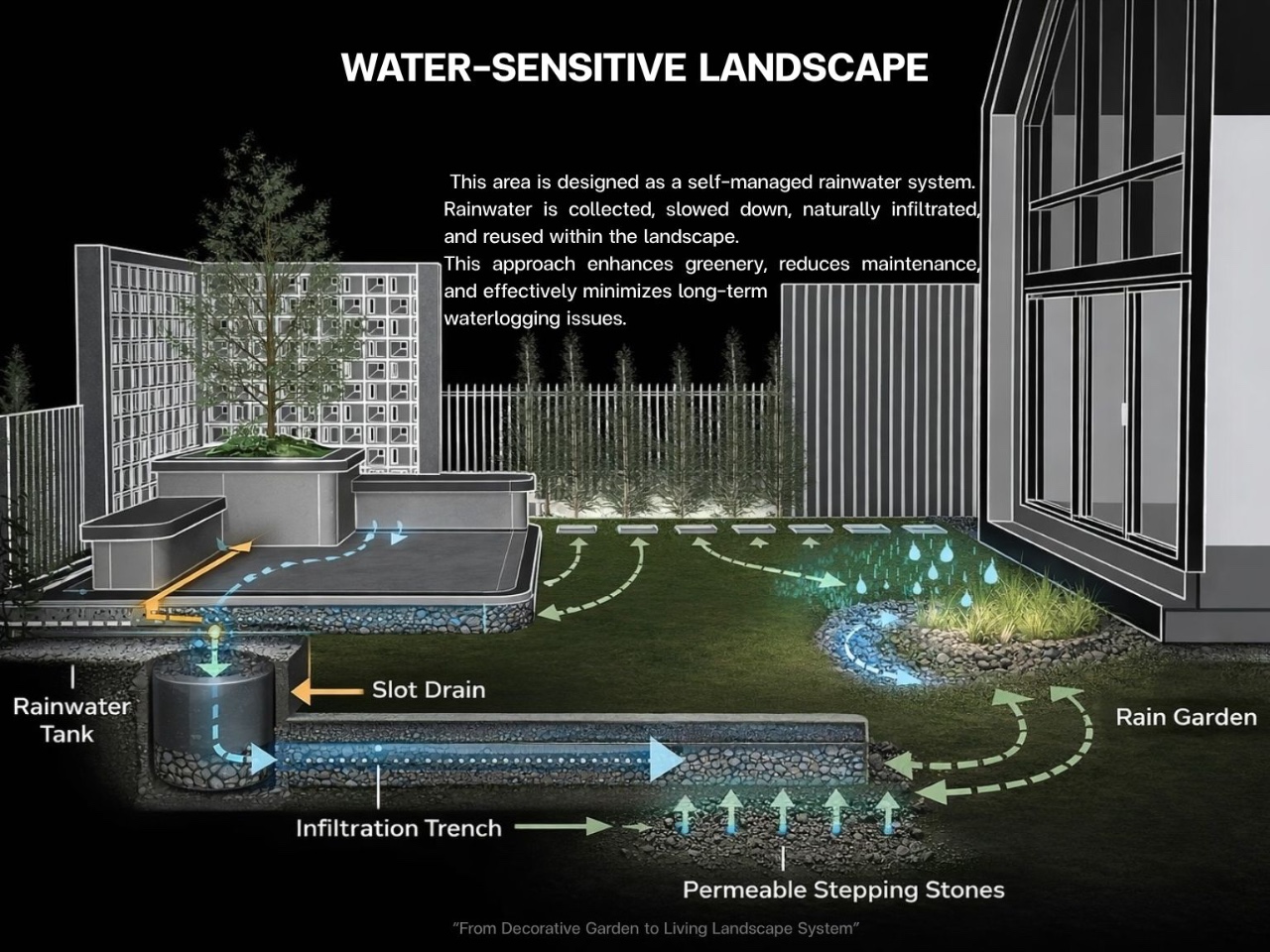
Stormwater is managed through rain gardens, permeable surfaces, and zoned irrigation. Water is slowed, filtered, and reused within the site, reducing overall consumption by approximately 30–40%.
2. Microclimate Design
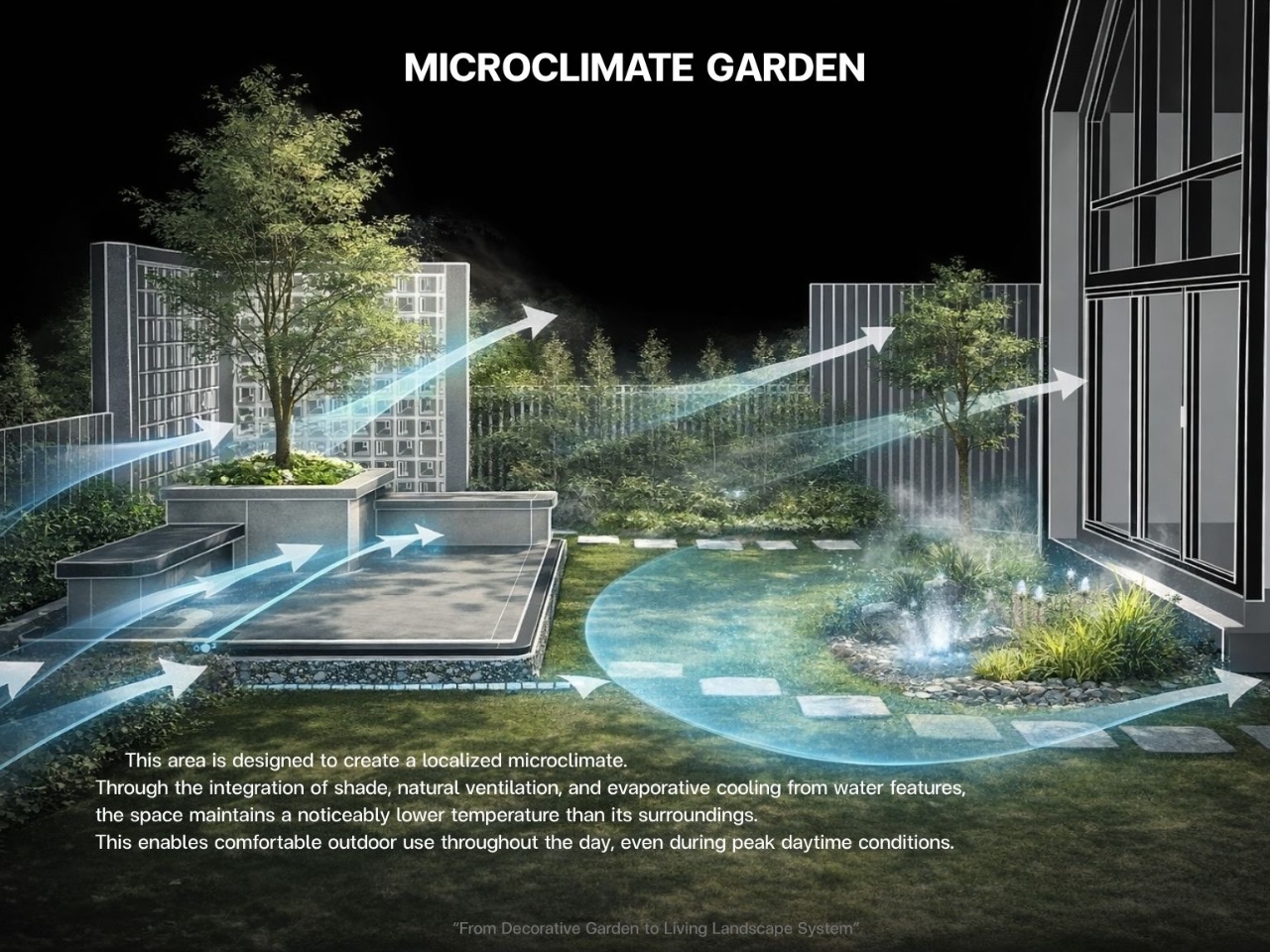
Strategic tree placement, layered planting, and water elements help reduce surface temperature and improve airflow, creating a cooler and more comfortable outdoor space.
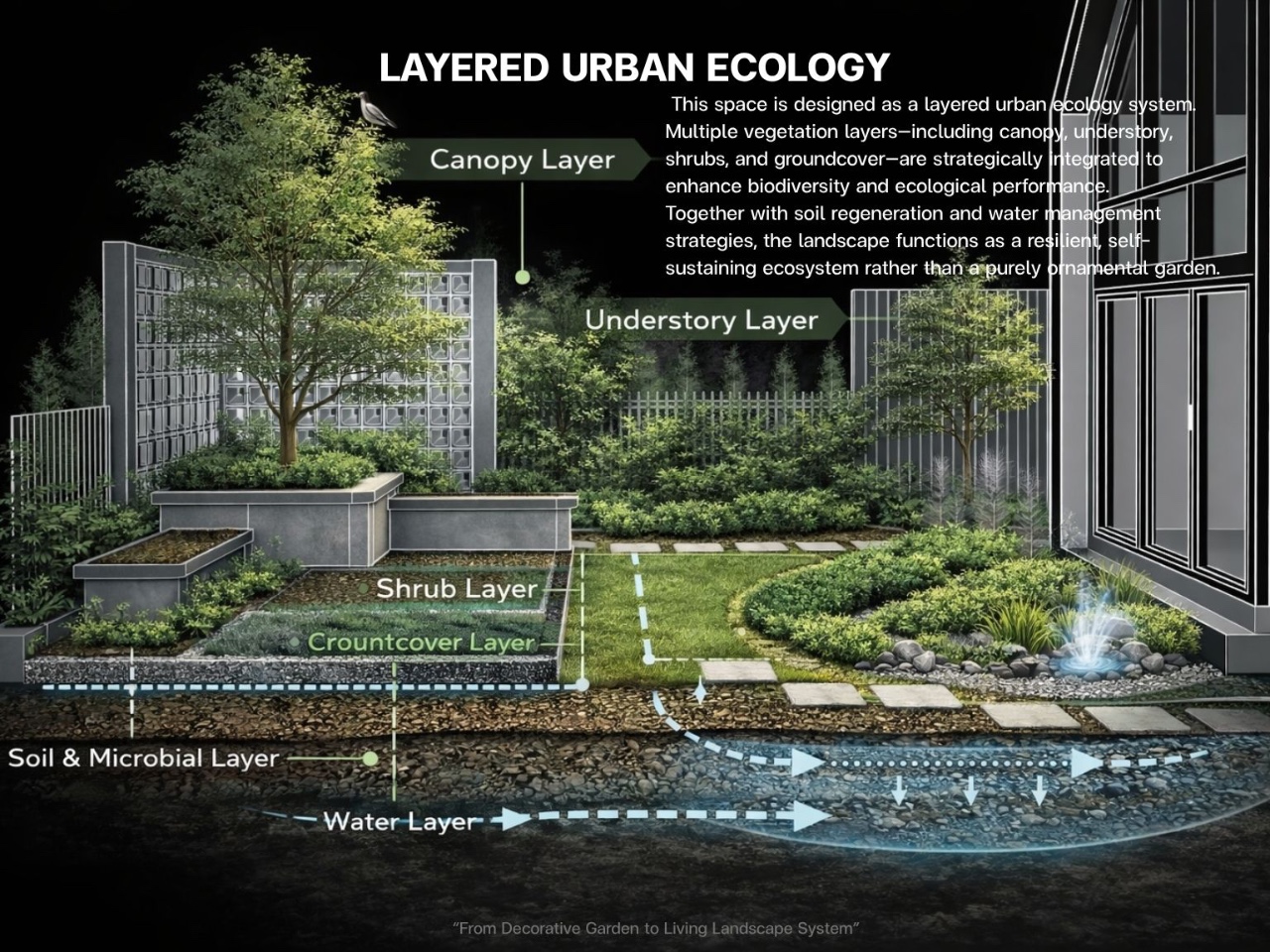
3. Layered Urban Ecology
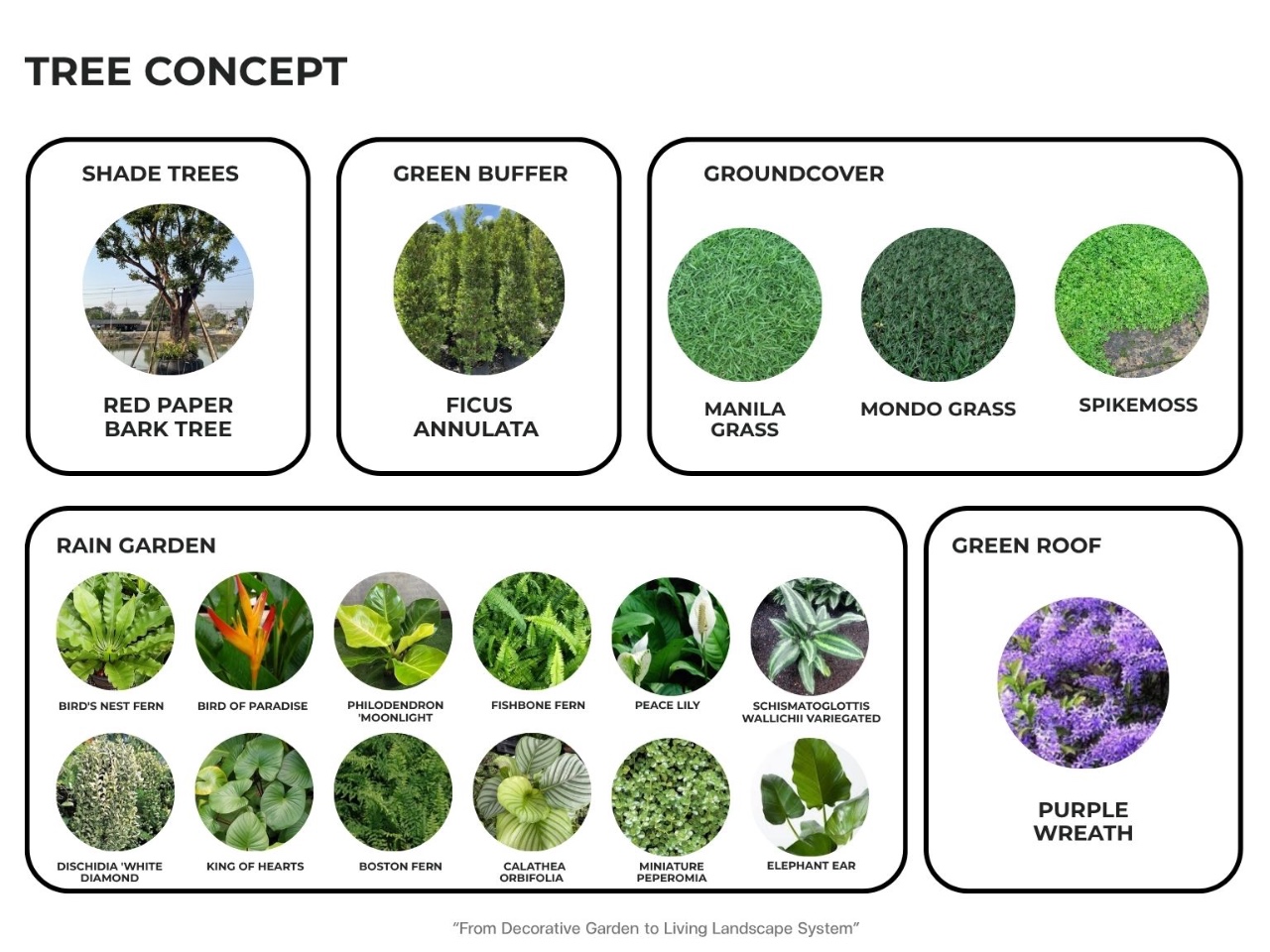
Multi-layer planting (canopy, understory, shrub, groundcover) enhances biodiversity and strengthens ecological resilience. Native and climate-adapted species support urban wildlife.
4. Low Maintenance Approach
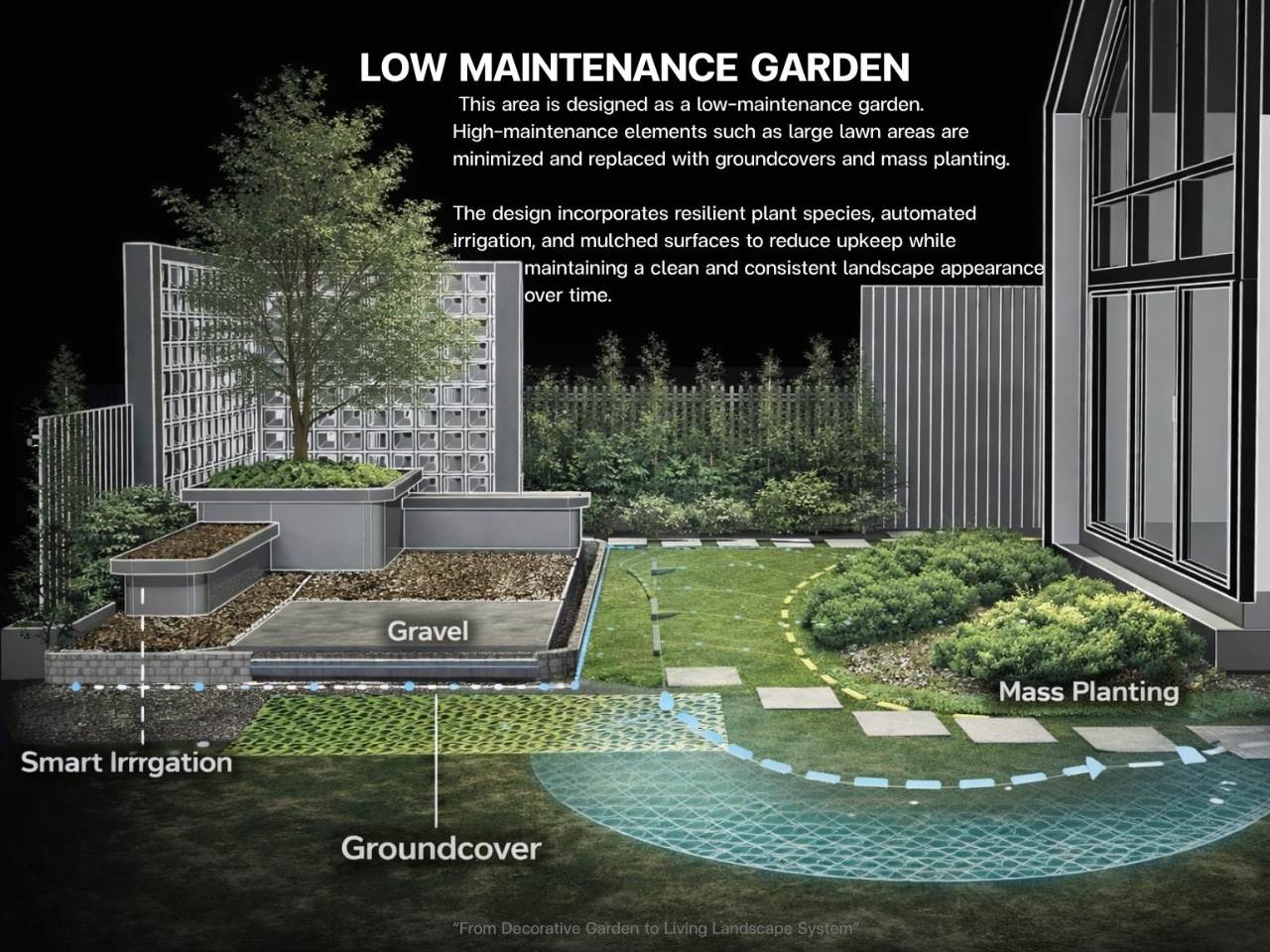
The design minimizes lawn areas, uses mass planting, and integrates drip irrigation, allowing the garden to remain healthy with minimal upkeep and without reliance on chemicals.
5. Material Efficiency
Local and low-impact materials are prioritized, with reduced hardscape and lightweight construction to lower environmental impact.
⸻
Spatial Organization
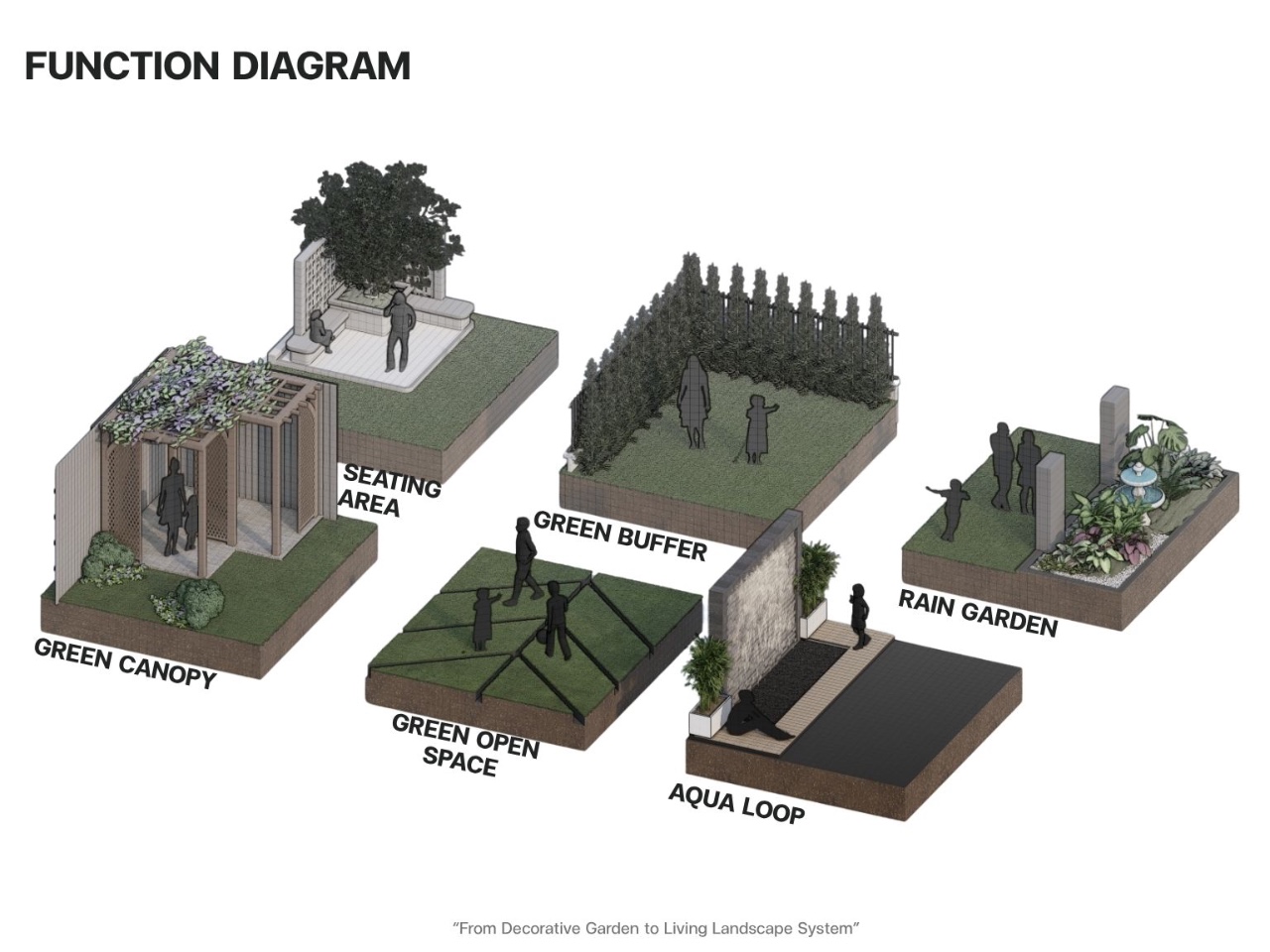
The landscape is structured into key zones: a green buffer along the boundary for dust and noise reduction, a pocket garden for relaxation, a functional yard for daily use, and a rain garden/bioswale as both a performance system and design feature.
⸻
Project Significance
This project positions the residential garden as a living laboratory for sustainability, where environmental strategies are directly experienced. It demonstrates that small-scale interventions can deliver real impact and be scaled across urban environments.
⸻
Project Status
Conceptual Design / Unbuilt Project
⸻
Conclusion
Urban Oasis shifts residential landscape design from decorative to performance-driven, integrating water, climate, ecology, and usability into a cohesive system. It offers a practical and scalable model for future sustainable living in cities.
THE GARDEN TREE DESIGN CO.,LTD
We are a landscape design studio specializing in residential and urban-scale environments that seamlessly integrate nature into everyday living. Our work focuses on transforming limited spaces into functional, immersive landscapes that enhance environmental performance while enriching human well-being.
Our design approach is grounded in tropical ecology, climate responsiveness, and low-maintenance systems. We see landscape not merely as an aesthetic layer, but as a living infrastructure—one that manages water, moderates microclimate, and supports biodiversity within dense urban environments.