 International Architecture & Design Awards 2026
Naples Underground Central Station
Miralles Tagliabue - EMBT
Airport, Train Station & Terminal Design
Naples Underground Central Station — IADA 2026 award
Naples Underground Central Station received Gold Winner recognition at the International Architecture & Design Awards 2026 in Airport, Train Station & Terminal Design. Project status, design team and credits are listed alongside the presentation.
About the project
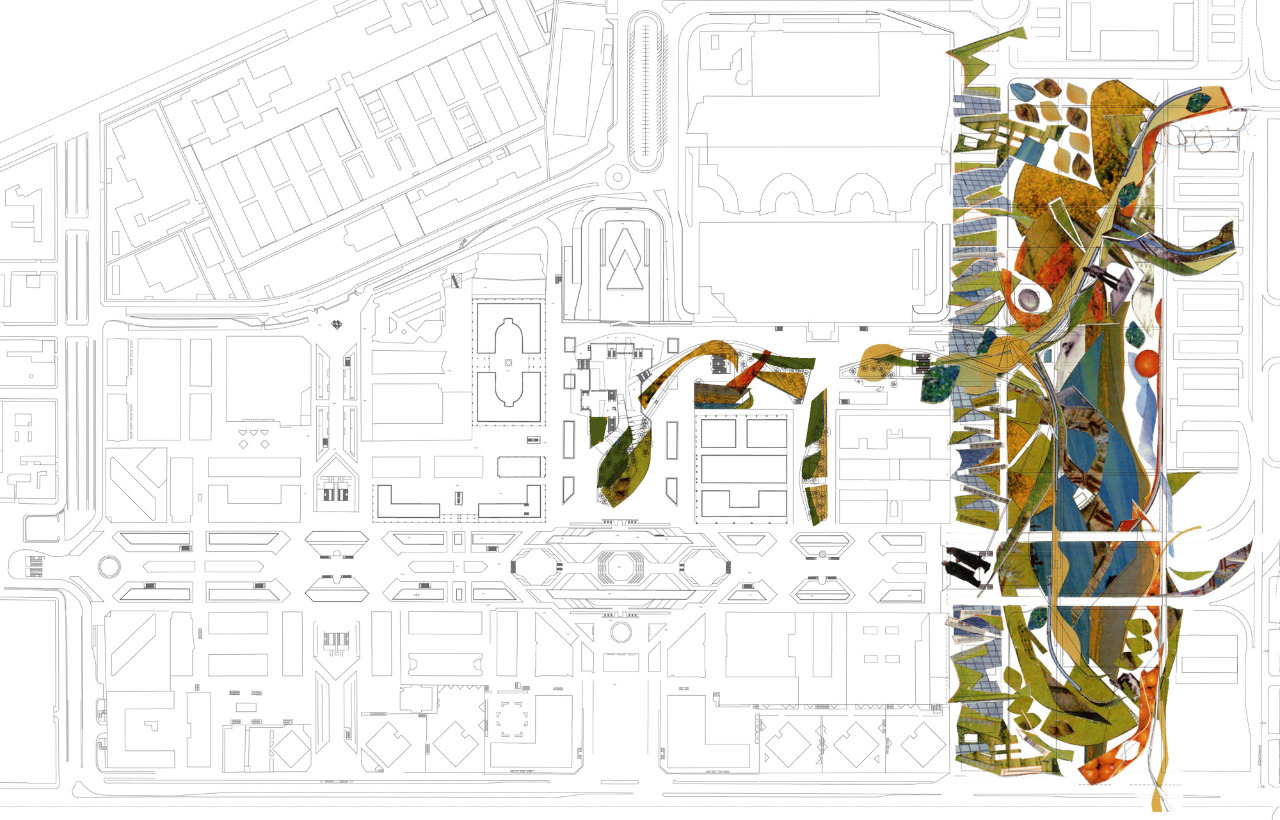
The new Centro Direzionale Station is part of Naples' ambitious infrastructure project aiming to redefine urban mobility while celebrating the city’s layered cultural identity. Developed under the city’s guiding principle of “Art, Architecture, and Archaeology,” the station embodies a contemporary and sensitive response to the transformation of a largely artificial business district into a vibrant, human-centered space.
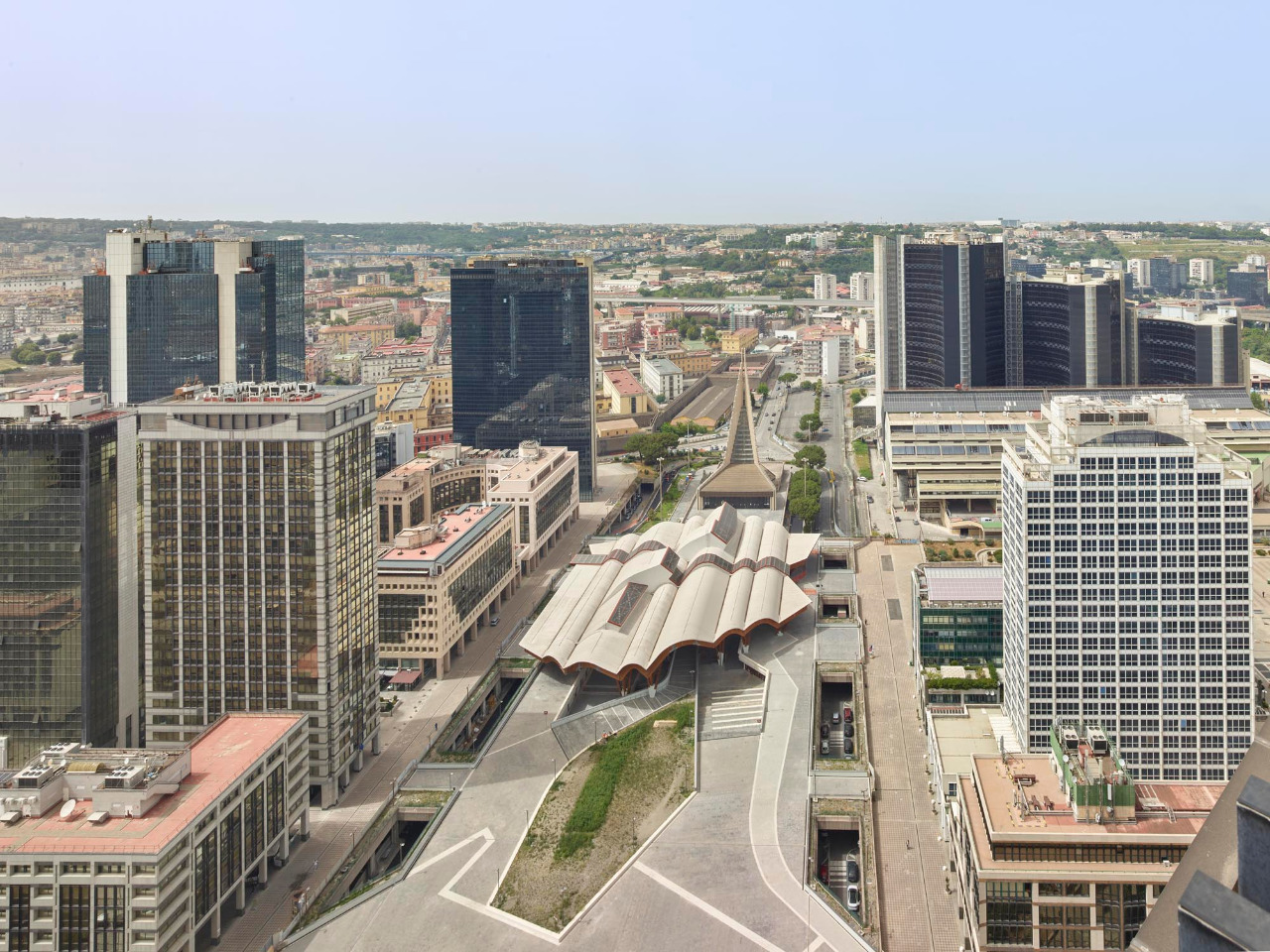
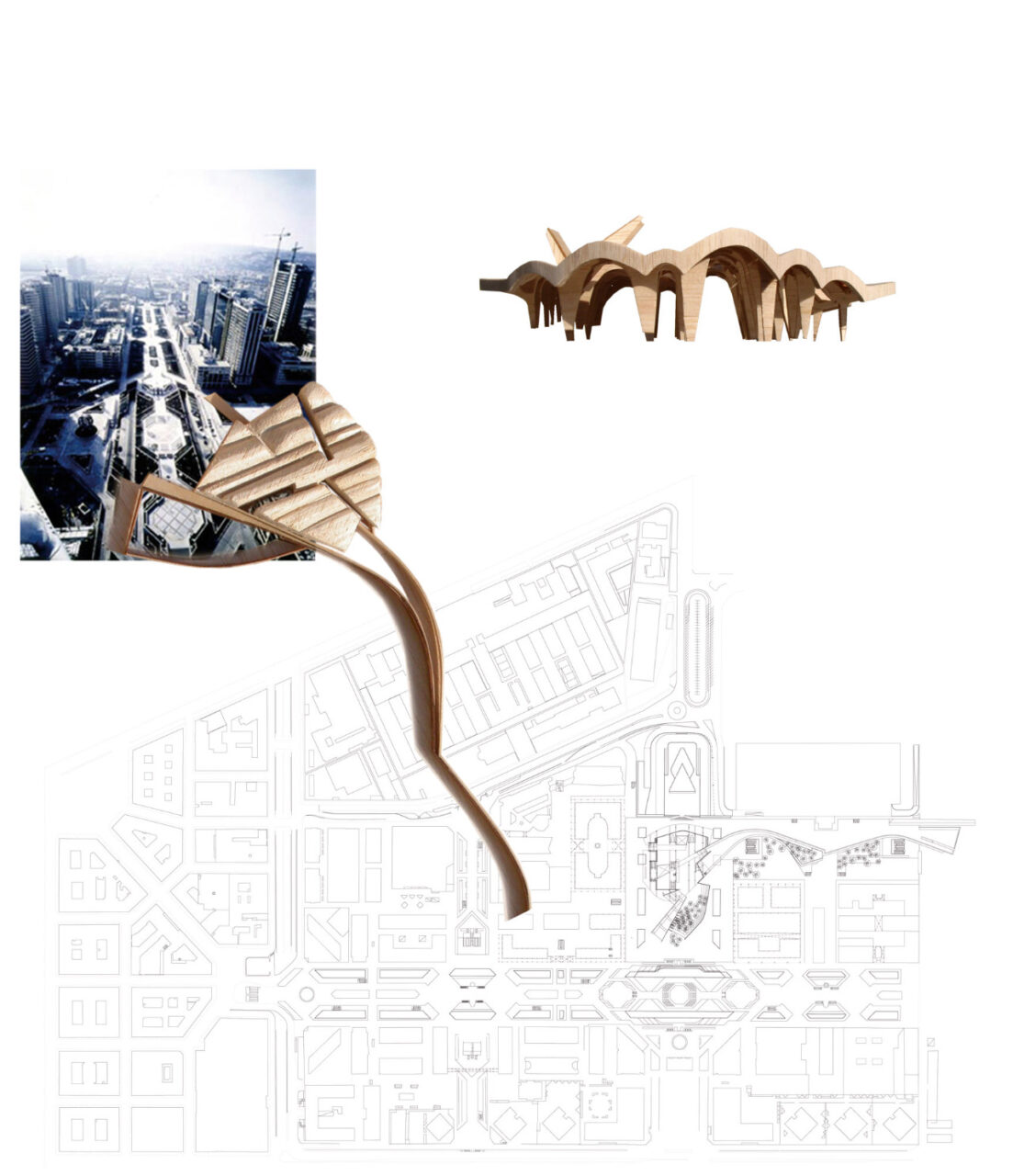
The project site is located within the Centro Direzionale, a business center designed in the 1970s by Japanese architect Kenzo Tange. Characterized by reflective skyscrapers and elevated piazzas, the area had become disconnected from Naples’ organic urban fabric, suffering from underuse and a lack of identity. The design of the new underground station seeks to reverse this condition by introducing an architectural gesture rooted in nature, memory, and public life.
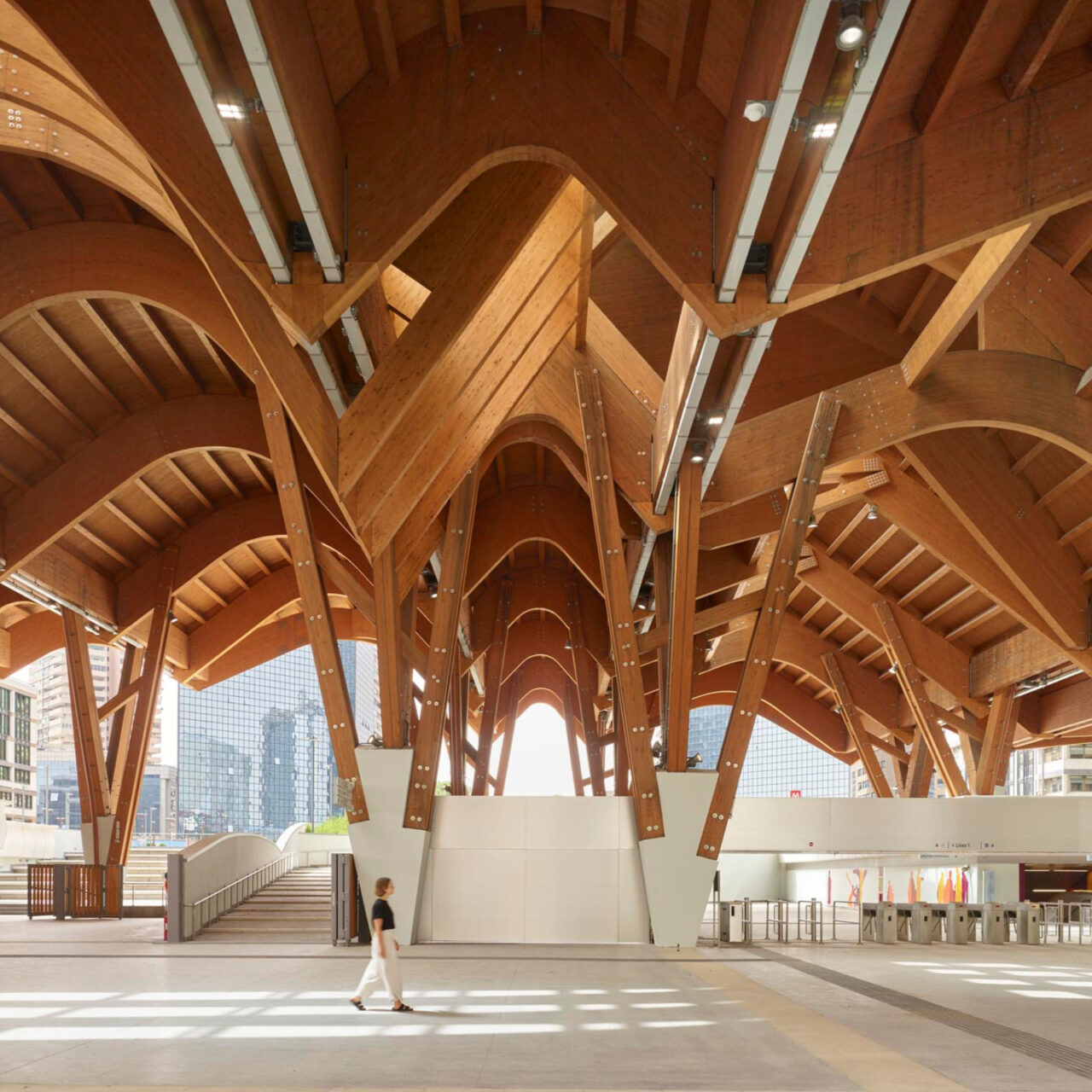
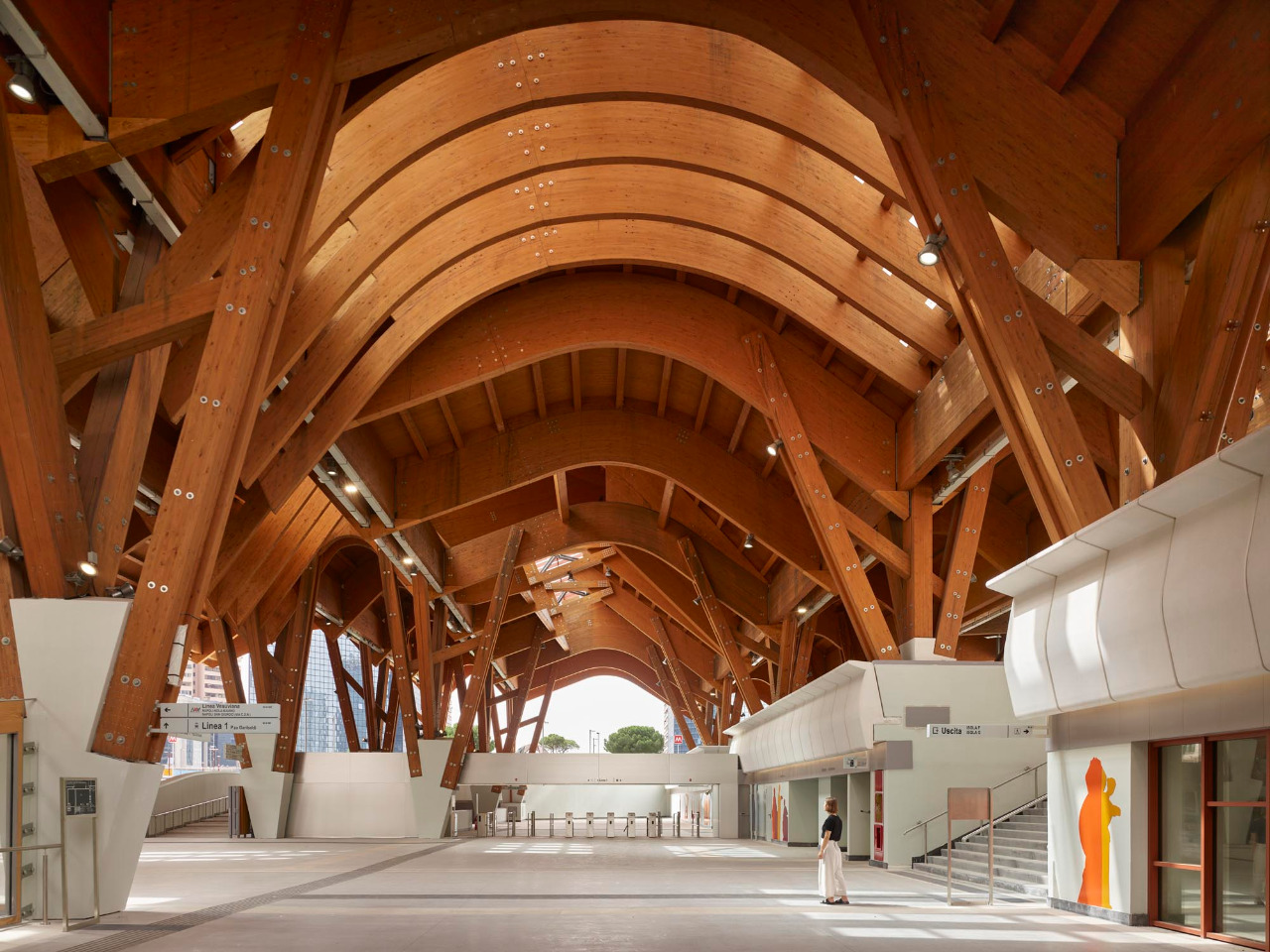
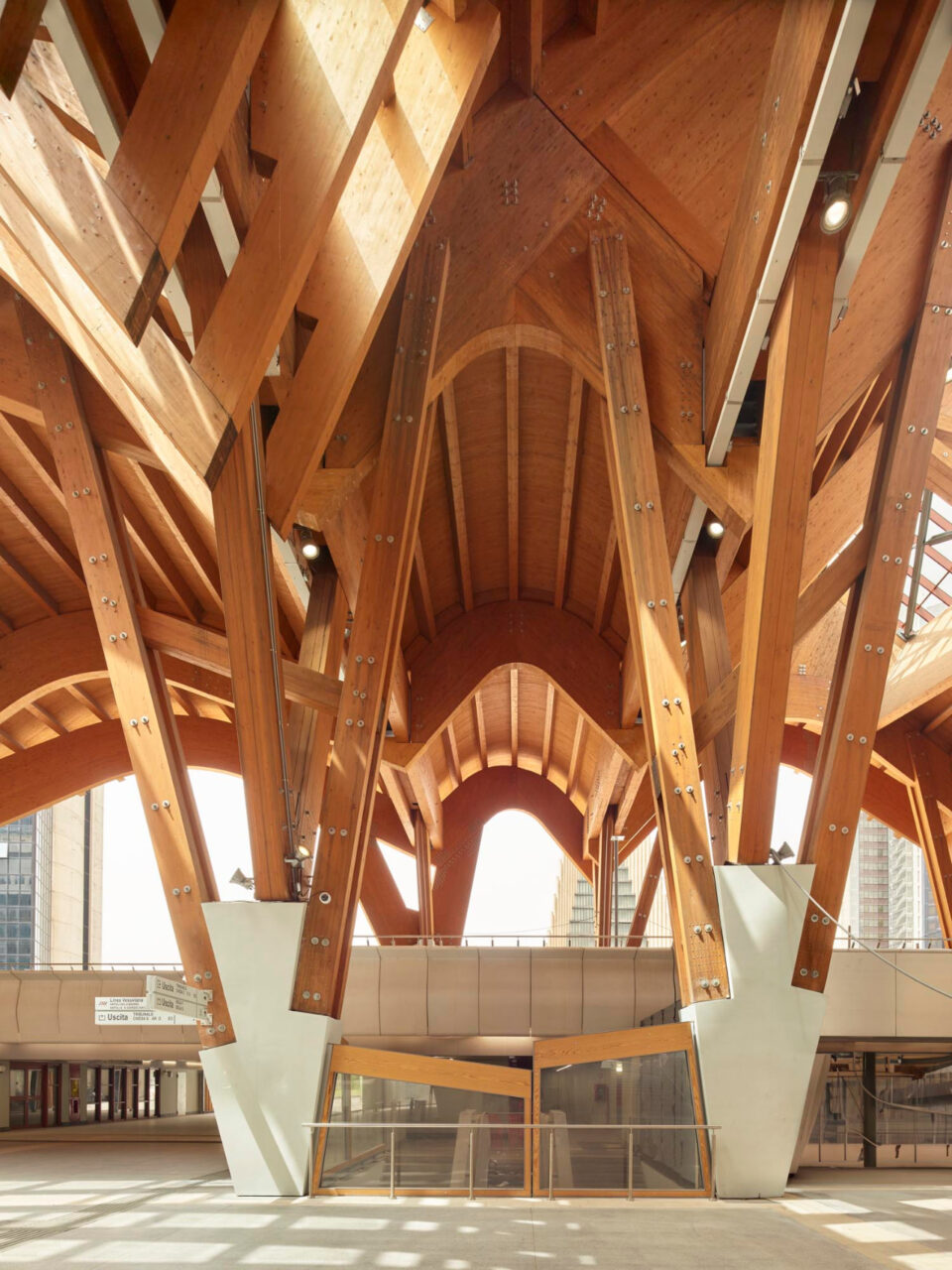
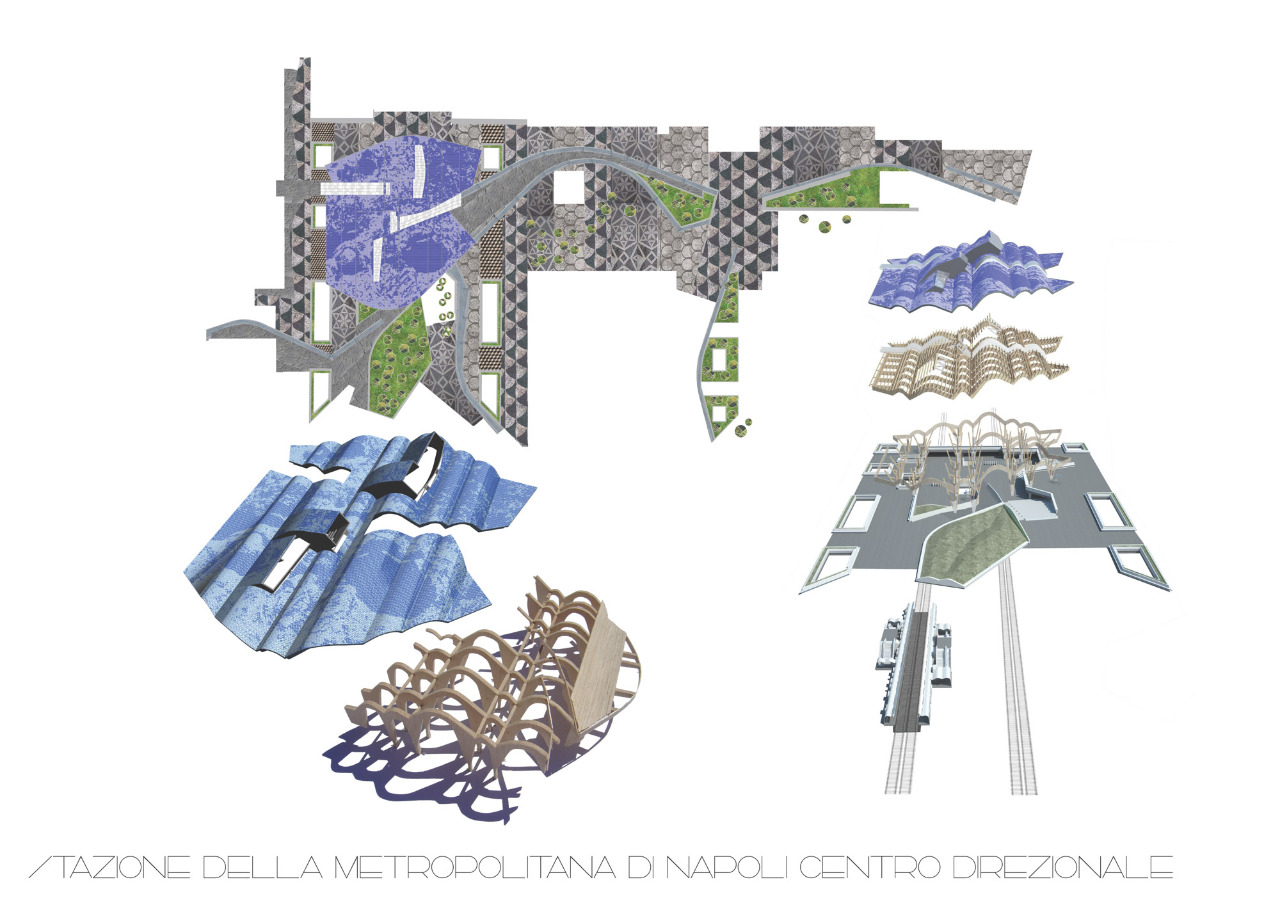
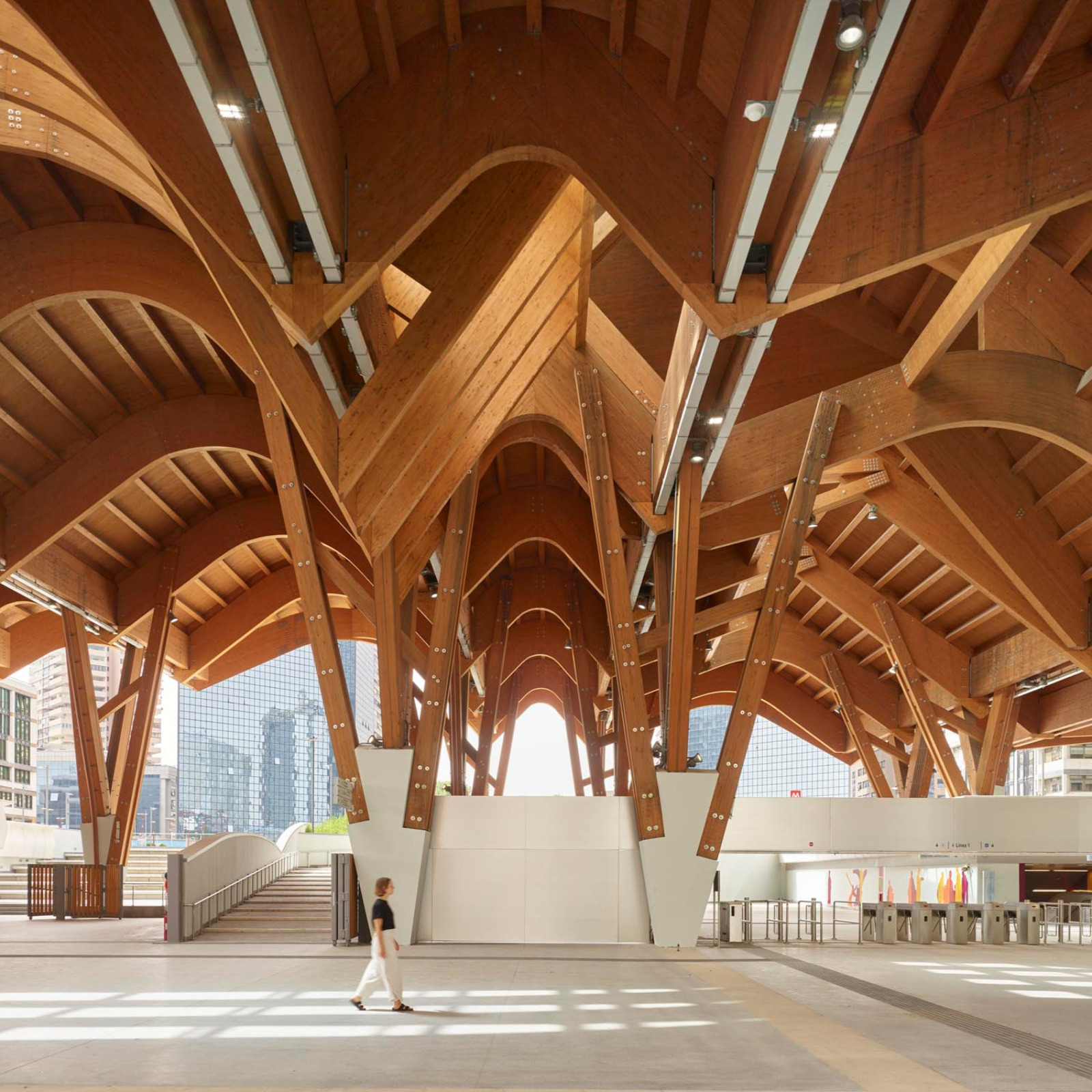
Inspired by the natural topography of Naples and the materiality of its historical heritage, the station’s structure reimagines the site as a flowing urban landscape. The vaulted roof, constructed from glued laminated timber (glulam), offers a warm, undulating canopy that evokes a walk through a forest — a striking contrast to the rigid and artificial geometry of the surroundings. This organic form reintroduces a sense of place, scale, and movement, while also referencing the vaulted typologies of traditional train stations.
Wood, chosen for its sustainability, lightness, and symbolic connection to nature, becomes the main material and structural protagonist. New wooden columns are integrated into the existing concrete framework, respecting the original infrastructure while transforming its spatial and material character. The result is a seamless dialogue between past and future, permanence and change.
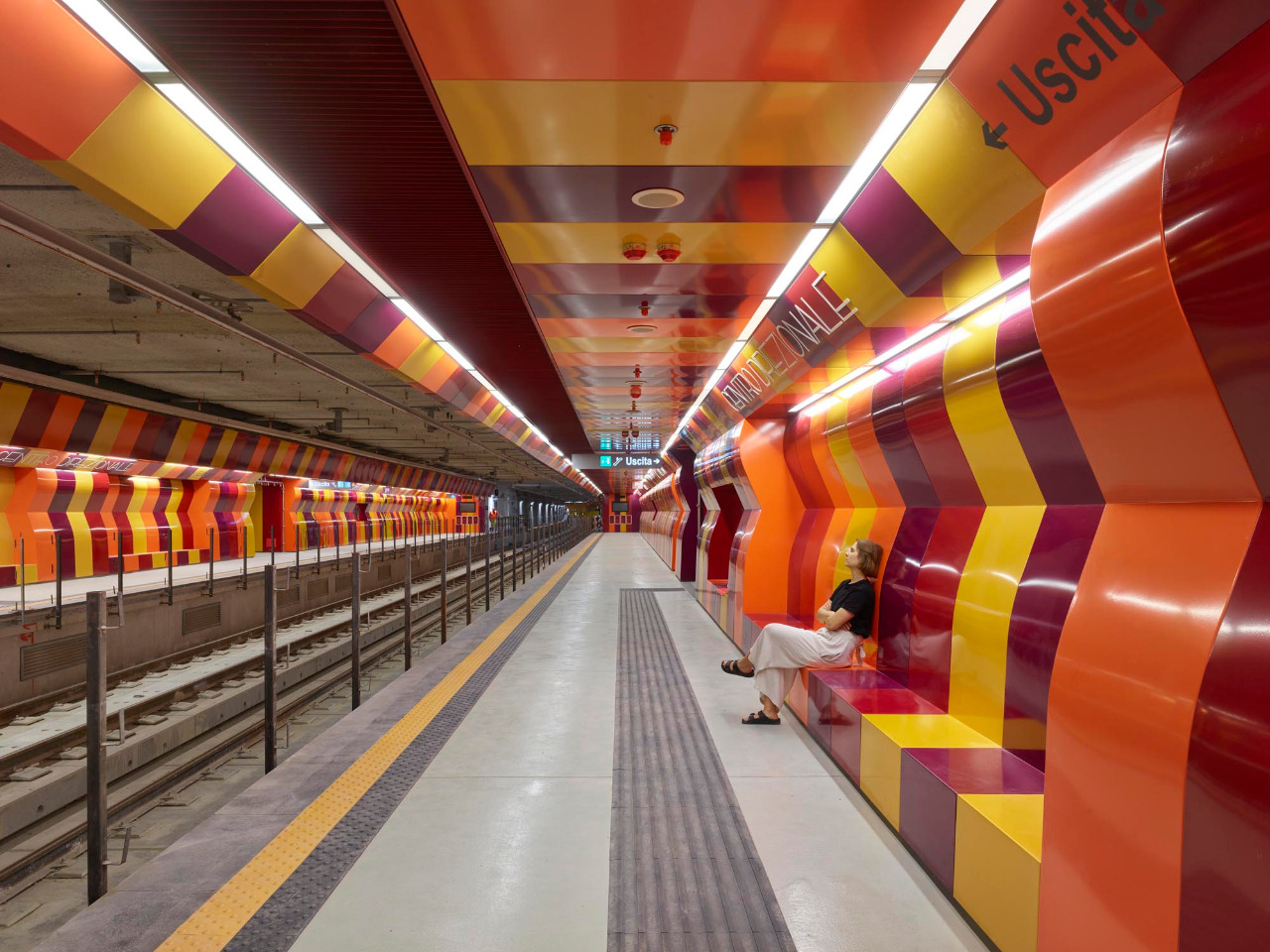
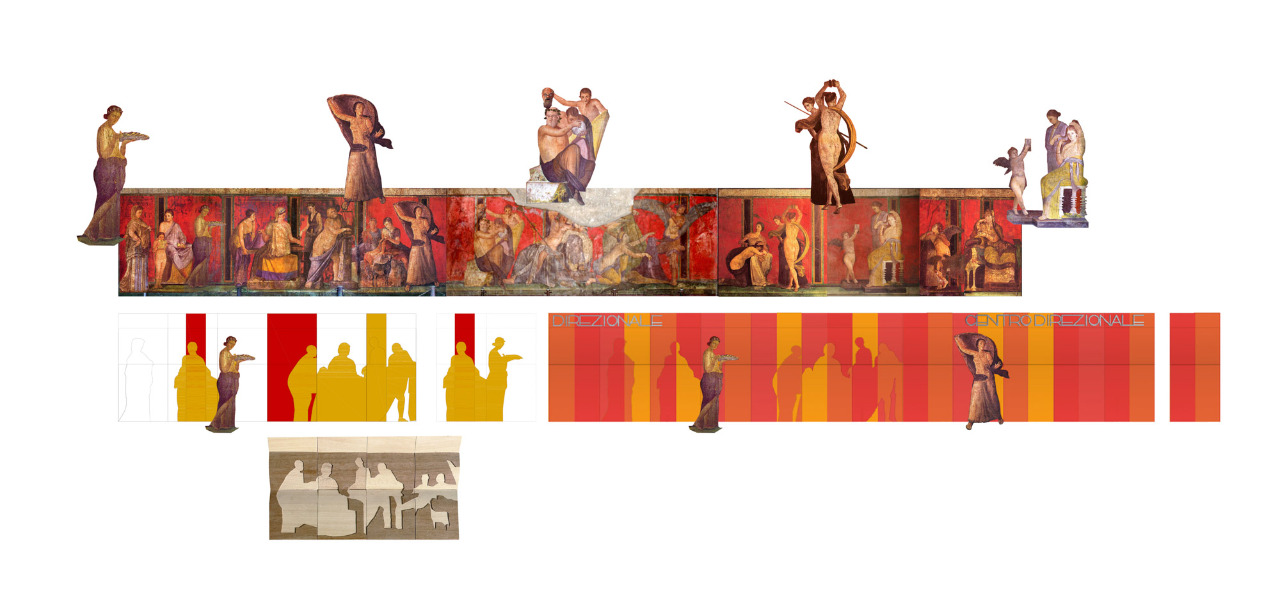
The station functions as both an infrastructural node and a civic space. Its multi-level design facilitates pedestrian circulation, intermodal connections, and spatial fluidity. Moreover, the integration of public art — including a large ceiling mosaic inspired by archaeological findings from Pompeii — anchors the project within the city’s cultural continuum.
Centro Direzionale is not just a transit station, but a catalyst for urban renewal. By reconnecting an isolated district with the rest of Naples, the project improves safety, accessibility, and the quality of public space. It demonstrates how contemporary architecture, when attuned to context and community, can regenerate even the most inert parts of the city.
The station reflects our studio’s commitment to creating architecture that is both poetic and grounded, capable of weaving together the material, historical, and emotional layers of place.
Miralles Tagliabue - EMBT

Miralles Tagliabue – EMBT is an internationally recognized architecture studio founded in 1994 in Barcelona by Enric Miralles (1955–2000) and Benedetta Tagliabue. The studio is renowned for its context-sensitive designs that blend tradition and innovation, emphasizing organic forms and material richness. EMBT's diverse portfolio includes notable projects such as the Scottish Parliament Building in Edinburgh, the Santa Caterina Market in Barcelona, and the Spanish Pavilion at Expo 2010 in Shanghai. Under Tagliabue's leadership, the firm continues to explore architecture's poetic dimension, integrating disciplines like landscape, urban planning, and interior design. With offices in Barcelona, Shanghai, and Paris, EMBT engages in projects worldwide, consistently earning accolades for its commitment to creating spaces that resonate with cultural and environmental contexts.