 International Architecture & Design Awards 2026
Vertical Tube House
naive practice
Single & Multi-family House Design
Vertical Tube House — IADA 2026 award
Vertical Tube House received Silver Winner recognition at the International Architecture & Design Awards 2026 in Single & Multi-family House Design. Project status, design team and credits are listed alongside the presentation.
About the project
Vertical Tube House: The House as Climate Device for Private Life
This vertically proportioned single-family house emerges from the intersection of two narratives: a very personal story of the client couple and the very generic principles of dwelling in Hanoi's tropical climate.
The Regional Climate and Dwelling Typology:
Traditional Hanoi houses embrace tropical design principles: generous outdoor spaces facilitate airflow while surrounding trees filter intense sunlight. Modern urban development, however, has prioritized accommodating exponential population growth over preserving these passive comfort strategies. This project reinterprets vernacular features, air circulation and sun filtration, within Hanoi's contemporary high-density fabric.
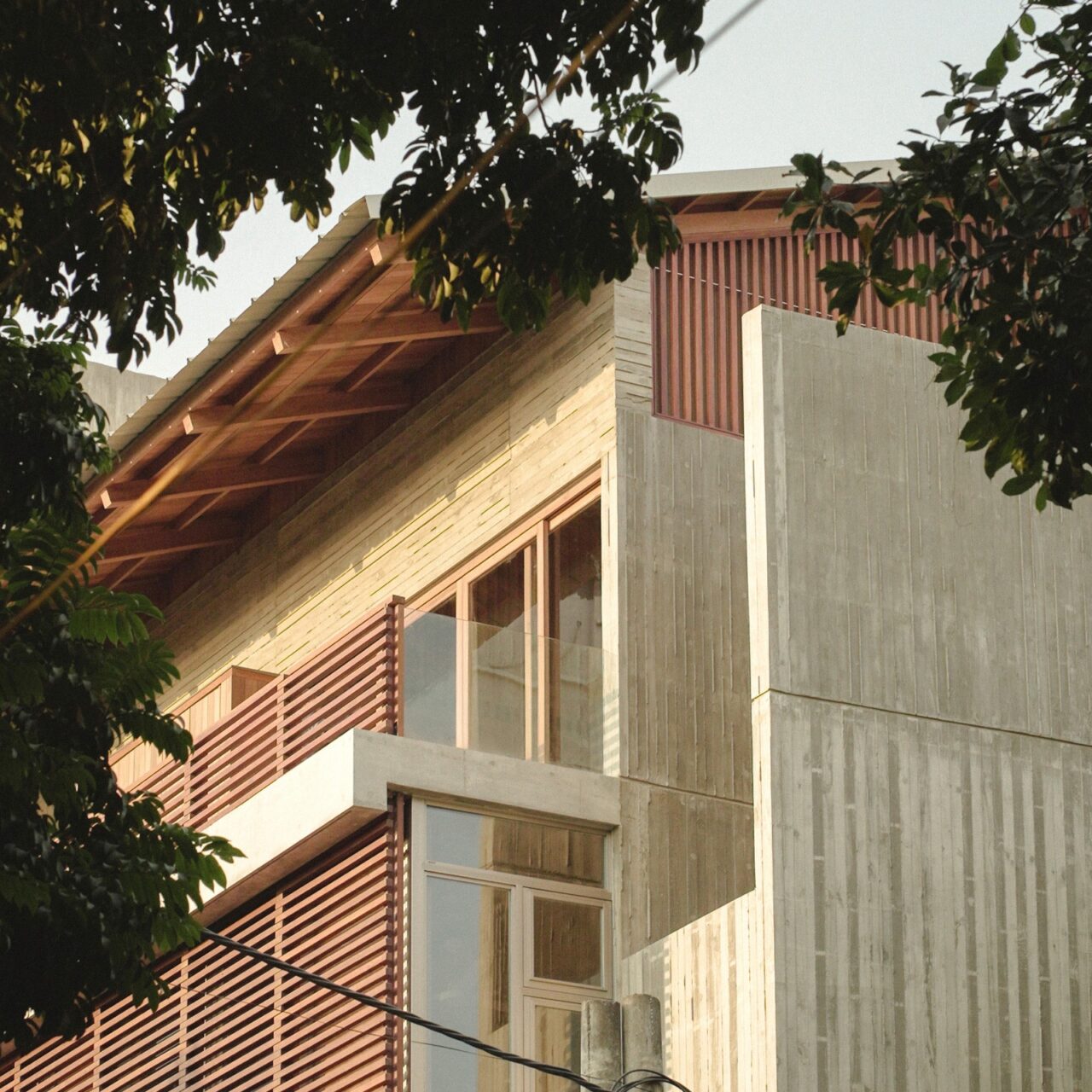
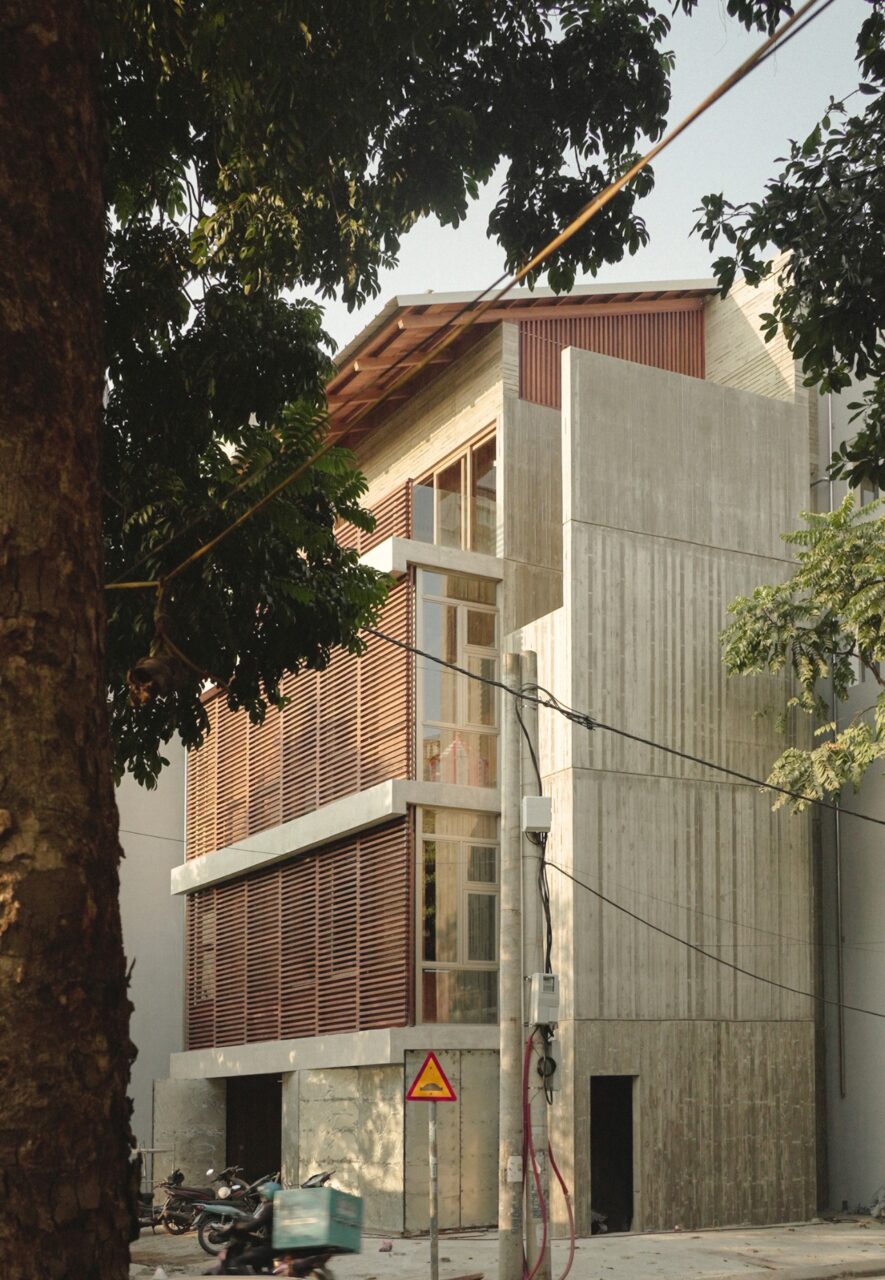
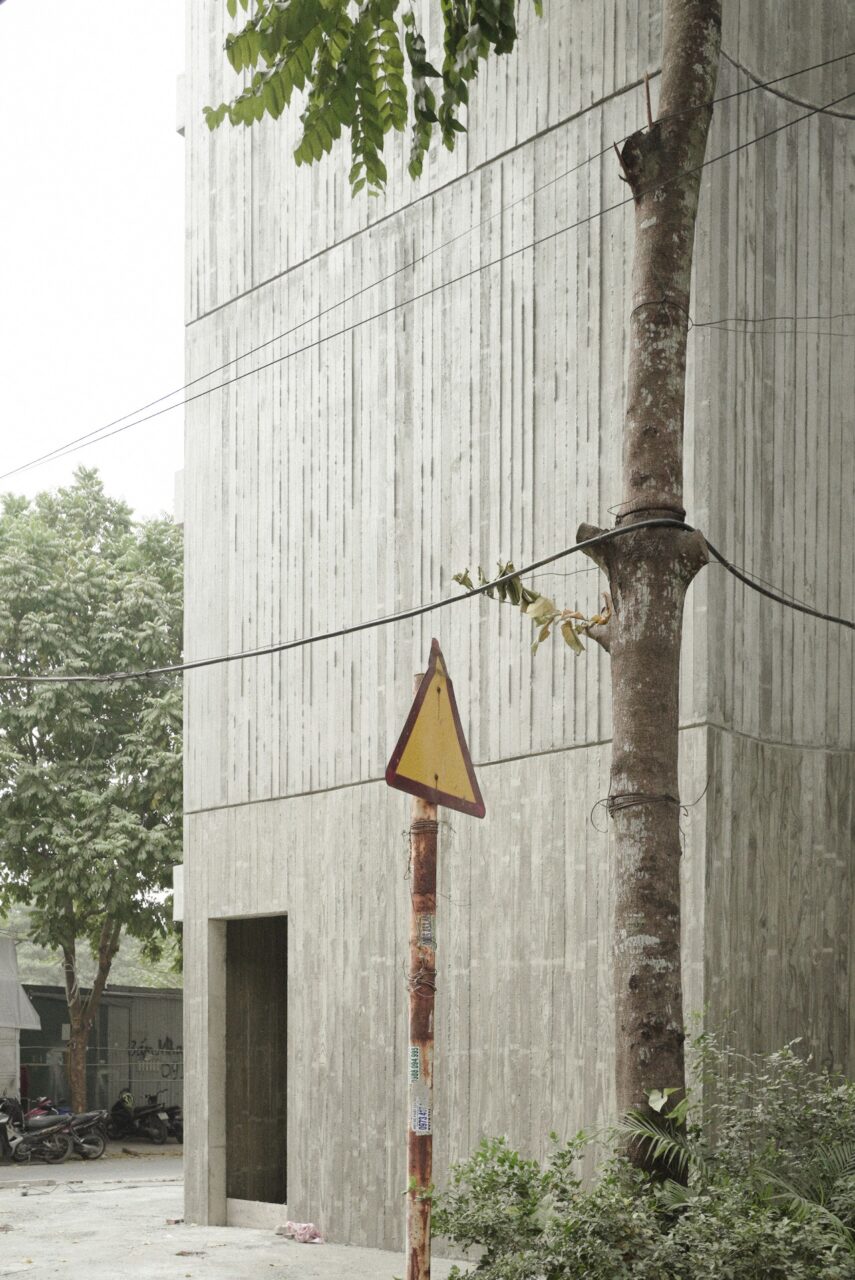
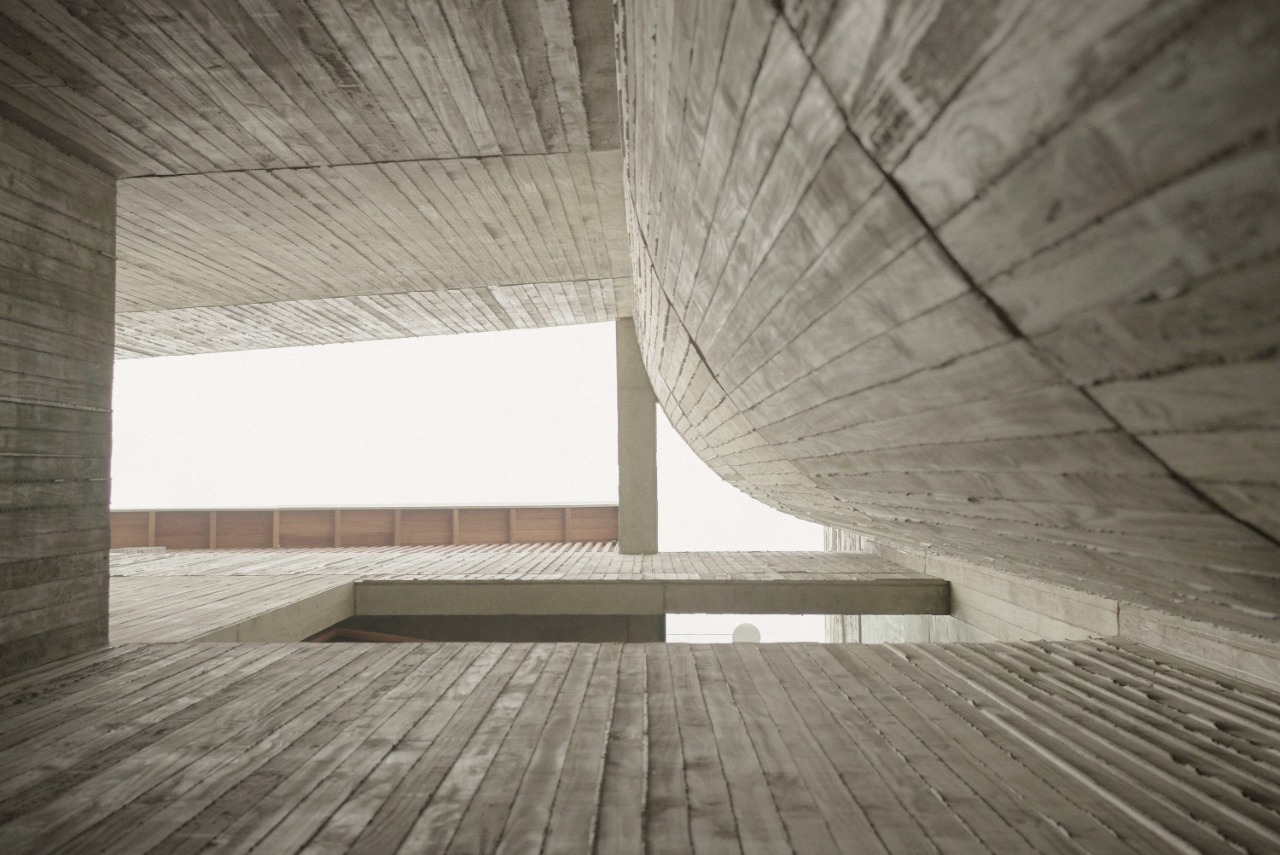
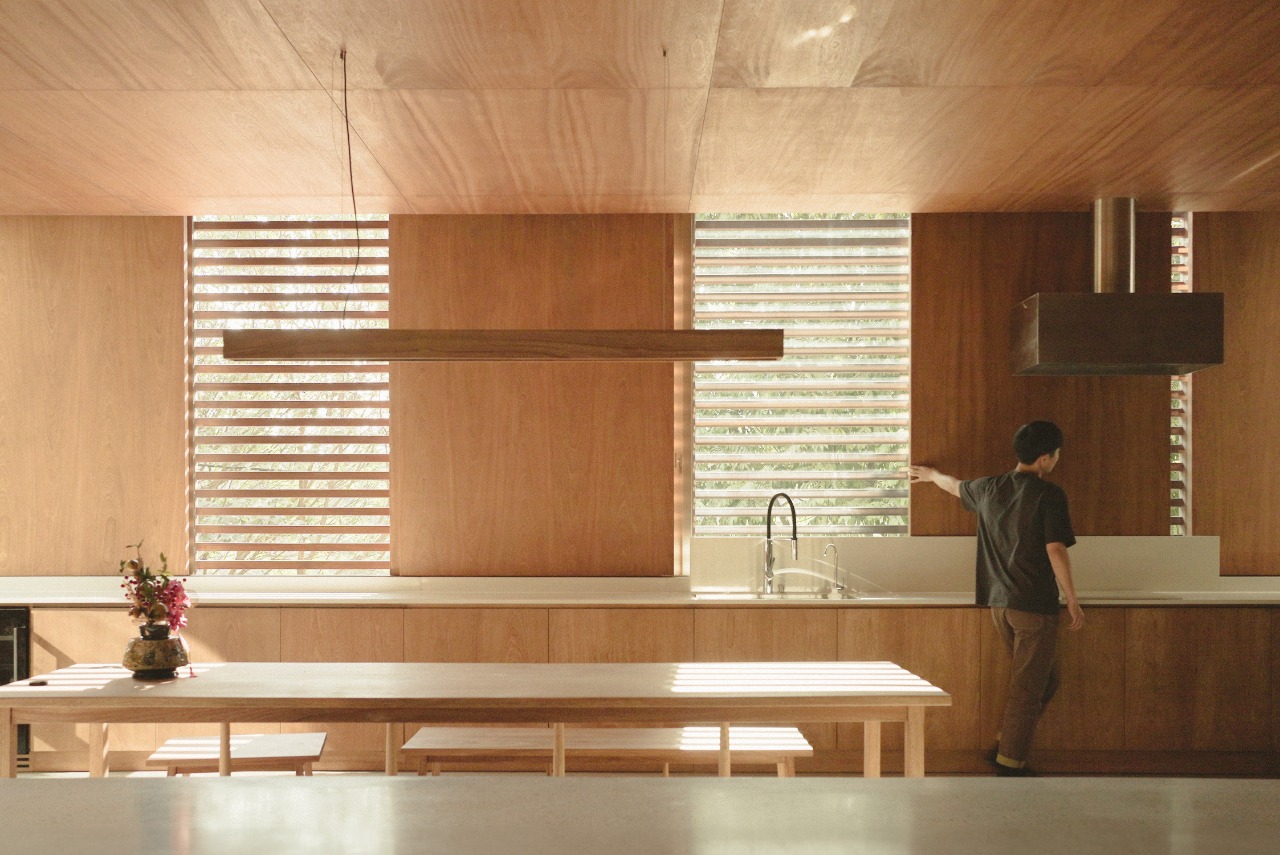
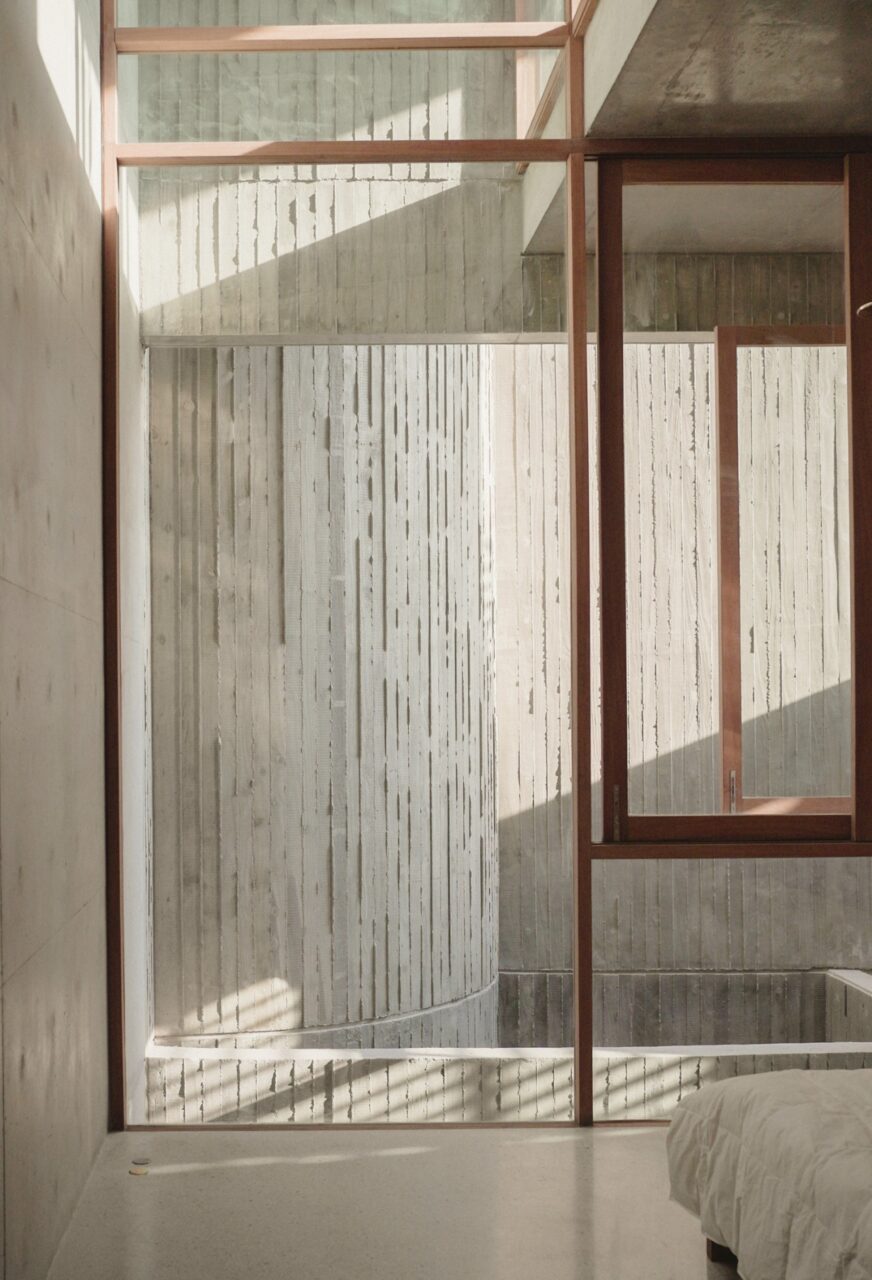
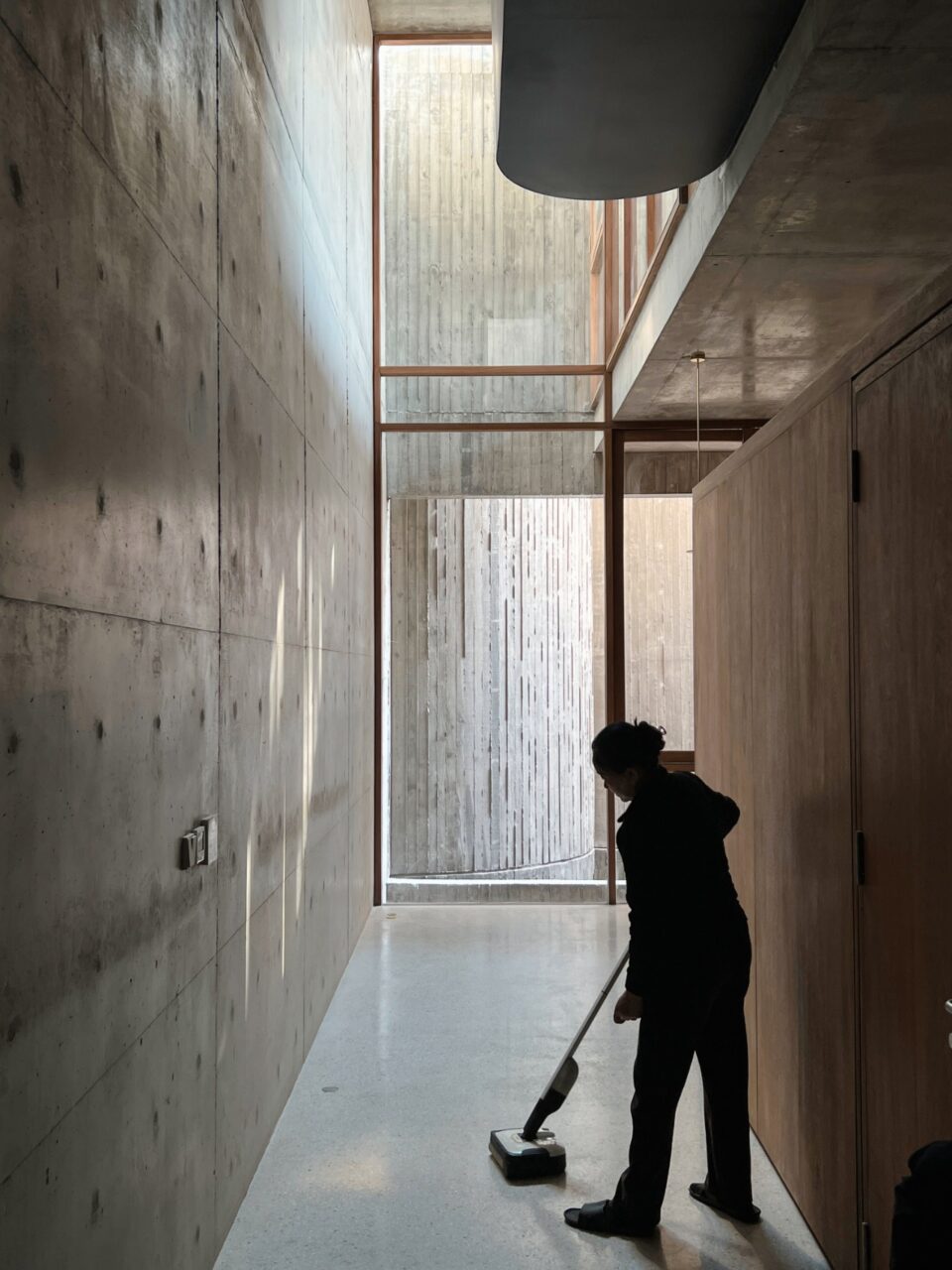
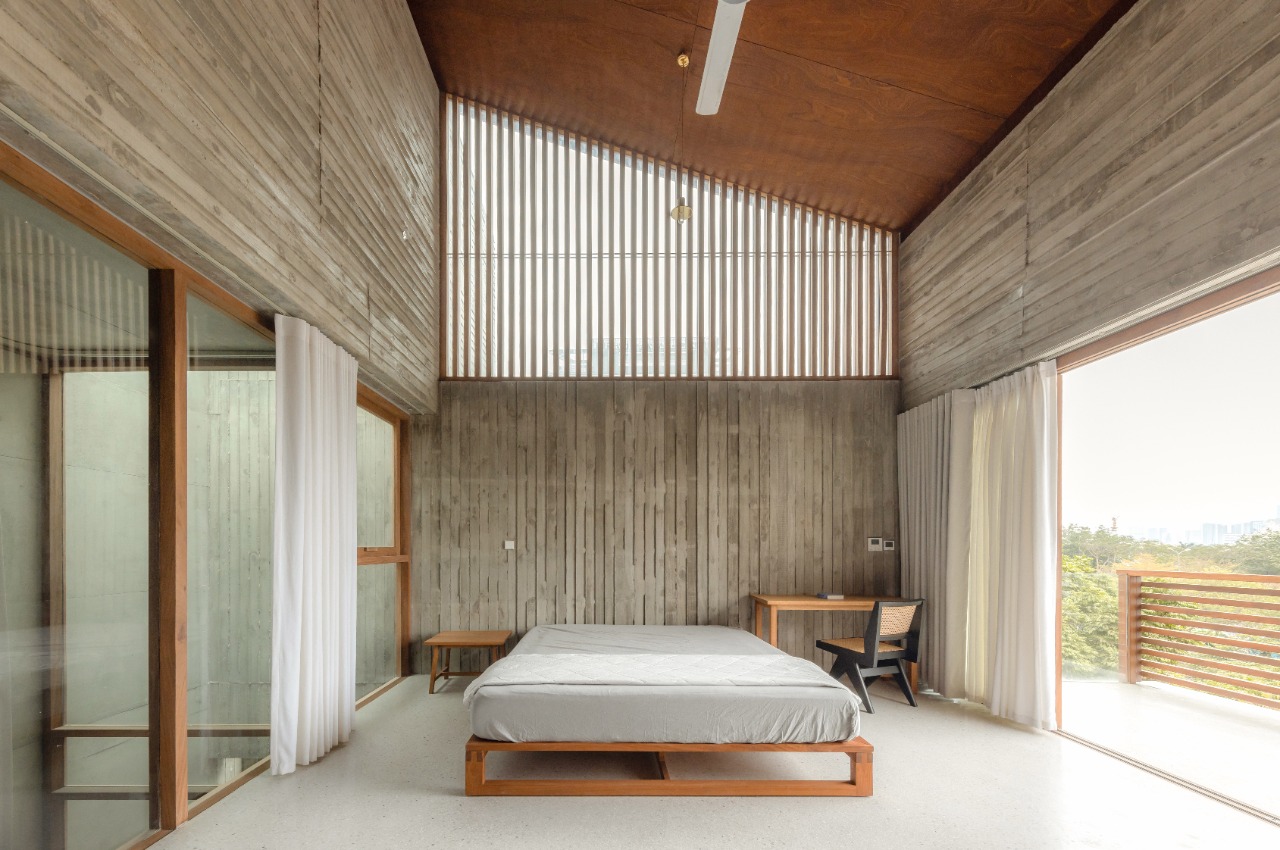
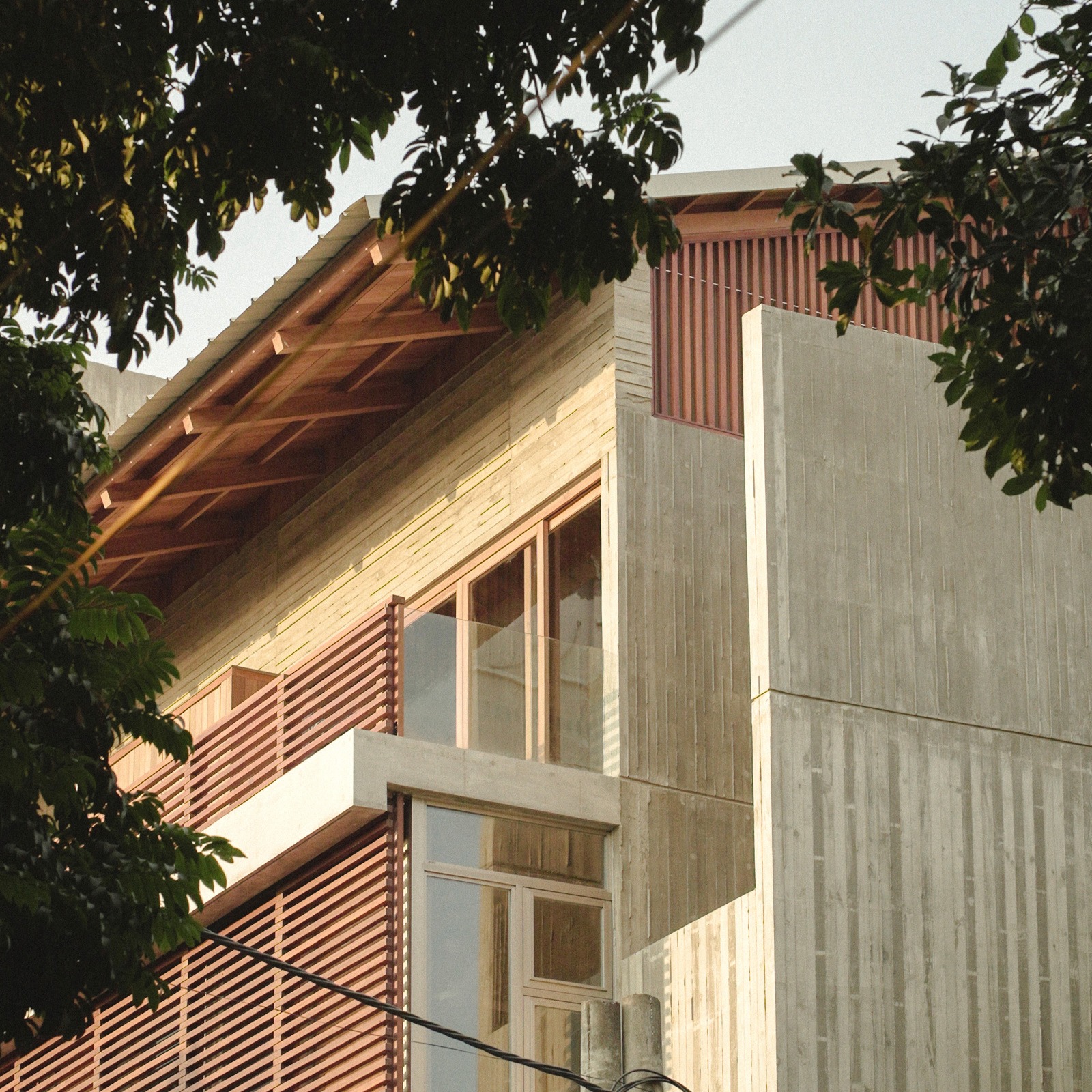
The house comprises two vertical cores anchoring opposite ends of the site, linked by a spanning slab. One core contains human and mechanical circulation. The other forms an open concrete tube channeling airflow and filtering light through a semi-exterior courtyard. These layered vertical voids generate natural ventilation throughout the living spaces. Western sun is modulated by louvered facades and hollow-core sliding shutters that open fully during cooler morning and evening hours to encourage cross-ventilation. While not aspiring to achieve a thermally optimal passive house, the design offers a regional approach to thermal comfort within the challenging constraints of a dense tropical urban block.
The Personal Narrative:
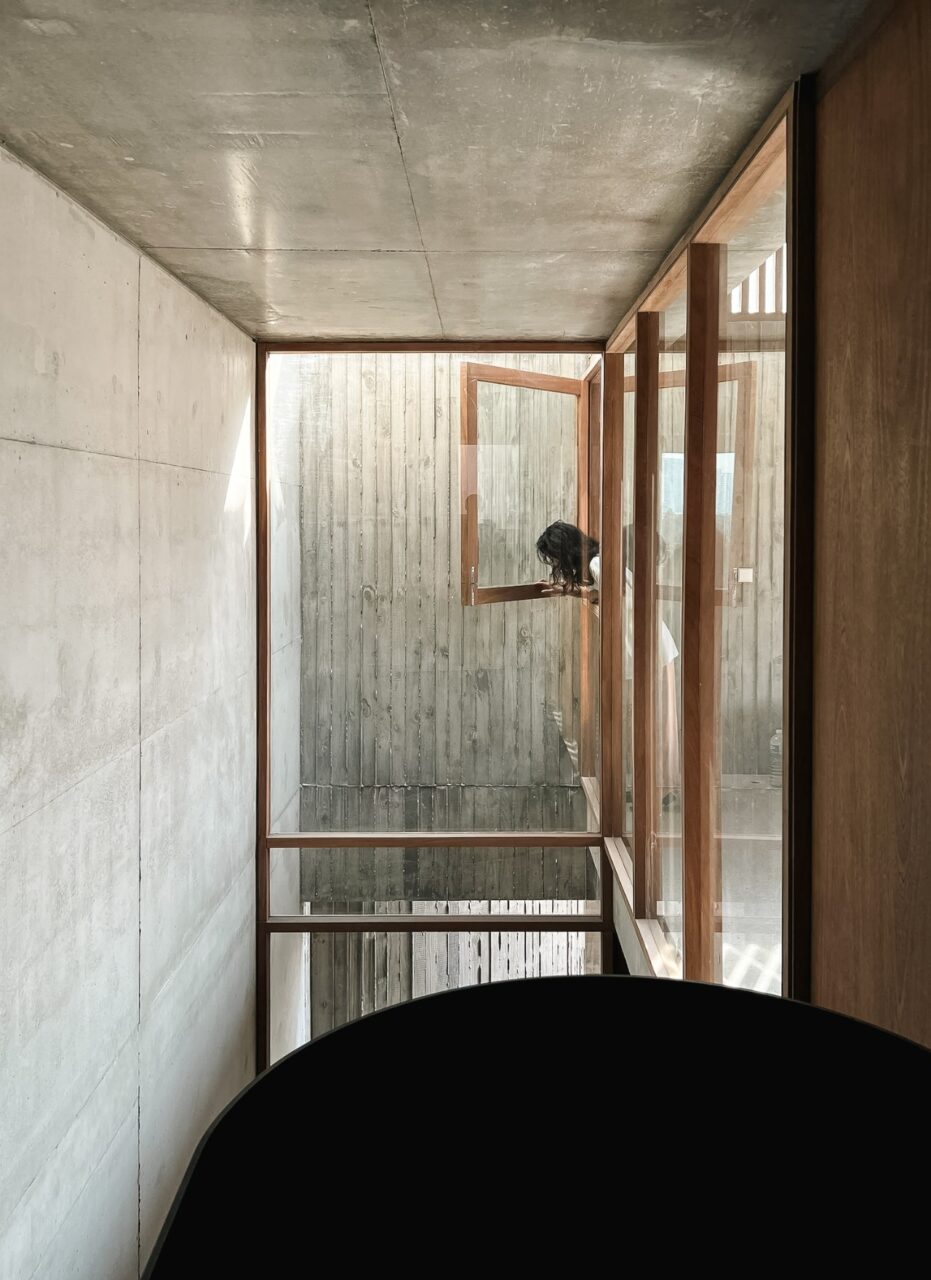
A long-married couple presented an unusual brief: accommodating fundamentally different daily rhythms. The husband rises early; the wife retires just as he awakens. Rather than forcing synchronization, the design maintains physical distance between their private spaces while creating multiple channels for sensing presence and enabling gentle communication. The most explicit connection is an interior balcony, a small platform suspended within a tall void that facilitates brief encounters. Their rooms connect vertically through two shared voids where light and sound travel at varying intensities. These same voids distribute cool air throughout the house, establishing not only thermal circulation but an intangible atmosphere of co-living that honors individual rhythms while sustaining connection.
Through these dual narratives, Vertical Tube House explores the creative tension between building as climate device, responding to general environmental conditions, and building as vessel for the unique life unfolding within.
naive practice
naïve practice imagines architecture as a collaborative ecosystem. We believe the architectural profession has narrowed its scope, creating divisions between design, engineering, and construction that limit the creative potential of building.
Our practice challenges the industrial and legal frameworks that constrain contemporary architecture. Instead of working within these limitations, we understand architecture as a mode of engagement—a dynamic process that brings together diverse voices and expertise throughout the design and construction journey.
Through our architectural research and projects, we engage in a creative and collaborative endeavor that requires active participation and uneasy coordination with various agencies—human and non-human actors that shape the building process.
We embrace this complexity rather than seeking to control it. Our practice thrives in the spaces between disciplines, where friction becomes productive and uncertainty generates new possibilities.
Project films